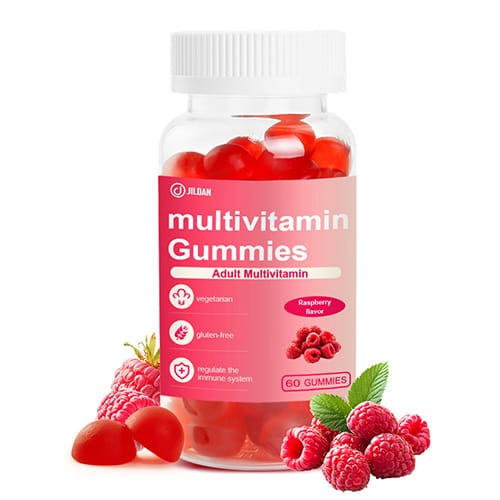
Multivitamin gummies have become one of the most recognizable formats in the dietary supplement market. They combine familiar vitamins and minerals with a convenient chewable format, making them attractive to adults, children, women, and other consumer groups that may prefer gummies to conventional tablets or capsules.
For supplement brands, however, developing multivitamin gummies is more complicated than selecting a list of popular nutrients and putting them into a flavored gummy.
Every nutrient takes up physical space. Vitamins and minerals have different stability characteristics. Some have strong flavors or colors. Others can interact with one another or with the gummy matrix. The final serving also needs to fit within realistic gummy sizes while meeting labeling, quality, and shelf-life requirements.
This creates an important formulation challenge: multivitamin gummies need to provide a useful nutrient profile without becoming overloaded, unstable, unpleasant to eat, or difficult to manufacture consistently.
The NIH Office of Dietary Supplements points out that multivitamin/mineral products vary widely in the nutrients and amounts they contain. There is no single standard formula that defines every multivitamin.
For brands, that flexibility creates opportunity—but only if the formula begins with a clearly defined consumer rather than an unnecessarily long Supplement Facts panel.
Multivitamin Gummies Should Start With a Target Consumer
The first question in developing multivitamin gummies should not be:
“How many vitamins can we include?”
It should be:
“Who is this product designed for?”
A general adult product has different requirements from gummies designed for children, women, older adults, or specific lifestyle groups.
The NIH notes that multivitamin/mineral formulations often differ by audience. Children’s products generally contain amounts suited to younger users, while products designed for older adults may emphasize nutrients such as vitamin D and vitamin B12 differently from products aimed at younger consumers.
That means audience selection should influence the entire formulation.
A brand might consider:
- general adult daily wellness;
- women’s daily nutrition;
- men’s daily nutrition;
- children’s nutrition;
- adults over 50;
- active-lifestyle consumers;
- vegan consumers;
- consumers looking for reduced-sugar products.
Trying to create one set of multivitamin gummies for every possible consumer usually makes the product less focused.
Once the target audience is defined, formulators can decide which nutrients are relevant, which amounts are appropriate, and which nutrients may be unnecessary for that particular product.
This also makes the eventual marketing message much clearer.
More Vitamins Do Not Automatically Make Better Multivitamin Gummies
The supplement category often encourages a “more is better” mentality.
More vitamins. More minerals. Higher percentages of Daily Value. More ingredients on the front label.
But adding nutrients to multivitamin gummies creates real technical trade-offs.
Every active ingredient affects one or more of the following:
- gummy size;
- serving size;
- taste;
- color;
- texture;
- stability;
- processing;
- ingredient interactions;
- label complexity.
Minerals are particularly important because they often require much more physical material than vitamins.
A small amount of a vitamin may be easy to incorporate into a gummy. Delivering a meaningful quantity of certain minerals can require considerably more ingredient mass.
This is why gummy products often do not contain the same nutrient profile as large tablets.
Rather than maximizing ingredient count, brands should ask:
- Which nutrients are appropriate for the target consumer?
- Which amounts can realistically be delivered?
- Which nutrients work well in a gummy format?
- Which ingredients may create sensory or stability problems?
- Does each nutrient strengthen the product proposition?
The best multivitamin gummies are not necessarily the formulas with the longest labels. They are formulas in which ingredient selection, dosage form, serving size, and consumer need align.
Choosing the Right Vitamins for a Gummy Formula
Different vitamins behave differently during manufacturing and storage.
A formula might include nutrients such as:
- vitamin A;
- vitamin C;
- vitamin D;
- vitamin E;
- vitamin B6;
- vitamin B12;
- folate;
- biotin;
- niacin;
- pantothenic acid.
But deciding whether to include a nutrient is only the beginning.
The manufacturer also needs to determine which ingredient form is appropriate.
For example, vitamin B12 exists in several forms, and folate can be supplied using different ingredient forms. Fat-soluble vitamins may require different formulation strategies from water-soluble nutrients.
For multivitamin gummies, the ingredient form can influence:
- stability;
- solubility;
- compatibility;
- active potency;
- sensory characteristics;
- processing behavior.
The appropriate choice should be based on the final product specification rather than whichever raw material has the most attractive marketing name.
Brands should therefore ask their manufacturer:
- Which nutrient forms are being proposed?
- Why were those forms selected?
- Are they compatible with the gummy system?
- Are they stable through the intended shelf life?
- How are potency specifications established?
- Is an overage required?
These questions are particularly important because a gummy that meets specification immediately after production still needs to meet its stated requirements months later.
Minerals Create One of the Biggest Formulation Challenges
Minerals can make multivitamin gummies significantly harder to formulate.
Unlike many vitamins, minerals can require relatively large raw-material quantities. They may also introduce:
- metallic flavor;
- bitterness;
- chalkiness;
- color changes;
- texture changes;
- interactions with the gelling system.
Calcium, magnesium, iron, and zinc are not interchangeable from a formulation standpoint.
A brand might want to advertise a comprehensive vitamin-and-mineral formula, but the physical limits of the gummy format may make some target amounts unrealistic.
This is why product developers should discuss active loading early.
If a desired formula contains many minerals at substantial levels, the realistic options may include:
- increasing gummies per serving;
- increasing individual gummy weight;
- reducing selected mineral amounts;
- removing lower-priority ingredients;
- changing the product format.
JD Nutra currently offers several vitamin- and mineral-oriented gummy products within its gummy supplement range, which can provide a useful starting point when evaluating what types of formulations fit this dosage form.
A strong product brief acknowledges physical formulation limits rather than treating multivitamin gummies like miniature tablets.
How Daily Value Should Influence Formula Design
Daily Value percentages are highly visible on supplement labels, so brands often use them as a product-development benchmark.
However, simply targeting very high percentages does not necessarily create a better product.
A thoughtful formulation should consider:
- recommended nutrient intake;
- target population;
- foods commonly consumed by that population;
- other supplements the consumer may use;
- upper intake limits where applicable;
- the purpose of the finished product.
The NIH explains that multivitamin/mineral products should not be viewed as substitutes for a healthy dietary pattern, and nutrient intake from food remains important.
This distinction matters for multivitamin gummies.
The product’s role is to supplement the diet, not to suggest that eating gummies can replace nutritious food.
Brands should also be careful about building formulas solely around impressive-looking percentages.
A very high level of one nutrient can introduce:
- formulation challenges;
- safety considerations;
- additional warnings;
- unpleasant taste;
- unnecessary complexity.
A better strategy is to define a rational nutritional profile for the intended consumer.
Pectin vs Gelatin for Multivitamin Gummies
The gummy base itself is a major product decision.
Pectin-Based Gummies
Pectin is widely used in plant-based gummy formulations and can support vegan positioning.
However, pectin systems require careful control of:
- pH;
- soluble solids;
- processing temperature;
- setting conditions;
- moisture.
Adding multiple vitamins and minerals can alter those conditions.
Gelatin-Based Gummies
Gelatin produces a different chew and elasticity profile. It has long been used for conventional gummies and offers different processing characteristics.
However, it is unsuitable for products positioned as vegan or vegetarian.
For multivitamin gummies, the choice should reflect both product positioning and manufacturing feasibility.
A brand targeting vegan consumers may naturally prefer pectin, but the entire ingredient system—including colors, flavors, coating materials, and active ingredients—should also match that positioning.
The gelling system should therefore be selected before final sensory development begins.
Sugar-Free and Low-Sugar Multivitamin Gummies Need Their Own Formulation
As gummies have become more mainstream, brands increasingly ask for low-sugar or sugar-free options.
This sounds simple from a marketing perspective but can be difficult technically.
Sugar contributes more than sweetness to a gummy. It also affects:
- solids;
- body;
- texture;
- water activity;
- flavor release;
- processing;
- stability.
Replacing it can require combinations of alternative sweeteners, fibers, sugar alcohols, or other bulking systems.
These changes may also alter digestive tolerance and mouthfeel.
For multivitamin gummies, sugar reduction is particularly challenging because the sweetener system also helps mask the flavor of vitamins and minerals.
A successful low-sugar formula needs to balance:
- sweetness;
- bitterness;
- acidity;
- nutrient flavor;
- texture;
- shelf stability.
For this reason, brands should avoid treating “sugar-free” as a minor adjustment to an already-approved formula.
It should be included in the original product-development brief.
Flavor Masking Becomes Harder as the Nutrient Load Increases
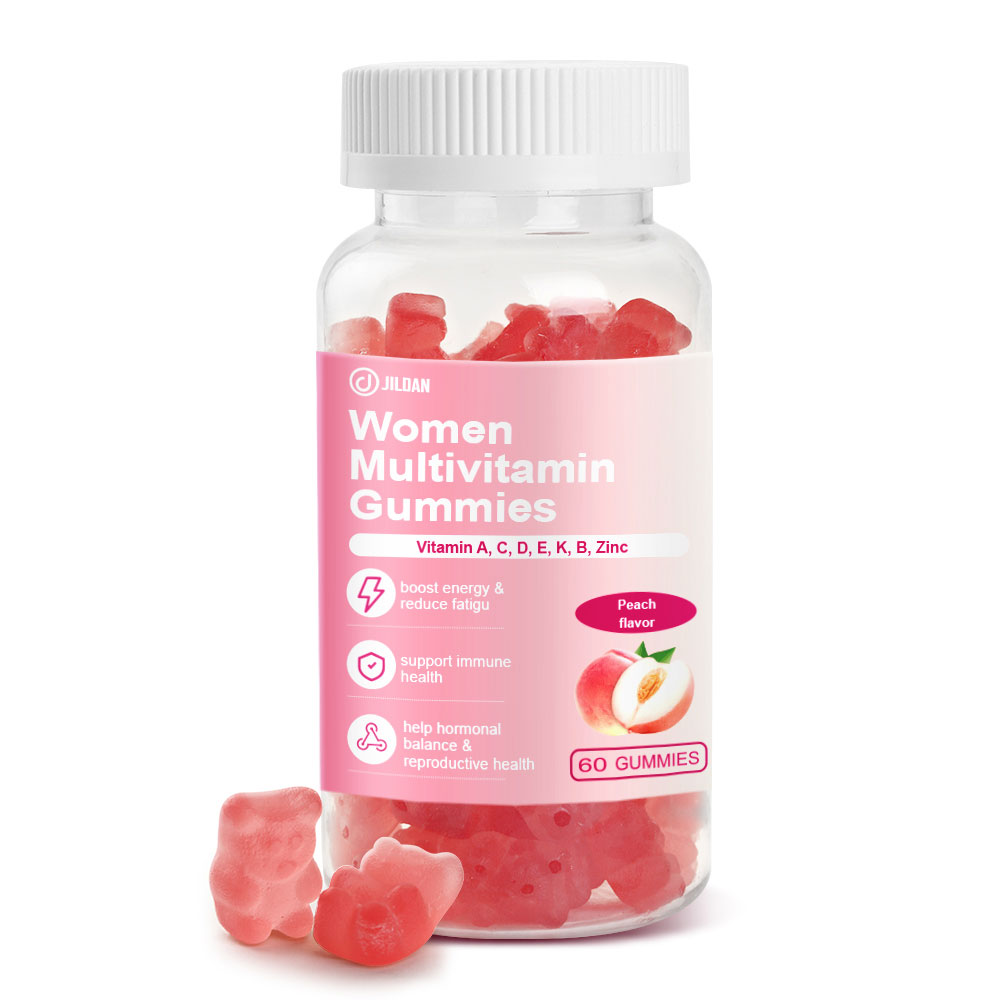
A multivitamin gummy can contain ingredients with strong sensory characteristics.
Certain minerals can taste metallic or chalky. Some B vitamins have distinctive bitterness or aroma. Botanical colors and nutrient powders can also change appearance.
The higher the active loading, the harder flavor masking becomes.
This creates a common development conflict:
The marketing team wants more nutrients, while the formulation team needs to preserve an enjoyable consumer experience.
Successful multivitamin gummies balance both.
Flavor development may involve:
- choosing an appropriate fruit profile;
- adjusting acidity;
- balancing sweetness;
- using bitterness-masking techniques;
- changing nutrient forms;
- modifying active load;
- changing serving size.
A strong berry, citrus, tropical, or mixed-fruit profile may help depending on the formula, but no flavor should be approved solely because it performs well in a first laboratory sample.
Brands should also taste aged stability samples.
Flavor can change during storage as vitamins, minerals, moisture, and aroma compounds interact.
Nutrient Overages Need to Be Based on Stability Data
One of the more technical considerations in multivitamin gummies is nutrient overage.
Some vitamins naturally degrade during manufacturing and storage.
If a label promises a certain amount through the intended shelf life, a manufacturer may formulate above the label amount at production so that the product remains within specification later.
That does not mean arbitrarily adding large amounts.
An overage should be based on factors such as:
- ingredient stability;
- process loss;
- storage conditions;
- packaging;
- shelf-life target;
- stability data.
Different nutrients require different approaches.
A stable mineral may behave very differently from a sensitive vitamin.
The correct question is therefore not:
“How much extra vitamin do you put in?”
Instead ask:
“How was the required overage established for this specific formula and shelf life?”
A reliable manufacturer should be able to connect overage decisions with formulation knowledge and stability evidence.
Stability Testing Is Essential for Multivitamin Gummies
A gummy can change substantially over time.
This is why stability testing should evaluate the finished product rather than only individual ingredients.
For multivitamin gummies, a stability program may monitor:
- nutrient potency;
- moisture;
- microbiological quality;
- gummy hardness;
- stickiness;
- appearance;
- color;
- flavor;
- odor;
- packaging condition.
Products need to remain acceptable throughout the intended shelf life under labeled storage conditions.
This is particularly important for formulas containing several vitamins because each nutrient can degrade at a different rate.
The manufacturer also needs to consider packaging.
A gummy stored in a high-barrier bottle with an appropriate closure may behave differently from the same formula stored in another packaging system.
For that reason, stability should ideally be performed in the intended commercial packaging.
JD Nutra describes formulation development, process optimization, stability considerations, manufacturing, testing, and batch release as interconnected stages of its supplement manufacturing services.
For brands, the key lesson is that shelf life should be designed into multivitamin gummies, not added to the label as an assumption.
Should Multivitamin Gummies Include Iron?
Iron deserves special consideration.
Many consumers associate a multivitamin with a comprehensive nutrient profile and may therefore expect iron. But iron is not appropriate for every product or every target consumer.
The NIH notes that formulations vary widely and that products designed for different populations frequently contain different nutrient amounts.
Iron also creates formulation challenges because it can influence:
- flavor;
- color;
- oxidation;
- interactions;
- serving size.
Therefore, brands should not add iron automatically.
Instead, ask whether it is appropriate for the target population and product concept.
For example, a general adult formula and a women’s formula may have very different reasons for including or excluding iron.
This is another example of why audience-first formulation produces better multivitamin gummies than simply copying an existing ingredient panel.
Children’s Multivitamin Gummies Need a Separate Product Strategy
Children’s supplements should not be created by taking an adult formula and making the gummies smaller.
Nutrient needs differ by age, and serving directions need to be appropriate for the intended user.
The NIH specifically notes that children’s multivitamin/mineral products generally provide smaller amounts of nutrients appropriate to that population.
Child-oriented multivitamin gummies also create additional considerations around:
- flavor;
- gummy size;
- serving count;
- appearance;
- packaging;
- child-resistant features where appropriate;
- labeling;
- accidental overconsumption.
One particular concern with gummy supplements is that children may perceive them as candy.
Brands should avoid marketing or packaging choices that blur the distinction between a dietary supplement and confectionery.
A children’s formula should therefore have its own:
- nutritional specification;
- safety review;
- serving directions;
- packaging strategy;
- label review.
JD Nutra’s current product range includes kids multivitamin gummies, illustrating how children’s formulations can be treated as a distinct product rather than a simple extension of an adult SKU.
Women’s and Adult Multivitamin Gummies Should Not Be Identical
Audience segmentation is also useful for adult products.
For example, women’s multivitamin gummies may emphasize a different nutrient profile from products intended for general adult use.
JD Nutra also lists women multivitamin gummies within its existing gummy portfolio.
The point is not that every demographic needs a completely different supplement.
The point is that segmentation should have a nutritional reason.
A meaningful audience-specific formula might differ based on:
- life stage;
- dietary patterns;
- nutrient priorities;
- intended use.
A weak segmentation strategy simply changes packaging colors while leaving the formula unchanged.
Consumers increasingly compare Supplement Facts panels, so meaningful formulation differences can create a stronger product story.
Packaging Protects More Than the Gummy Texture
Packaging is often approached late in product development.
That can be a mistake.
For multivitamin gummies, packaging needs to protect both physical quality and nutrient stability.
Important considerations include:
- moisture barrier;
- oxygen exposure;
- light exposure;
- closure integrity;
- container size;
- headspace;
- desiccant use where appropriate;
- transportation conditions.
Repeated consumer opening should also be considered.
A bottle may be opened every day for one or two months. In humid environments, that repeated exposure can affect texture and stability.
Brands should therefore coordinate packaging selection with stability planning.
Changing from one bottle or pouch to another after stability testing begins can make the original data less representative of the final product.
Multivitamin Gummies Labels Need Careful Nutrient Declaration
In the United States, dietary supplements must follow specific labeling requirements.
FDA guidance identifies required elements including the statement of identity, net quantity of contents, nutrition labeling, ingredient list, and the name and place of business of the manufacturer, packer, or distributor.
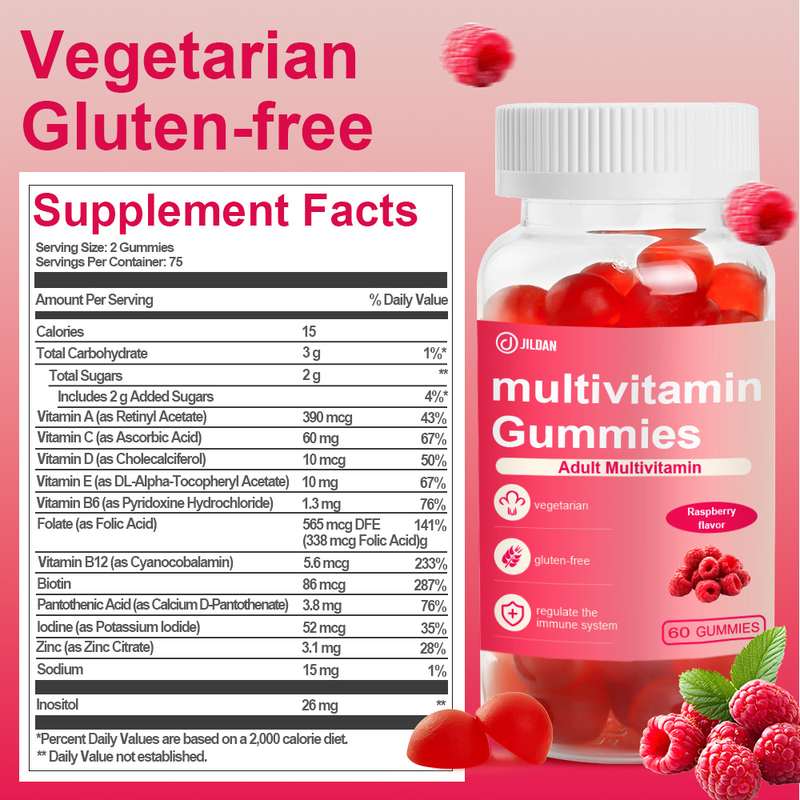
For multivitamin gummies, the Supplement Facts panel is especially important because it communicates:
- serving size;
- nutrient amounts;
- Daily Value percentages;
- other dietary ingredients where applicable.
FDA provides detailed guidance on how nutrients are declared in the Supplement Facts panel.
Artwork should therefore not be finalized until the formula is stable.
Changing a nutrient form, active level, serving count, or gummy weight late in development can require changes to:
- Supplement Facts;
- ingredient lists;
- claims;
- serving directions;
- package dimensions.
Regulatory review should be integrated into formulation development rather than treated as the final step before printing.
Health Claims Should Match the Actual Formula
Multivitamins are often marketed with broad statements about energy, immunity, metabolism, bones, beauty, or general wellness.
The problem is that these benefits cannot simply be assigned to every formula because it contains several vitamins.
The claim needs to match:
- the nutrient;
- the amount provided;
- the scientific evidence;
- the target market;
- the wording used.
Brands should therefore avoid turning multivitamin gummies into a collection of every possible health claim associated with every ingredient.
A more credible approach is to focus the communication.
For example, if the product has been developed around everyday nutritional support, the website can explain:
- who the product is designed for;
- which nutrients it contains;
- why those nutrients were selected;
- what percentage of Daily Value each serving provides;
- how the gummy should be used.
This provides useful consumer information without presenting a gummy as a substitute for a balanced diet.
The NIH explicitly emphasizes that people should obtain most nutrients from foods and beverages, while supplements may help in particular circumstances or where dietary intake is insufficient.
How to Evaluate a Multivitamin Gummies Manufacturer
Developing multivitamin gummies requires experience with both nutrient formulation and gummy processing.
Brands should ask potential manufacturers questions in several areas.
Formula Development
Ask:
- Which nutrients can realistically fit in the target gummy?
- Which nutrient forms are recommended?
- How is active loading calculated?
- Which ingredients create the biggest sensory challenges?
- Can the formula be customized for different audiences?
Gummy Technology
Ask:
- Are pectin and gelatin formats available?
- Can vegan gummies be produced?
- Can low-sugar or sugar-free formulas be developed?
- How are texture and moisture controlled?
- What flavor-masking options are available?
Quality Control
Ask:
- How are raw materials qualified?
- Which finished-product tests are performed?
- How are nutrient potencies verified?
- How are overages established?
- Is a batch COA supplied?
Stability
Ask:
- How is shelf life established?
- Which nutrient losses are monitored?
- Is the commercial package included in stability testing?
- How are aged flavor and texture evaluated?
Packaging
Ask:
- Which bottle and pouch formats are available?
- How is the appropriate container size determined?
- What moisture-protection options are available?
- Can custom labels and secondary packaging be supported?
A manufacturer should be able to explain how these areas connect rather than treating them as independent services.
What to Include in a Multivitamin Gummies RFQ
A useful RFQ should tell the manufacturer much more than “We want a multivitamin gummy.”
Include the following information.
Target Consumer
Specify:
- adults;
- women;
- men;
- children;
- older adults;
- another defined audience.
Nutrient Concept
Include:
- desired vitamins;
- desired minerals;
- approximate target levels;
- nutrients that must be excluded;
- dietary preferences.
Gummy Requirements
Specify:
- pectin or gelatin;
- gummies per serving;
- preferred flavor;
- preferred color;
- sugar requirements;
- vegan requirements.
Quality Requirements
Include:
- testing expectations;
- contaminant limits;
- nutrient potency specifications;
- COA requirements;
- stability expectations.
Packaging
Specify:
- bottle or pouch;
- gummies per package;
- label requirement;
- carton requirement;
- destination market.
Commercial Information
Include:
- initial volume;
- expected reorder volume;
- target launch period;
- required sample stage.
Brands preparing a project can review JD Nutra’s custom supplement manufacturing services and then submit formulation requirements once the consumer, nutrient profile, gummy format, and packaging concept are defined.
Common Mistakes When Developing Multivitamin Gummies
Trying to Include Too Many Nutrients
More ingredients can lead to larger servings, worse taste, and greater stability complexity.
Copying an Existing Formula
A competitor’s nutrient panel may not fit your target consumer, market, positioning, or manufacturing process.
Focusing Only on Label Percentages
High Daily Value numbers do not automatically make multivitamin gummies more useful.
Ignoring Mineral Load
Minerals can consume substantial formula space and create sensory challenges.
Selecting Flavor Before the Final Active Load
The nutrient blend can dramatically affect taste.
Assuming Sugar-Free Is an Easy Conversion
Sugar alternatives change both structure and sensory performance.
Ignoring Stability Until the Product Is Finished
Nutrient potency, color, flavor, moisture, and texture need to remain acceptable throughout shelf life.
Finalizing Artwork Too Early
Supplement Facts, serving size, and ingredient declarations depend on the final formula.
FAQ
Are Multivitamin Gummies Effective?
Multivitamin gummies can provide vitamins and minerals when formulated and used appropriately. However, product compositions vary substantially, and supplements should complement rather than replace a nutritious diet.
Are Multivitamin Gummies Better Than Tablets?
Not necessarily.
Gummies can provide a more convenient and enjoyable format, but tablets often have more physical capacity for high amounts of vitamins and minerals. Format selection should depend on nutrient targets and the intended consumer.
Can Multivitamin Gummies Contain Minerals?
Yes, but mineral loading needs careful consideration because minerals can affect flavor, color, texture, and gummy size.
Can Multivitamin Gummies Be Vegan?
Yes. Pectin-based multivitamin gummies can support vegan product concepts when all other ingredients and processing materials also meet the appropriate requirements.
Can Multivitamin Gummies Be Sugar-Free?
Yes, but sugar-free products require a formulation designed around alternative sweeteners, bulking ingredients, texture, water activity, and flavor masking.
Should Children’s Multivitamin Gummies Use the Same Formula as Adult Gummies?
No. Children’s nutrient needs and serving requirements differ from those of adults, so child-oriented products should have a dedicated nutritional and safety specification.
How Is Shelf Life Established?
Manufacturers typically use stability evaluation to assess nutrient potency and finished-product characteristics over time. The program should reflect the actual formulation, packaging, and labeled storage conditions.
What Should Brands Ask a Multivitamin Gummies Manufacturer?
Ask how the manufacturer determines nutrient forms, active loading, overages, finished-product specifications, stability, packaging, and batch-release testing.
Conclusion
Developing successful multivitamin gummies requires more than putting popular nutrients into a chewable format.
The product needs a clearly defined target consumer, a rational nutrient profile, suitable vitamin and mineral forms, realistic active loading, an appropriate gummy base, effective flavor masking, stable packaging, and a testing strategy that verifies the finished product over its intended shelf life.
For supplement brands, one of the most valuable decisions is knowing what not to add.
A focused formula that fits the consumer and remains stable can be more compelling than multivitamin gummies overloaded with nutrients simply to create a longer Supplement Facts panel.
The strongest products connect nutritional purpose with manufacturing reality.
That means deciding who the product is for, selecting nutrients for that audience, checking whether the required amounts fit the gummy format, testing the final product, and communicating its role responsibly.
If you are developing multivitamin gummies for adults, women, children, or another defined consumer group, explore JD Nutra’s gummy supplement range, review its custom supplement manufacturing services, or contact JD Nutra to discuss nutrient selection, gummy format, flavor, testing, packaging, and manufacturing requirements.