The market for private label ashwagandha gummies has moved well beyond simply putting a popular botanical into a sweet chewable format. For supplement brands, the real challenge is building a product that combines a clearly defined ashwagandha extract, realistic active loading, acceptable flavor, stable gummy texture, reliable testing, compliant labeling, and a supply chain that can support repeat orders.
That makes manufacturer selection one of the most important decisions in the project.
A supplier may be able to produce gummies, yet still lack experience with botanical extracts. Another may offer an attractive stock formula but provide limited flexibility for extract selection, active levels, packaging, or quality specifications. A third may support extensive customization but require a development process that does not fit the brand’s launch plan.
The right partner for private label ashwagandha gummies therefore depends on much more than minimum order quantity.
Before requesting samples or quotations, brands should understand what they are actually buying, which specifications need to be agreed upon, what documentation should be requested, and how the manufacturer will take the product from a small development sample to repeatable commercial production.
This buyer’s guide explains the major decisions that should be made before selecting a manufacturing partner.
Table of Contents
Why Private Label Ashwagandha Gummies Require More Supplier Due Diligence
Ashwagandha is not a simple commodity ingredient.
It is botanically identified as Withania somnifera, and commercial preparations may use the root, root-and-leaf material, or different types of extracts. Different materials can vary in concentration, phytochemical profile, sensory characteristics, and supporting evidence.
The NIH Office of Dietary Supplements notes that ashwagandha products use different preparations and that research has evaluated various extract types and doses. It also reports that evidence is more developed for some stress and sleep applications than for many of the other benefits commonly associated with the ingredient.
For brands sourcing private label ashwagandha gummies, this means that the ingredient specification needs to be established before marketing claims, dosage, and packaging are finalized.
A manufacturer should be able to explain:
- the botanical identity of the ingredient;
- the plant part used;
- whether the material is a powder or extract;
- how the extract is standardized;
- which analytical specifications apply;
- how incoming material is tested;
- whether the ingredient has been used successfully in gummies before.
If these questions cannot be answered clearly, an attractive sample is not enough to qualify the supplier.
Stock Formula or Custom Formula: Choose the Right Development Route
One of the first decisions in a private label ashwagandha gummies project is whether to begin with an existing formula or create a custom product.
Both approaches can be appropriate.
Stock Private Label Formula
A stock formula may be useful for brands that want a relatively straightforward launch.
Potential advantages include:
- a formula that has already been developed;
- fewer rounds of formulation work;
- established manufacturing parameters;
- existing flavor and texture systems;
- simpler project management.
However, brands should not assume that “stock” means identical terms across manufacturers.
Ask what can actually be customized.
Some stock private label ashwagandha gummies may allow changes to packaging and branding but not to the active ingredient. Others may permit adjustments to flavor, color, serving size, or supporting ingredients.
You should also determine whether the existing formula matches your intended market rather than selecting it solely because it is convenient.
Custom Formula
A custom formula provides more control over:
- extract selection;
- active amount;
- gummy base;
- flavor;
- sweetener system;
- supporting ingredients;
- serving size;
- positioning.
The trade-off is greater development complexity.
Custom private label ashwagandha gummies may require additional feasibility assessment, prototype development, flavor adjustment, stability planning, ingredient sourcing, and packaging coordination.
For established brands seeking clear product differentiation, that extra development work can be worthwhile.
The key is deciding whether customization provides meaningful commercial value rather than adding complexity simply to make the product different.
Define the Ashwagandha Specification Before Comparing Manufacturers
A quotation is difficult to compare if every manufacturer is quoting a different raw material.
When requesting private label ashwagandha gummies, define the ashwagandha ingredient as precisely as possible.
At minimum, discuss:
- Withania somnifera identity;
- root, leaf, or specified combination;
- extract or botanical powder;
- extract ratio, if relevant;
- standardized constituents;
- carrier materials;
- target amount per serving;
- testing requirements.
This is especially important when comparing apparently similar quotations.
A highly concentrated extract and a lower-concentration botanical powder may both be called “ashwagandha,” yet they can behave very differently in a gummy.
A stronger extract may allow a lower raw-material weight, potentially making flavor masking easier. A different extract may have a stronger botanical taste or darker color. Plant part and extraction process may also affect how well the finished ingredient aligns with the evidence the brand plans to reference.
For private label ashwagandha gummies, apples-to-apples supplier comparison requires an agreed ingredient specification.
Without it, you may be comparing completely different products.
Active Loading Determines Whether the Gummy Concept Is Realistic
Once the ingredient is selected, the next question is how much needs to be delivered per serving.
This is where many private label ashwagandha gummies projects become technically difficult.
Gummies already contain the ingredients required to create their structure, texture, sweetness, acidity, and flavor. Active botanical material must fit into this matrix without making the gummy excessively large, bitter, hard, soft, sticky, or unstable.
The manufacturer should evaluate:
- target milligrams per serving;
- concentration of the selected extract;
- gummies per serving;
- individual gummy weight;
- total botanical solids;
- impact on texture;
- impact on flavor.
If the proposed formula cannot reasonably fit into two gummies, there are several possible solutions.
The project may use a more concentrated extract, increase the number of gummies per serving, increase gummy size, or adjust the active target where scientifically and commercially appropriate.
What should not happen is forcing an unrealistic formula into a predetermined gummy size simply because the packaging design has already been completed.
For this reason, private label ashwagandha gummies should go through technical feasibility review before label artwork begins.
Flavor Is One of the Best Ways to Evaluate Manufacturer Experience
Ashwagandha can have an earthy, bitter, and persistent botanical flavor.
This makes flavor development particularly useful when evaluating manufacturers.
A manufacturer experienced with private label ashwagandha gummies should understand that simply adding a stronger fruit flavor may not solve the problem.
Successful masking can involve a combination of:
- sweetness;
- acidity;
- flavor family;
- botanical concentration;
- bitterness management;
- extract selection;
- gummy texture.
Ask potential manufacturers whether they have previously worked with bitter botanical extracts and how the sensory process is managed.
Ideally, evaluate multiple prototypes rather than accepting the first sample.
Also ask whether sensory evaluation continues during stability testing. A fresh gummy may taste good immediately after production yet develop stronger botanical notes as it ages.
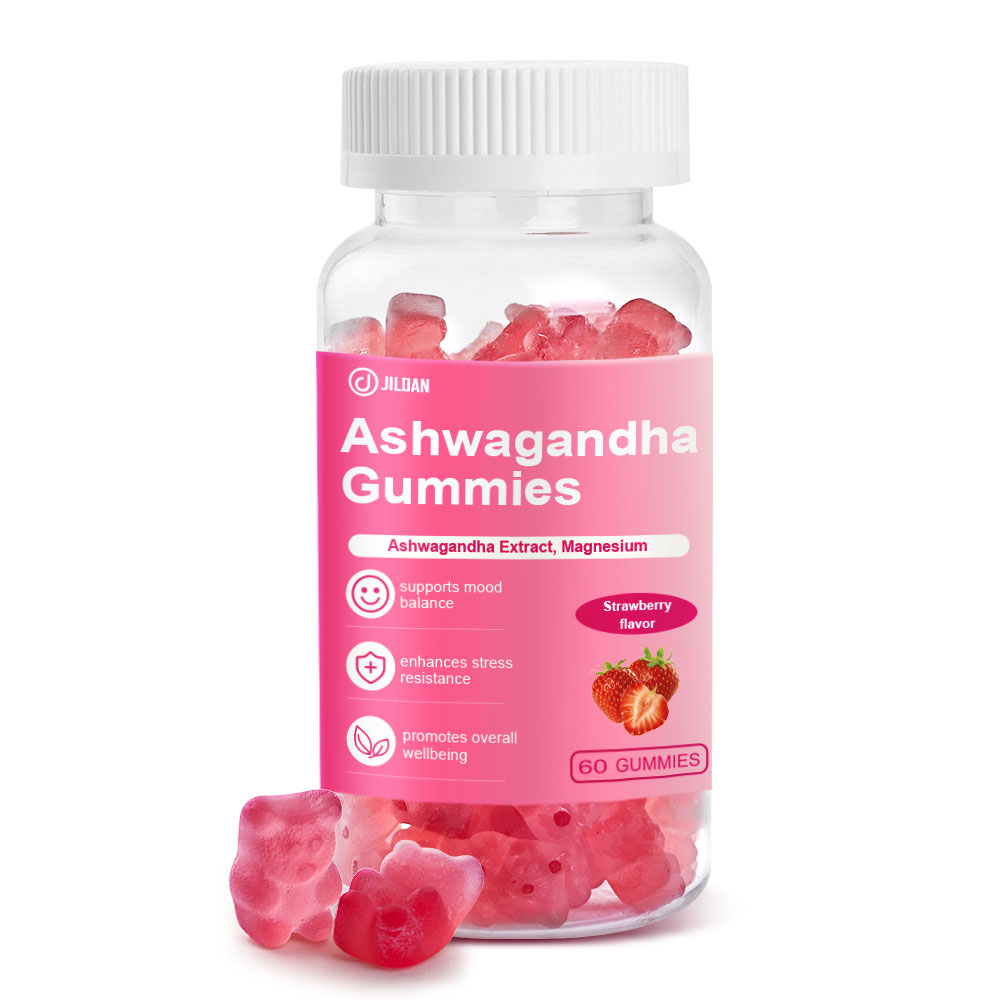
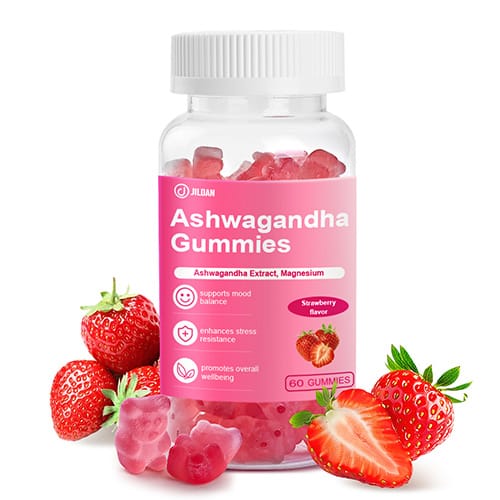
Brands can review JD Nutra’s existing Ashwagandha Gummies product format when preparing an initial brief for a private label or custom project.
Pectin, Gelatin, and Sugar Strategy Should Be Decided Early
The gummy base affects both manufacturing and market positioning.
For private label ashwagandha gummies, common decisions include whether the product should use pectin or gelatin and whether the formula should be conventional, reduced-sugar, or sugar-free.
Pectin Gummies
Pectin can support plant-based and vegan product concepts.
However, it requires careful control of formulation parameters such as acidity, solids, moisture, and processing conditions.
Botanical extracts can affect that balance.
Gelatin Gummies
Gelatin produces a different chew and process profile and may be appropriate for brands that do not require a vegetarian or vegan product.
Reduced-Sugar and Sugar-Free Gummies
Sugar does much more than provide sweetness.
It contributes to structure, solids, water activity, texture, and flavor.
Removing or reducing sugar may require a different formulation system rather than a simple ingredient substitution.
For private label ashwagandha gummies, sugar strategy also affects bitterness masking because sweetness plays an important role in balancing the botanical taste.
A manufacturer should therefore understand these requirements before prototype development begins.
MOQ Should Be Evaluated as Part of the Entire Project
MOQ is important, particularly for brands launching a new product, but it should not be evaluated in isolation.
A manufacturer may quote a relatively accessible MOQ for a stock formula but require a different quantity for custom ingredients, flavors, bottles, labels, cartons, or printed packaging.
When evaluating MOQ for private label ashwagandha gummies, clarify whether it applies to:
- finished bottles;
- kilograms of gummy mass;
- a full production batch;
- custom packaging;
- custom ingredients;
- custom flavors.
Also ask what happens after the first order.
Important questions include:
- Does the MOQ change for repeat production?
- Can custom packaging inventory be carried forward?
- What happens to unused labels or bottles?
- Are raw materials dedicated to the project?
- Can the manufacturer support larger repeat orders?
- How far in advance should repeat production be booked?
The lowest initial MOQ is not always the best long-term option.
A supplier that can support a first launch but cannot scale reliably can create a much larger problem when demand increases.
Sample Development Should Simulate the Final Product
Samples are one of the most important stages in sourcing private label ashwagandha gummies.
However, a visually appealing sample only tells part of the story.
Before approving it, confirm whether the prototype uses:
- the intended ashwagandha extract;
- the intended active amount;
- the intended gummy base;
- the intended flavor system;
- the intended color;
- the intended sweeteners.
If a sample uses substitute materials merely to demonstrate texture or flavor, that should be clearly disclosed.
Otherwise, the commercial batch may behave differently from the approved prototype.
A useful sample evaluation should cover:
| Area | What to Check |
|---|---|
| Appearance | Color, uniformity, surface finish |
| Aroma | Botanical notes, flavor freshness |
| Flavor | Sweetness, acidity, bitterness, aftertaste |
| Texture | Bite, chew, firmness, stickiness |
| Serving | Gummy size and number per serving |
| Active Load | Matches intended product concept |
| Packaging Fit | Suitable for selected bottle or pouch |
For custom private label ashwagandha gummies, keep an approved reference sample when possible so that future commercial batches can be compared against the agreed sensory target.
Ask Exactly What Raw Material Testing Is Performed

Quality claims such as “premium,” “high quality,” and “lab tested” tell a procurement team very little.
A manufacturer should be able to explain which tests are actually performed.
For the ashwagandha component of private label ashwagandha gummies, relevant controls may include:
- botanical identity;
- marker or constituent assay;
- moisture;
- microbiological limits;
- heavy metals;
- pesticide residues where appropriate;
- residual solvents where relevant.
The exact panel should reflect the ingredient, source, processing method, destination market, and agreed specification.
The key question is:
How does the manufacturer confirm that the material entering production matches the ingredient that was approved?
This should be supported by documentation rather than only supplier marketing materials.
Brands should also clarify whether the manufacturer relies entirely on the ingredient supplier’s COA or performs verification through internal or qualified third-party testing.
Finished-Product Testing Matters as Much as Ingredient Testing
An approved botanical ingredient still has to survive the gummy manufacturing process.
This is why private label ashwagandha gummies should have a finished-product specification.
Depending on the formula, the specification may cover:
- appearance;
- gummy weight;
- active content;
- microbiological limits;
- relevant contaminant limits;
- moisture-related characteristics;
- packaging integrity.
A representative batch COA can help buyers understand what will actually be reported after commercial production.
Ask the manufacturer:
- Which tests appear on the finished-product COA?
- Does the COA show actual numerical results where appropriate?
- Which laboratory performs the testing?
- Who reviews and releases the batch?
- Are retained samples maintained?
- How are out-of-specification results handled?
These questions provide a much clearer view of manufacturing quality than a list of certification logos.
Stability Testing Protects the Product After Launch
Private label sourcing does not end when the production line stops.
The product needs to remain within specification during storage, shipping, retail, and consumer use.
For private label ashwagandha gummies, stability may involve monitoring:
- active constituents;
- gummy hardness;
- moisture;
- stickiness;
- flavor;
- aroma;
- color;
- microbiological quality;
- packaging performance.
Brands should ask how the stated shelf life is established.
Useful questions include:
- Has this exact formula been evaluated?
- Is the final package included in the stability program?
- Which conditions are used?
- What attributes are tested?
- Are both accelerated and real-time observations available where appropriate?
- What happens if the flavor or texture changes before the active ingredient does?
The commercial package matters because gummy stability can be affected by moisture and environmental exposure.
Changing packaging after stability work begins should therefore be evaluated carefully.
Packaging Can Change MOQ, Lead Time, and Stability
Packaging is often one of the largest sources of project complexity.
Standard bottles with pressure-sensitive labels may support a simpler launch, while custom-molded containers, printed pouches, cartons, and special closures can introduce additional supply-chain steps.
For private label ashwagandha gummies, packaging should be evaluated for:
- moisture protection;
- closure integrity;
- gummy count;
- headspace;
- desiccant requirements where appropriate;
- label area;
- ecommerce durability;
- shipping environment.
It should also match the brand’s intended distribution channel.
A premium retail package may have different requirements from an ecommerce-first product designed to move through parcel networks.
When requesting a quotation, separate the gummy manufacturing requirements from packaging options so you can understand which decisions are driving MOQ and lead time.
JD Nutra’s custom supplement manufacturing services cover formulation and dosage-form development as well as packaging-related project support, making the service page a useful internal reference when planning the entire product rather than only the gummy itself.
Lead Time Should Be Broken Into Stages
A single statement such as “production takes several weeks” is not detailed enough for launch planning.
The timeline for private label ashwagandha gummies can include:
- product brief review;
- ingredient sourcing;
- prototype development;
- sample approval;
- packaging confirmation;
- artwork review;
- packaging procurement;
- production scheduling;
- manufacturing;
- testing and batch release;
- shipment.
Custom formulas generally require more development work than existing stock formulas.
Brands should ask for milestone-based planning rather than one estimated completion date.
This helps identify what is actually controlling the schedule.
Sometimes the longest lead-time item is not the gummy manufacturing itself. It may be a custom extract, bottle, cap, printed pouch, or carton.
Planning these components together reduces the risk of finished gummies waiting for packaging—or packaging arriving before the formula has been approved.
Label and Claims Review Should Happen Before Packaging Is Printed
Packaging artwork for private label ashwagandha gummies should not be finalized until the product specification is stable.
FDA guidance identifies five major required statements on U.S. dietary supplement labels: statement of identity, net quantity, nutrition labeling, ingredient list, and the name and place of business of the manufacturer, packer, or distributor.
The Supplement Facts panel also depends on the final:
- serving size;
- active amount;
- other ingredients;
- number of gummies per serving.
Claims require particular attention.
Under FDA rules, structure/function claims need appropriate substantiation, must be truthful and not misleading, and carry specific notification and disclaimer requirements. They cannot turn a dietary supplement into a product claiming to diagnose, treat, cure, or prevent disease.
This is especially relevant to private label ashwagandha gummies because consumers frequently associate the ingredient with stress and sleep.
Authoritative U.S. health information currently describes some evidence for stress and sleep while also emphasizing limitations in the evidence and important safety considerations.
Brands should therefore avoid copying aggressive claims from marketplace listings.
Claims should be reviewed against the actual extract, dosage, evidence, and intended market.
Safety Information Should Be Part of the Product Brief
Ashwagandha is widely used, but it is not appropriate to market it as universally suitable.
NIH and NCCIH resources note that short-term use has been studied more extensively than long-term use and identify potential concerns including gastrointestinal effects, drowsiness, possible liver injury, thyroid effects, medication interactions, pregnancy, breastfeeding, autoimmune conditions, and certain other populations.
That means brands developing private label ashwagandha gummies should discuss:
- intended age group;
- serving directions;
- required warnings;
- excluded populations;
- target-market rules;
- customer-service guidance.
Safety considerations should be incorporated before artwork approval, not added as an afterthought.
A responsible manufacturer may support formulation and documentation, but the brand should still ensure that regulatory and scientific review is appropriate for the markets where the product will be sold.
How to Compare Private Label Ashwagandha Gummies Manufacturers
A structured scorecard makes supplier comparison much more useful.
Consider evaluating manufacturers across these areas:
| Area | Questions to Ask |
| Botanical Expertise | Can the supplier document species, plant part, extract, and standardization? |
| Gummy Capability | Does the facility routinely manufacture botanical gummies? |
| Formula Options | Stock, semi-custom, and fully custom? |
| Flavor Development | Can bitterness and botanical aftertaste be managed? |
| Testing | What is tested on incoming material and finished batches? |
| Stability | How is shelf life established? |
| Packaging | Which formats and barrier options are available? |
| Documentation | COA, specifications, batch records, certificates? |
| Regulatory Support | Can label and claims requirements be supported? |
| Scale | Can repeat production grow with the brand? |
| Communication | Is there one accountable project contact? |
The strongest private label ashwagandha gummies supplier is usually not determined by a single factor.
It is the supplier whose technical capabilities, documentation, communication, quality system, and commercial model best fit the product you want to build.
Red Flags to Watch for Before Placing an Order
Certain warning signs deserve additional investigation.
The Manufacturer Cannot Identify the Ashwagandha Material
“Premium ashwagandha” is not a specification.
You should know the botanical identity, plant part, extract type, and relevant standardization.
Every Formula Can Apparently Be Made Immediately
Complex custom private label ashwagandha gummies usually require feasibility assessment.
A manufacturer that never raises technical limitations may not be evaluating the project deeply enough.
The Sample Does Not Use the Final Ingredient
Prototype substitutions should be disclosed.
The Manufacturer Cannot Explain the Finished COA
Quality teams should be able to explain which tests are performed and how batches are released.
Shelf Life Is Given Without Supporting Rationale
Ask how the shelf-life period was established for the actual formula and package.
Aggressive Medical Claims Are Encouraged
A supplier suggesting disease-treatment or guaranteed health claims creates additional risk for the brand.
The MOQ Is Clear but Everything Else Is Vague
MOQ is only one element of a commercial project. Specifications, quality, packaging, timeline, and repeatability matter just as much.
What to Include in Your RFQ
A detailed RFQ will make quotations for private label ashwagandha gummies much easier to compare.
Include the following information.
Product Concept
Specify:
- target consumer;
- product positioning;
- destination market;
- main sales channel.
Ashwagandha Requirements
Include:
- preferred plant part;
- extract type;
- standardization;
- amount per serving;
- documentation requirements.
Gummy Format
Specify:
- pectin or gelatin;
- vegan requirement;
- gummies per serving;
- flavor;
- color;
- conventional, low-sugar, or sugar-free.
Additional Ingredients
If you want a blend, identify any proposed:
- vitamins;
- minerals;
- amino acids;
- botanical ingredients;
- other functional ingredients.
Quality Requirements
Include:
- incoming material specifications;
- finished-product testing;
- contaminant limits;
- COA expectations;
- stability requirements.
Packaging
Specify:
- bottle or pouch;
- gummy count;
- label;
- carton;
- special closure or barrier requirements.
Commercial Requirements
Include:
- expected initial volume;
- repeat-order forecast;
- target launch timing;
- sample requirements.
If the project is already defined, you can contact JD Nutra with these requirements to discuss formulation, sampling, testing, packaging, and production feasibility.
FAQ
What are private label ashwagandha gummies?
Private label ashwagandha gummies are gummy dietary supplements manufactured by a third-party supplement producer and sold under another company’s brand. Depending on the manufacturer, brands may choose an existing formula or develop a customized product.
Can the ashwagandha extract be customized?
Yes, depending on the manufacturer’s capabilities. Custom private label ashwagandha gummies may allow changes to plant part, extract specification, active amount, gummy base, flavor, sweetener system, and supporting ingredients.
Are pectin ashwagandha gummies available?
Pectin can be used for plant-based gummy formulations. The complete formula, including flavors, colors, coatings, and other ingredients, should be reviewed if vegan positioning is required.
Can private label ashwagandha gummies be sugar-free?
Sugar-free formulations are possible, but they require a gummy system designed around alternative sweeteners and bulking ingredients. Texture, water activity, flavor masking, and stability all need to be evaluated.
What testing should a brand request?
The appropriate testing plan depends on the ingredient, formula, and market. It may address botanical identity, standardized constituents, microbiological quality, heavy metals, other relevant contaminants, and finished-product specifications.
How should brands compare MOQ?
Compare what the MOQ actually includes. Formula type, custom ingredients, flavor, bottles, labels, printed packaging, and cartons can each have different minimum requirements.
Should a brand choose a stock or custom formula?
Stock private label ashwagandha gummies may suit brands prioritizing a simpler launch, while custom formulations offer more control over differentiation. The better route depends on product strategy, technical requirements, and launch plans.
What is the most important question to ask the manufacturer?
Ask the manufacturer to explain how the approved botanical specification, gummy formulation, testing program, packaging, and finished-product release criteria will remain consistent from the first commercial batch through repeat orders.
Conclusion
Sourcing private label ashwagandha gummies should not begin and end with MOQ.
A successful project requires a defined Withania somnifera specification, realistic active loading, appropriate gummy technology, effective flavor masking, reliable raw-material and finished-product testing, suitable packaging, stability planning, accurate labeling, and a manufacturing partner capable of reproducing the product consistently.
The most useful supplier is therefore not simply the company that sends the fastest sample.
It is the manufacturer that can explain why the formula is technically feasible, document what goes into it, define how quality is measured, identify potential limitations before production, and support the product as order volumes grow.
For brands developing private label ashwagandha gummies, this approach also creates a stronger competitive position. Instead of relying only on a familiar ingredient and attractive packaging, the brand can build a product around transparent specifications, deliberate formulation choices, tested quality, and responsible communication.
You can explore JD Nutra’s Ashwagandha Gummies, review its broader gummy supplement range, or learn about custom supplement manufacturing services before preparing your product brief.
When your extract requirements, serving target, gummy format, packaging, and target market are ready, contact JD Nutra to discuss the next stage of development.