Choosing a multivitamin gummies manufacturer is not simply a matter of finding a factory that can produce attractive gummies with the right flavor, shape, and packaging. Multivitamin gummies combine multiple active ingredients with very different chemical and physical characteristics, making consistent commercial production considerably more demanding than the finished product may suggest.
Vitamins can differ in their sensitivity to heat, moisture, oxygen, light, and pH. Minerals can contribute metallic flavors, increase active loading, alter texture, or interact with the gummy matrix. Some nutrients can lose potency during manufacturing or storage, while others require particularly careful mixing because they are present at very low levels.
This means the most important question for a supplement brand is not whether a multivitamin gummies manufacturer can produce an impressive laboratory sample.
The better question is whether the manufacturer can repeatedly produce a finished gummy that meets agreed specifications for nutrient potency, weight, microbiological quality, physical characteristics, packaging, and labeling throughout the intended shelf life.
For products intended for the United States, FDA dietary supplement Current Good Manufacturing Practice requirements under 21 CFR Part 111 establish controls covering components, manufacturing, packaging, labeling, quality control, records, and finished-product specifications. Brands comparing suppliers should understand these principles before approving commercial production. See the FDA Dietary Supplement CGMP Guidance.
A qualified multivitamin gummies manufacturer should therefore be able to explain not only what the product contains, but also how those ingredients are controlled from incoming raw material through finished-batch release.
Start With a Finished-Product Specification
One of the first things a professional multivitamin gummies manufacturer should establish is a detailed finished-product specification.
This specification acts as the technical definition of what both parties have agreed to manufacture.
Depending on the product, it may define:
- vitamin and mineral forms;
- target nutrient amounts;
- serving size;
- number of gummies per serving;
- individual gummy weight;
- flavor;
- color;
- appearance;
- texture;
- microbiological limits;
- relevant contaminant limits;
- packaging configuration;
- storage conditions;
- labeling requirements.
Without a clear specification, future production becomes vulnerable to misunderstandings.
For example, a brand may expect one form of vitamin B12 while purchasing uses another. A mineral source may change and affect taste. A flavor system may be modified during a repeat order. Packaging may be substituted without considering moisture protection.
A strong multivitamin gummies manufacturer should treat these changes as controlled technical decisions rather than routine purchasing substitutions.
FDA’s dietary supplement CGMP framework requires manufacturers to establish specifications for components, in-process production, finished batches, and packaging and labeling. These controls exist to help ensure that the finished dietary supplement is manufactured and labeled according to the master manufacturing record. The requirements are explained in the FDA CGMP guidance for dietary supplements.
Brands that are still defining the nutrient profile can first review JD Nutra’s Multivitamin Gummies Formulation Guide before moving into supplier qualification.
A Multivitamin Gummies Manufacturer Should Control Raw Materials Before Production
A finished gummy cannot be more consistent than the ingredients used to manufacture it.
A multivitamin gummies manufacturer may handle many different components within one product, including vitamins, minerals, acids, sweeteners, flavors, colors, gelling agents, coatings, and processing aids.
Each critical ingredient should have an established specification.
For vitamin and mineral components, useful supplier questions include:
- What exact nutrient form is used?
- Who supplies the ingredient?
- How is that supplier qualified?
- What incoming testing is performed?
- How is ingredient identity verified?
- How is potency confirmed?
- What storage conditions are required?
- How are supplier or ingredient changes controlled?
These questions matter because two ingredients that provide the same named vitamin or mineral do not necessarily behave identically.
Raw materials can differ in:
- nutrient concentration;
- carriers;
- particle size;
- flow;
- solubility;
- stability;
- color;
- taste.
A multivitamin gummies manufacturer should therefore control ingredients against approved specifications rather than purchasing solely by ingredient name.
The FDA dietary supplement CGMP guidance specifically addresses component specifications and identity verification as part of dietary supplement manufacturing controls.
For a brand planning repeat production, one useful question is:
Will future batches use materials controlled against the same approved specifications as the original commercial batch?
The answer provides far more information about long-term product consistency than generic descriptions such as “premium ingredients.”
Nutrient Form Matters More Than the Front-Label Name
Consumers might see vitamin D, vitamin B12, folate, zinc, vitamin E, or vitamin C on a label.
The multivitamin gummies manufacturer, however, needs to work with specific ingredient forms.
Those forms can affect:
- stability;
- solubility;
- compatibility;
- flavor;
- color;
- process performance;
- label declaration.
A nutrient form that performs effectively in a tablet or capsule is not automatically the best choice for an acidic, moisture-containing gummy system.
The manufacturer should therefore be able to explain why each material was selected.
Useful questions include:
- Why is this nutrient form suitable for gummies?
- Does the supplier have stability information?
- Is the material sensitive to heat or moisture?
- Does it interact with other nutrients?
- Will it change taste or color?
- Does it require a formulation overage?
The NIH Office of Dietary Supplements Multivitamin/Multimineral Fact Sheet notes that multivitamin/mineral supplements vary substantially in composition and that formulations for children, adults, pregnant women, and older adults often contain different nutrient amounts.
This flexibility gives brands room to differentiate, but it also means a multivitamin gummies manufacturer should be developing the formula around the intended customer rather than copying a generic vitamin blend.
Nutrient Uniformity Is a Critical Manufacturing Challenge
Multivitamin formulas frequently contain ingredients at dramatically different quantities.
One nutrient may be present in milligrams while another is present in micrograms.
This creates an important production challenge for a multivitamin gummies manufacturer: ensuring that low-dose nutrients remain evenly distributed throughout a large commercial batch.
Uniformity can be influenced by:
- particle size;
- particle density;
- premixing;
- mixing sequence;
- mixing time;
- temperature;
- batch size;
- ingredient addition order;
- settling during processing.
Very low-dose vitamins may require a carefully prepared premix before being introduced into the main gummy batch.
If a small amount of active is added directly to a large batch without an appropriate dispersion strategy, achieving consistent distribution can become more difficult.
A professional multivitamin gummies manufacturer should be able to explain:
- how micronutrients are premixed;
- how ingredient distribution is controlled;
- which in-process checks are performed;
- how finished-product samples are collected;
- how nutrient potency is verified.
This is especially important for complex formulas containing many vitamins and trace minerals.
An attractive gummy is not a successful multivitamin if nutrient delivery varies significantly from unit to unit.
How a Multivitamin Gummies Manufacturer Should Manage Nutrient Overages
Overage is one of the most important technical concepts brands should understand.
Some vitamins may lose potency during manufacturing or storage.
To account for expected losses, a multivitamin gummies manufacturer may intentionally formulate certain nutrients above the amount declared on the label so that the product can remain within specification through its intended shelf life.
However, overage should not mean adding an arbitrary amount “just to be safe.”
FDA’s dietary supplement CGMP guidance addresses intentional overages in master manufacturing records and states that an overage should be limited to the amount necessary to meet the declared quantity of a dietary ingredient. See the FDA dietary supplement manufacturing guidance.
Factors influencing the overage strategy can include:
- process loss;
- ingredient sensitivity;
- storage conditions;
- shelf-life target;
- packaging;
- stability results.
Different nutrients can require different approaches.
A relatively stable mineral may behave very differently from a vitamin that is sensitive to heat, oxygen, or moisture.
When evaluating a multivitamin gummies manufacturer, ask:
How was the overage for each sensitive nutrient determined?
The manufacturer should be able to provide a technical rationale rather than applying the same percentage automatically across the entire formula.
Minerals Create Different Problems From Vitamins
Minerals deserve separate attention.
Depending on the product, a multivitamin gummies manufacturer might work with zinc, selenium, iodine, iron, calcium, magnesium, or other minerals.
Minerals can influence:
- active loading;
- gummy size;
- taste;
- texture;
- color;
- formulation compatibility.
Some minerals require considerably more raw-material mass than vitamins.
This is one reason gummies do not always contain the same mineral quantities commonly found in larger tablets or powders.
The NIH Office of Dietary Supplements notes that basic multivitamin/mineral products can contain relatively small quantities of bulky nutrients such as calcium, magnesium, and potassium.
For supplement brands, that creates an important product-development principle:
The formula needs to respect the physical limits of the dosage form.
A capable multivitamin gummies manufacturer should be willing to explain when a requested nutrient amount creates problems with gummy size, flavor, texture, or serving count.
Trying to force tablet-level mineral loading into a small gummy may create an inferior product.
Technical honesty during feasibility assessment can prevent repeated prototype failures later.
In-Process Quality Controls Matter Before Final Testing
Finished-product testing cannot correct every manufacturing problem.
A qualified multivitamin gummies manufacturer should monitor critical process parameters while the batch is being produced.
Depending on the gummy platform, these can include:
- component weighing;
- ingredient verification;
- mixing;
- temperature;
- pH;
- soluble solids;
- gummy deposit weight;
- drying or conditioning;
- appearance;
- yield.
These measurements allow production teams to identify deviations before an entire batch reaches finished-product testing.
Gummy weight is particularly relevant because a change in deposit weight can influence the amount of vitamins and minerals delivered in each unit.
Moisture and solids can also influence:
- texture;
- stickiness;
- drying behavior;
- long-term physical stability.
FDA’s dietary supplement CGMP guidance requires manufacturers to establish in-process specifications at points where control is necessary to help ensure the quality of the finished supplement. See the official FDA guidance.
When auditing a multivitamin gummies manufacturer, brands should therefore ask which production parameters are considered critical and how they are documented.
A specific answer is much more valuable than simply hearing that the factory “follows SOPs.”
Finished-Product Testing Should Match the Approved Specification
A Certificate of Analysis is useful only if buyers understand what was actually tested.
A multivitamin gummies manufacturer should be able to explain which finished-product characteristics need verification before commercial release.
Depending on the formulation, the finished specification may address:
| Test Area | Why It Matters |
|---|---|
| Appearance | Confirms expected visual quality |
| Gummy Weight | Helps maintain serving consistency |
| Vitamin Potency | Verifies selected vitamin specifications |
| Mineral Content | Confirms relevant mineral targets |
| Microbiology | Supports microbiological quality |
| Contaminants | Verifies agreed contaminant specifications |
| Moisture | Can influence texture and stability |
| Packaging | Confirms the finished packaged product |
The exact testing strategy depends on the formula, analytical methods, regulatory requirements, quality system, and product risk.
The important point is that the multivitamin gummies manufacturer should be able to explain how finished-product compliance is demonstrated.
FDA’s 21 CFR Part 111 framework addresses finished-batch specifications and the quality-control responsibilities associated with product release. The FDA compliance guide provides additional detail.
Ask:
- Which nutrients are tested?
- Which methods are used?
- What are the acceptance limits?
- Is testing performed internally or externally?
- Who reviews the results?
- Who releases the batch?
- What happens if a specification is not met?
A manufacturer that can answer these questions clearly offers much greater transparency.
How to Read a COA From a Multivitamin Gummies Manufacturer
A useful COA should relate to a specific production lot.
It may contain:
- product name;
- batch number;
- testing date;
- specification;
- test method;
- acceptance criteria;
- actual result;
- quality approval.
Brands should determine whether the document refers to:
- incoming ingredients;
- bulk gummy material;
- finished gummies;
- finished packaged product.
These are not necessarily interchangeable.
For quantitative tests, actual numerical results can provide more information than a generic “Pass” statement.
A multivitamin gummies manufacturer should also be able to connect the COA with the corresponding manufacturing records.
If a quality issue appears later, the manufacturer should be able to determine:
- which ingredient lots were used;
- when the product was manufactured;
- which equipment was involved;
- which tests were performed;
- who reviewed the results;
- who approved release.
The FDA CGMP guidance describes detailed batch production records that document components, manufacturing steps, packaging, labeling, results, and quality-control review.
This level of traceability becomes increasingly important as production volume grows.
Stability Testing Should Include Potency and Consumer Experience
Shelf life is not only a chemical question.
A multivitamin gummies manufacturer also needs to consider whether the product remains physically acceptable throughout storage.
Gummies can change over time.
They may:
- harden;
- soften;
- absorb moisture;
- become sticky;
- change color;
- lose flavor;
- develop undesirable aroma.
At the same time, certain vitamins may gradually lose potency.
This creates two possible types of failure.
The first is chemical: the gummy still looks acceptable but one or more nutrients fall outside specification.
The second is physical: the nutrient profile remains within specification but the product becomes unpleasant to consume.
A useful stability program for multivitamin gummies may therefore consider:
- selected nutrient potency;
- moisture;
- texture;
- appearance;
- flavor;
- aroma;
- microbiological quality;
- packaging performance.
The multivitamin gummies manufacturer should be able to explain the technical basis used to support the intended shelf life.
The objective is not simply to produce a stable laboratory result. The product must remain acceptable in its final commercial package under the intended storage conditions.
Packaging Is Part of the Quality-Control System
Packaging should not be treated as a purely visual decision.
For a multivitamin gummies manufacturer, the package is part of the finished-product stability strategy.
Packaging can influence:
- moisture exposure;
- oxygen exposure;
- light exposure;
- texture;
- nutrient stability;
- transportation durability.
A bottle that looks attractive may not automatically provide the best barrier protection.
Brands should ask:
- What package is recommended for this formula?
- Does the container provide sufficient moisture protection?
- Is a desiccant appropriate?
- Is there excessive headspace?
- How does the closure perform?
- Will the packaging be used during stability evaluation?
- How might warm or humid distribution conditions affect the gummy?
Repeated opening also matters.
A consumer may open the same bottle every day for several weeks, exposing the product repeatedly to ambient air and humidity.
A capable multivitamin gummies manufacturer should therefore evaluate packaging based on product protection as well as branding.
Brands exploring multiple gummy products can review JD Nutra’s gummy supplement product range when considering whether several SKUs can share compatible packaging platforms.
Different Consumer Groups Need Different Formulations
A general adult formula should not automatically become a children’s formula simply by changing the recommended serving.
According to the NIH Office of Dietary Supplements, multivitamin/mineral formulations often differ according to age, sex, and life stage.
That means a multivitamin gummies manufacturer should know the target consumer before confirming the formula.
For children’s products, development can involve additional consideration of:
- nutrient amounts;
- serving directions;
- gummy size;
- flavor;
- packaging;
- accidental overconsumption.
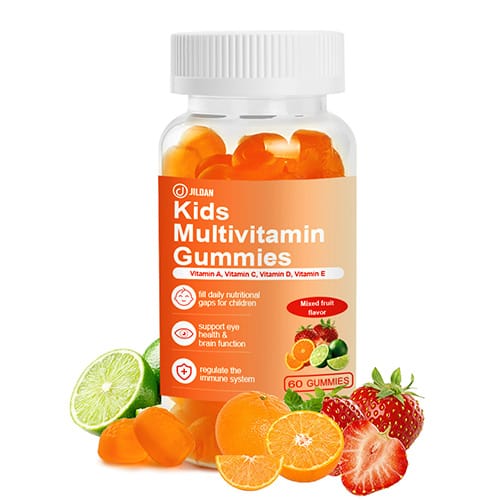
JD Nutra’s existing Kids Multivitamin Gummies illustrate how a children’s product can be treated as a distinct formulation rather than a reduced adult formula.
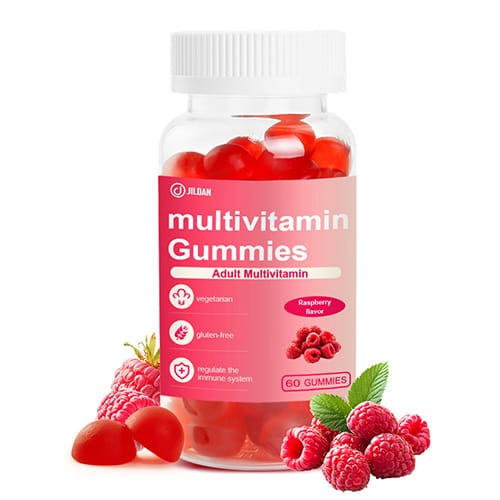
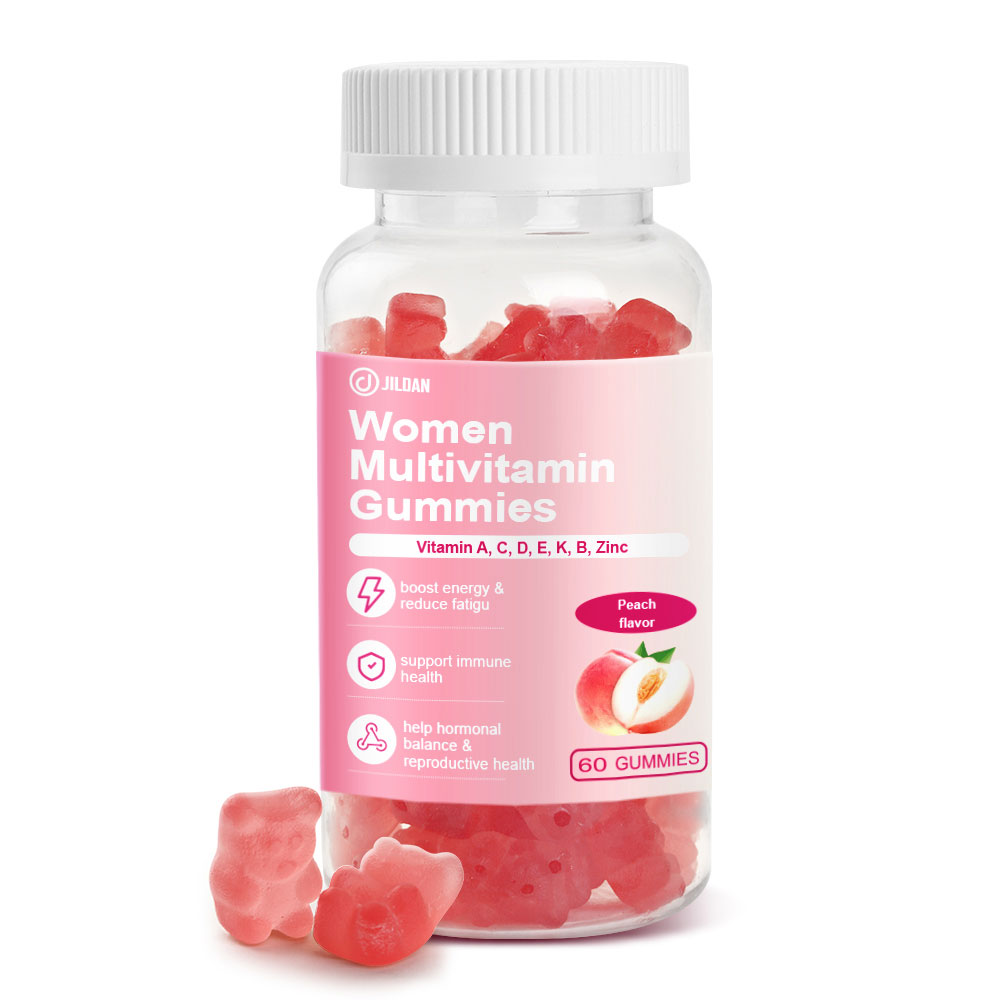
Women’s products may also have different nutrient priorities when there is an appropriate nutritional basis. Brands exploring this direction can review JD Nutra’s Women Multivitamin Gummies as another product-development reference.
The purpose of segmentation should be meaningful formulation—not simply different packaging colors.
Supplement Facts Accuracy Depends on Manufacturing Accuracy
For products sold in the United States, the Supplement Facts panel needs to match the actual finished product.
FDA’s dietary supplement nutrition-labeling guidance states that the Supplement Facts panel identifies the serving size and quantities of dietary ingredients and provides specific formatting and declaration requirements. See the FDA Dietary Supplement Nutrition Labeling Guide.
This creates a direct relationship between manufacturing and labeling.
If the serving size changes, the Supplement Facts panel can change.
If the nutrient form changes, ingredient declarations may require review.
If the active amount changes, the declared quantity and percentage Daily Value may change.
A multivitamin gummies manufacturer should therefore coordinate:
- approved formula;
- master manufacturing record;
- serving size;
- ingredient declaration;
- Supplement Facts;
- packaging artwork.
FDA’s broader Dietary Supplement Labeling Guide provides additional guidance on U.S. dietary supplement labeling requirements.
Artwork should not be printed while the formula is still changing.
This is particularly important for custom multivitamin gummies because product development may involve several rounds of nutrient, flavor, serving-size, and packaging adjustments.
Claims Need to Match the Actual Multivitamin Formula
A long vitamin list can tempt brands to attach numerous health claims to a product.
That approach can create regulatory and credibility problems.
A multivitamin gummies manufacturer may support product development, but the claims used by the brand still need to be appropriate for the finished formula and target market.
The NIH Office of Dietary Supplements notes that multivitamin/mineral supplements can help increase nutrient intake when dietary intake is insufficient, but available research does not justify treating a multivitamin as a universal solution for preventing chronic disease.
That distinction should influence content strategy.
Instead of promising broad medical outcomes, product communication can focus on:
- which nutrients are included;
- why the formula was designed for the target consumer;
- how much each serving provides;
- how the product fits within a broader dietary routine.
FDA also provides specific guidance governing dietary supplement claims. See the FDA Dietary Supplement Claims Guide.
Clear, evidence-aligned communication creates a stronger long-term product asset than exaggerated claims.
What Quality Documents Should a Multivitamin Gummies Manufacturer Provide?
The exact documentation package depends on the project, but buyers should understand what evidence is available.
Potential documents include:
- finished-product specification;
- raw-material specifications;
- representative COA;
- allergen statements;
- applicable facility certifications;
- packaging specifications;
- stability information;
- batch documentation where appropriate.
The objective is not to accumulate a large number of PDFs.
Each document should answer a real quality or procurement question.
For example:
Does the specification define what is being manufactured?
Does the COA demonstrate that a particular lot met agreed requirements?
Does stability evidence support the intended shelf life?
Does a certificate apply to the actual manufacturing facility and relevant scope?
A professional multivitamin gummies manufacturer should be able to explain what its documentation proves and what it does not prove.
How to Audit a Multivitamin Gummies Manufacturer Before Ordering
A structured supplier audit makes comparison much easier.
Raw Materials
Ask:
- How are ingredient suppliers qualified?
- How is identity verified?
- How are potency and purity specifications controlled?
- How are ingredient changes managed?
Formula and Manufacturing
Ask:
- How are low-dose nutrients premixed?
- How is uniformity maintained?
- Which processing parameters are monitored?
- How is gummy weight controlled?
Nutrient Potency
Ask:
- Which nutrients require overages?
- How are those overages calculated?
- Which nutrients are tested in the finished product?
Quality Control
Ask:
- Who approves specifications?
- Who reviews deviations?
- Who reviews laboratory results?
- Who releases finished batches?
Stability
Ask:
- How is shelf life supported?
- Which nutrients are monitored?
- Is the final packaging included?
- Are physical changes such as texture and moisture evaluated?
Traceability
Ask:
- Can every finished lot be traced back to the raw-material lots used?
Packaging
Ask:
- How are containers and labels verified?
- How are packaging changes controlled?
- Which packaging configurations are recommended for gummies?
A multivitamin gummies manufacturer that can provide clear, documented answers is easier to evaluate than a supplier relying mainly on general marketing claims.
Brands can also review JD Nutra’s custom supplement manufacturing services when preparing a technical supplier questionnaire.
Red Flags When Comparing Multivitamin Gummies Manufacturers
Several warning signs deserve additional investigation.
No Detailed Finished-Product Specification
Without a specification, it becomes difficult to determine whether one production batch is equivalent to another.
Nutrient Forms Are Not Clearly Defined
“Vitamin D” or “zinc” is not necessarily a complete technical raw-material specification.
Overages Cannot Be Explained
A multivitamin gummies manufacturer should have a technical rationale for intentional overages.
The COA Provides Little Useful Information
Ask exactly which product was tested and what the reported results represent.
Shelf Life Has No Clear Technical Basis
The manufacturer should be able to explain how the proposed shelf-life period is supported.
Ingredient Changes Can Occur Without Review
Substitutions can affect potency, flavor, texture, stability, and labeling.
Technical Questions Receive Only Sales Answers
A competent quality or R&D team should be available for questions that require technical detail.
These red flags do not automatically prove poor manufacturing, but they identify areas where additional evidence should be requested before production.
What to Include in an RFQ for a Multivitamin Gummies Manufacturer
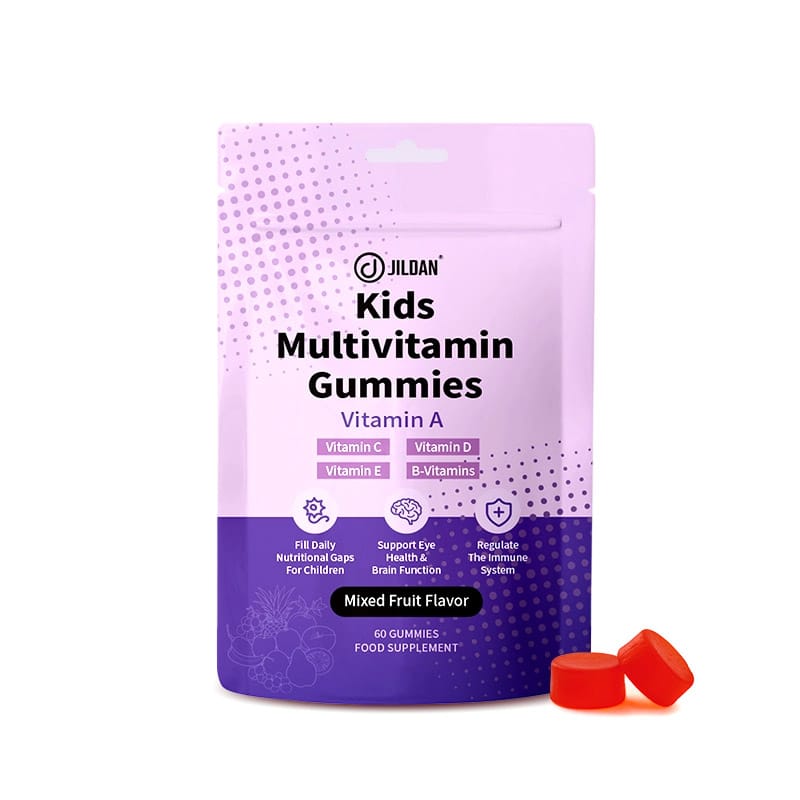
A detailed RFQ helps a multivitamin gummies manufacturer evaluate the project accurately.
Target Consumer
Define whether the formula is intended for:
- general adults;
- women;
- men;
- children;
- older adults;
- another defined group.
Nutrient Formula
Provide:
- desired vitamins;
- desired minerals;
- target amounts;
- preferred nutrient forms where known;
- ingredients that should be excluded.
Gummy Requirements
Specify:
- pectin or gelatin;
- vegan requirements;
- gummies per serving;
- individual gummy weight;
- flavor;
- color.
Sugar Strategy
State whether the product should be:
- conventional;
- reduced-sugar;
- sugar-free.
Quality Requirements
Define:
- potency specifications;
- microbiological limits;
- relevant contaminant limits;
- finished-product testing;
- COA expectations;
- stability expectations.
Packaging
Include:
- bottle or pouch;
- product count;
- closure;
- label;
- carton;
- destination market.
Commercial Planning
Provide:
- expected initial production volume;
- repeat-order forecast;
- target launch schedule;
- sample requirements.
The more complete the project brief, the easier it becomes to compare manufacturers on equivalent technical requirements.
Once these requirements are clear, brands can contact JD Nutra to discuss formula development, testing, packaging, documentation, and manufacturing feasibility.
FAQ
What should I ask a multivitamin gummies manufacturer first?
Ask whether the multivitamin gummies manufacturer can establish a complete finished-product specification covering nutrient forms, target amounts, gummy weight, testing requirements, packaging, and shelf-life expectations.
How does a multivitamin gummies manufacturer keep nutrients consistent?
Consistency can involve approved ingredient specifications, precise weighing, controlled premixing, documented mixing procedures, in-process monitoring, finished-product testing, and batch records.
Why does a multivitamin gummies manufacturer use nutrient overages?
Some vitamins may lose potency during manufacturing or storage. A controlled overage may be used when technically justified so that the product remains within specification through its intended shelf life. FDA dietary supplement CGMP guidance addresses intentional overages within master manufacturing records. See the FDA guidance.
Should every nutrient be tested in every batch?
The appropriate verification strategy depends on the formula, regulatory requirements, analytical methods, specifications, and quality system. The multivitamin gummies manufacturer should be able to explain how compliance with finished-product specifications is established.
What should a multivitamin gummies COA include?
A representative COA may include batch identification, specifications, analytical methods, acceptance criteria, results, and quality approval.
Does packaging affect gummy quality?
Yes. Packaging can influence exposure to moisture, oxygen, and light, which can affect physical gummy quality and potentially nutrient stability.
Are children’s and adult multivitamin gummies manufactured differently?
The manufacturing technology may be similar, but nutrient levels, serving sizes, target specifications, labeling, and product-design considerations can differ according to the intended population. The NIH Office of Dietary Supplements notes that multivitamin/mineral formulas are commonly tailored by age, sex, and life stage.
What makes a reliable multivitamin gummies manufacturer?
A reliable multivitamin gummies manufacturer should demonstrate controlled raw materials, defined specifications, appropriate nutrient forms, controlled overages, repeatable processing, finished-product verification, stability planning, packaging controls, traceability, and documented quality review.
Conclusion
Selecting a multivitamin gummies manufacturer requires a deeper evaluation than comparing flavor samples, production capacity, packaging design, or minimum order quantities.
Multivitamin gummies combine numerous nutrients with different stability profiles, physical characteristics, and manufacturing requirements. That complexity makes raw-material control, nutrient-form selection, premixing, active uniformity, intentional overages, in-process controls, finished-product testing, packaging, and stability particularly important.
A strong multivitamin gummies manufacturer should be able to explain exactly how an approved formula becomes a controlled, repeatable commercial product.
The manufacturer should know:
- which raw materials are used;
- how those materials are qualified;
- how low-dose nutrients are distributed;
- how sensitive vitamins are protected;
- how overages are justified;
- how finished batches are verified;
- how packaging supports stability;
- how each production lot can be traced.
For supplement brands, this level of control supports more than regulatory compliance. It creates a stronger foundation for consistent repeat orders, accurate labeling, product quality, lower complaint risk, and long-term portfolio development.
Before approving a multivitamin gummies manufacturer, evaluate both the product and the quality system behind it.
Brands developing a new formula can first review JD Nutra’s Multivitamin Gummies Formulation Guide, explore its gummy supplement range, and review the company’s supplement CDMO and custom manufacturing services.
When nutrient targets, gummy format, quality specifications, packaging, and destination-market requirements are ready, contact JD Nutra to discuss technical feasibility and commercial production.