
Probiotics gummies have become an increasingly visible way to move live microbial supplements beyond the traditional capsule format. For supplement brands, however, choosing between gummies and capsules is not simply a question of which format consumers find more attractive.
Probiotics are live microorganisms. That changes the product-development equation.
A successful probiotic product must consider strain identity, viable cell count, temperature, moisture, oxygen exposure, manufacturing conditions, packaging, storage, and the amount of live microorganisms expected to remain at the end of shelf life. A delivery format that performs well for one strain may be unsuitable for another.
According to the NIH Office of Dietary Supplements, probiotics are identified at the strain level, and their effects can be strain-specific. NIH also notes that probiotic supplements can contain anything from one strain to multiple strains and that higher CFU counts do not necessarily make a product more effective.
This is especially important when developing probiotics gummies. The format can provide strong consumer appeal, but it also exposes live microorganisms to a formulation environment that is considerably more complex than a dry capsule.
The right question for a supplement brand is therefore not:
“Are probiotics gummies better than capsules?”
It is:
“Which format can deliver our selected strains, target CFU, shelf-life specification, consumer experience, and commercial positioning most reliably?”
Table of Contents
Probiotics Gummies and Capsules Solve Different Product Problems
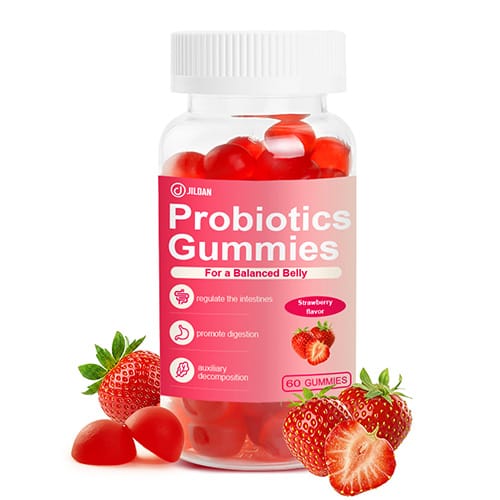
Both capsules and probiotics gummies can be successful products, but they are usually optimized for different priorities.
Capsules are often selected when technical simplicity, strain flexibility, and protection of sensitive ingredients are the main concerns.
Gummies are more attractive when consumer experience, taste, differentiation, and ease of use are central to the product strategy.
A basic comparison looks like this:
| Factor | Probiotics Gummies | Probiotic Capsules |
|---|---|---|
| Consumer experience | Chewable and flavored | Traditional supplement experience |
| Taste | Designed around flavor | Usually minimal taste exposure |
| Heat exposure | Can be challenging | Generally easier to control |
| Moisture environment | More complex | Usually drier |
| Active loading | More limited | Often more flexible |
| Branding options | Strong | Moderate |
| Strain flexibility | Depends heavily on stability | Often broader |
| Formula complexity | Higher | Generally lower |
| Packaging needs | Strong moisture/stability focus | Often simpler |
| Lifestyle positioning | Strong | More clinical or traditional |
This table should not be interpreted as meaning that one format is objectively superior.
The best format depends on the microorganism, consumer, formula, packaging system, and intended shelf life.
Brands considering a gummy-first product strategy can also review JD Nutra’s existing article on probiotics gummies and digestive wellness product development before comparing manufacturing routes.
Strain Selection Should Come Before Dosage Form
One of the biggest mistakes in probiotics gummies development is selecting the dosage form first and the microorganisms second.
Not all probiotic strains respond to heat, moisture, oxygen, acidity, and storage conditions in the same way.
NIH explains that probiotics are identified by genus, species, and strain designation and that some mechanisms and health effects can be strain-specific. This means evidence for one strain should not automatically be transferred to another microorganism simply because it belongs to the same species. NIH Probiotics Fact Sheet for Health Professionals provides a detailed explanation of strain-level identification and evidence.
For product development, this creates a logical sequence:
- define the intended consumer;
- define the intended product purpose;
- identify appropriate strains;
- establish the target viable count;
- evaluate strain stability;
- choose the delivery format;
- design the manufacturing and packaging system.
If the selected microorganisms cannot tolerate the gummy process or maintain viability in the finished matrix, forcing them into probiotics gummies because of marketing preference is a poor formulation decision.
A capsule may be the better product.
On the other hand, certain microorganisms or protected ingredients may be appropriate for gummies when the production process is specifically designed around their stability.
The product should follow the microbiology—not the other way around.
Higher CFU Does Not Automatically Mean Better Probiotics Gummies
CFU, or colony-forming units, is one of the most recognizable numbers in probiotic marketing.
It is also one of the easiest numbers to oversimplify.
The NIH Office of Dietary Supplements states that many commercial probiotic supplements contain approximately 1 billion to 10 billion CFU per dose, while some products contain 50 billion CFU or more. NIH also specifically notes that products with higher CFU counts are not necessarily more effective than products with lower counts.
For probiotics gummies, this is a crucial formulation point.
A label displaying an extremely large CFU number may look impressive, but brands should ask:
- Which strains make up that number?
- Is the amount supported by evidence?
- Is the CFU guaranteed at manufacture or at the end of shelf life?
- Can the gummy maintain the target CFU?
- What overage is being used?
- What stability data support the claim?
A lower, evidence-aligned CFU target that remains viable through shelf life can be more technically meaningful than a very high initial number that declines rapidly.
Product developers should therefore avoid turning CFU into a simple competitive race.
End-of-Shelf-Life CFU Is More Useful Than Day-One CFU
One of the most important differences between ordinary vitamin gummies and probiotics gummies is that the active ingredient can decline because the microorganisms must remain alive.
A probiotic product may contain a high viable count immediately after manufacturing but substantially fewer live microorganisms months later.
The NIH consumer fact sheet explains that CFU can decline during a product’s lifespan and that the amount at manufacture does not necessarily reflect the amount available when the consumer actually uses the product. NIH notes that some experts therefore recommend looking for products that state CFU through the expiration or use-by date. NIH Probiotics Consumer Fact Sheet provides the full explanation.
This principle should influence the development of probiotics gummies from the beginning.
The manufacturer needs to decide:
- target CFU at end of shelf life;
- initial manufacturing target;
- appropriate overage;
- storage conditions;
- packaging;
- testing schedule.
The goal should not simply be to pass the first test.
The goal is to maintain the agreed viable level for the commercial life of the product.
Why Probiotics Gummies Are Technically Harder to Keep Stable
The gummy format creates several environmental stresses that live microorganisms may need to tolerate.
Heat
Conventional gummy manufacturing can involve elevated processing temperatures.
Many live microorganisms are heat sensitive.
The exact risk depends on the strain, how the microorganism is protected, when it is added, and the temperature to which it is exposed.
A manufacturer developing probiotics gummies should therefore define:
- point of probiotic addition;
- maximum exposure temperature;
- exposure duration;
- cooling conditions;
- expected process loss.
Adding a sensitive microorganism at the wrong stage can substantially reduce viability before packaging even begins.
Moisture
Gummies contain substantially more moisture than typical dry capsule formulations.
Water activity can influence microbial survival over time.
For probiotics gummies, the challenge is particularly important because the product must maintain a pleasant chew while also protecting live microorganisms.
Acidity
Many gummies rely on acids to create flavor and control the gelling system.
The pH environment may affect microorganism stability.
Oxygen
Certain probiotic organisms are sensitive to oxygen.
That makes production conditions, packaging atmosphere, headspace, and packaging barrier properties relevant.
This combination of stresses explains why probiotics gummies need to be designed as a complete delivery system rather than treated as ordinary gummies with live microorganisms added at the end.
Capsules Usually Provide a Simpler Stability Environment
Capsules do not eliminate stability problems, but they generally offer a drier and less complex environment for live microorganisms.
A capsule formula may contain:
- probiotic powder;
- carrier materials;
- prebiotics;
- stabilizing excipients;
- other dry ingredients.
Because the consumer does not taste the contents directly, capsules also avoid many of the flavor-development challenges associated with probiotics gummies.
This can make capsules suitable for:
- sensitive strains;
- higher CFU targets;
- multi-strain blends;
- formulas where taste would be difficult to manage;
- technically focused product positioning.
However, capsule products still require attention to:
- moisture;
- oxygen;
- capsule shell compatibility;
- storage;
- packaging.
The choice is therefore not “stable capsules versus unstable gummies.”
It is a question of relative technical difficulty.
Brands can compare available capsule supplement manufacturing capabilities with JD Nutra’s gummy supplement manufacturing options when deciding which platform better matches the intended product.
Probiotics Gummies Can Win on Consumer Experience
Technical simplicity is not the only factor in product success.
Probiotics gummies can offer a consumer experience that capsules cannot easily reproduce.
Potential advantages include:
- no pill swallowing;
- flavor;
- chewable format;
- more lifestyle-oriented positioning;
- strong visual branding;
- suitability for consumers who avoid traditional supplements.
This can be valuable for brands attempting to reach audiences beyond established supplement users.
The product may feel less clinical and easier to integrate into a daily routine.
However, this benefit should be treated as a product-positioning advantage rather than proof of superior probiotic performance.
A gummy is only useful when the microorganisms remain viable at the intended level.
The best probiotics gummies combine consumer experience with technical stability rather than sacrificing one for the other.
Multi-Strain Probiotics Gummies Need a Stronger Scientific Rationale
A long strain list can make a probiotic formula look sophisticated.
That does not automatically make it better.
Every additional strain can introduce new questions relating to:
- evidence;
- dosage;
- viability;
- compatibility;
- testing;
- shelf-life decline.
NIH explains that the health effects of probiotics can be strain-specific and that the benefit of a commercial product cannot necessarily be inferred simply from the number of microorganisms or strains it contains.
For probiotics gummies, multi-strain formulations create another practical challenge: different organisms may lose viability at different rates.
A total CFU number may therefore hide changes in the composition of the blend.
For example, a finished gummy might technically retain an acceptable total CFU while one strain declines much more rapidly than another.
When building a multi-strain gummy, ask:
- Why is each strain included?
- Is the intended amount supported?
- Can each strain survive the process?
- Is stability known for the finished combination?
- Can the strains be measured appropriately?
A shorter, better-characterized strain list can sometimes create a more defensible product.
Should Probiotics Gummies Include Prebiotics?
Probiotics and prebiotics are often discussed together, but they are not the same thing.
The NIH Office of Dietary Supplements explains that probiotics are live microorganisms, while prebiotics are compounds used by microorganisms in the gastrointestinal tract. Products containing both are often described as synbiotics.
Adding a prebiotic can create useful product differentiation for probiotics gummies, but it can also change the formulation.
Prebiotic ingredients may affect:
- active load;
- gummy texture;
- sweetness;
- water activity;
- digestive tolerance;
- flavor;
- serving size.
This means brands should not add a prebiotic simply because “probiotic + prebiotic” sounds more complete.
The quantity should be meaningful, technically feasible, and compatible with the intended gummy system.
The same principle applies to vitamins, botanicals, and other additional ingredients.
Every component should have a reason to be present.
Packaging Is Part of the Probiotic Delivery System
For probiotics gummies, packaging is not just branding.
It can affect how many live microorganisms remain available over time.
Important packaging variables can include:
- moisture barrier;
- oxygen barrier;
- closure integrity;
- headspace;
- light protection;
- desiccant use where technically appropriate;
- frequency of consumer opening.
A bottle opened every day may experience repeated exposure to environmental humidity.
A pouch may have different barrier characteristics.
Individual packaging may reduce repeated exposure but creates a different production and packaging system.
The manufacturer should therefore evaluate packaging during product development rather than after the formula has already been approved.
When requesting probiotics gummies, ask:
- Was stability evaluated in this package?
- How does the package control moisture?
- How does it control oxygen exposure?
- Is the storage statement supported by the stability program?
A product’s viable CFU target and its packaging strategy should be designed together.
Refrigerated vs Shelf-Stable Probiotics Gummies
Consumers often ask whether probiotics need refrigeration.
The correct answer depends on the microorganism and finished product.
The NIH consumer fact sheet notes that some probiotic products require refrigeration while others can be stored at room temperature and advises consumers to follow the storage instructions on the label.
For probiotics gummies, shelf-stable positioning can be commercially attractive because it simplifies:
- ecommerce fulfillment;
- retail storage;
- shipping;
- consumer use.
But “shelf stable” should be supported by evidence from the actual finished product.
Brands should ask:
- Which storage conditions were tested?
- Was the final package used?
- How long was stability evaluated?
- Was CFU measured through the study?
- Which strains were included?
A raw-material supplier’s storage recommendation cannot automatically establish shelf life for the finished gummy.
Labeling CFU Requires Careful Attention
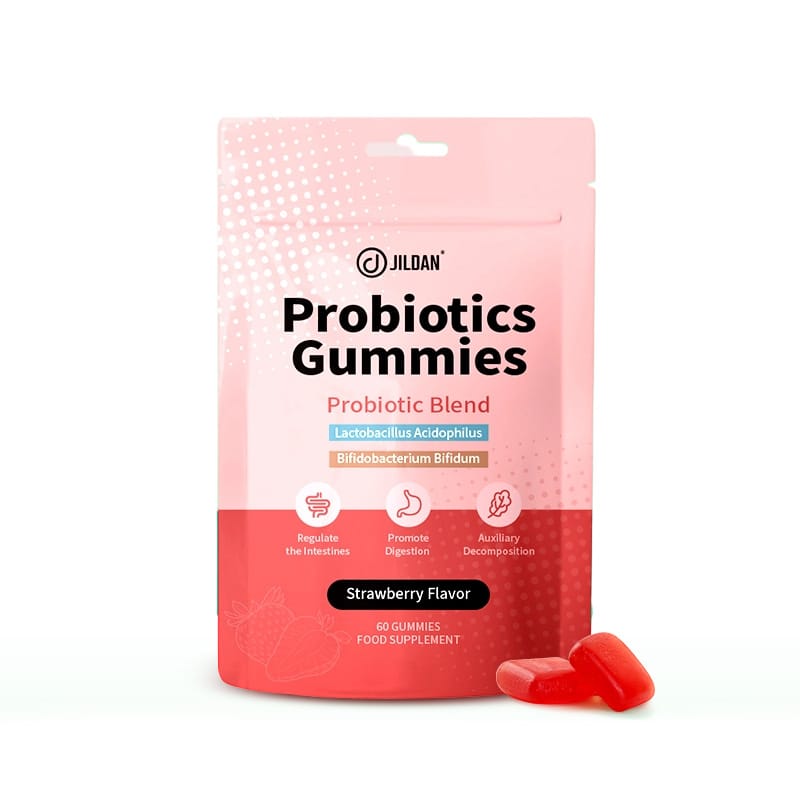
Live microbial supplements create unusual labeling questions because microorganisms can be described by both weight and viable count.
FDA issued draft guidance addressing quantitative labeling of dietary supplements containing live microbial ingredients. Under the policy described in the draft guidance, FDA discusses conditions under which firms may declare CFU in addition to the quantitative amount by weight required by regulation. FDA Draft Guidance on Live Microbial Labeling provides the complete regulatory discussion.
Because this remains draft guidance, brands should work from current applicable requirements and appropriate regulatory review rather than treating the document as a final regulation.
For probiotics gummies, label development should consider:
- microorganism identification;
- strain designation;
- quantitative declaration;
- CFU statement;
- serving size;
- storage instructions;
- expiration or use-by date;
- other ingredients.
The finished label should reflect the actual tested formulation, not a preliminary product brief.
Don’t Assume More Strains or More CFU Create Better Claims
Probiotic marketing often reduces complex microbiology to simple numbers.
“More strains.”
“More billions.”
Those statements can be easy for consumers to compare but may not communicate product quality accurately.
The NIH Probiotics Consumer Fact Sheet specifically notes that a higher CFU count alone does not necessarily mean a product provides greater health benefits. Benefits depend on the specific microorganisms and the amount present.
For supplement brands, this suggests a better content strategy for probiotics gummies:
Explain the formula rather than simply amplifying the number.
Useful product education can include:
- strain identity;
- why the strains were selected;
- viable CFU target;
- end-of-shelf-life approach;
- storage requirements;
- dosage form.
This creates more useful content for consumers and provides a stronger basis for B2B product differentiation.
Safety Messaging Should Not Be Ignored
Probiotics are commonly used by healthy consumers, but brands should avoid presenting them as universally risk free.
The NIH consumer fact sheet notes that probiotics have a long history of use and that serious problems are uncommon in healthy people, but it also identifies greater safety concerns for certain vulnerable populations, including people who are seriously ill or have weakened immune systems.
That means probiotics gummies content should avoid overly broad statements such as:
- safe for everyone;
- suitable for every age;
- no side effects;
- guaranteed digestive improvement.
The appropriate warnings and target population depend on the selected strains, finished formula, and intended market.
Children’s products, products intended for medically vulnerable users, or formulas making more sensitive claims should receive additional scientific and regulatory review.
Finished-Product Testing Should Go Beyond a Raw-Material COA
A probiotic ingredient supplier may provide a COA showing strain identity and starting CFU.
That does not automatically prove that the finished probiotics gummies meet their intended specification.
Manufacturing can introduce losses.
Storage can introduce further losses.
A finished-product quality plan should therefore consider the actual commercial gummy.
Depending on the project, specifications may address:
- viable CFU;
- strain identity where appropriate;
- microbiological quality;
- gummy weight;
- moisture-related characteristics;
- texture;
- appearance;
- packaging integrity.
The appropriate testing strategy should be defined before commercial manufacturing begins.
Brands should ask:
- At what stage is CFU tested?
- Is testing performed after gummy manufacturing?
- Is it repeated during stability?
- Which method is used?
- What acceptance limit applies?
- Is the result reported on the finished-product COA?
These questions distinguish technical product development from simply purchasing probiotic raw material.
How to Evaluate a Probiotics Gummies Manufacturer
Not every gummy manufacturer is automatically equipped to produce live-microbial supplements.
When selecting a manufacturing partner for probiotics gummies, evaluate several areas.
Probiotic Experience
Ask:
- Which types of probiotic products have been manufactured?
- How are strains selected?
- Which stability constraints are considered?
Process Control
Ask:
- At what stage are probiotics introduced?
- What temperature exposure occurs?
- How is moisture managed?
- How are microorganisms protected?
CFU Control
Ask:
- Is the target specified at manufacture or end of shelf life?
- How is overage determined?
- What stability data are available?
Packaging
Ask:
- Which barrier formats are available?
- Is the final package included in stability evaluation?
- Which storage conditions are recommended?
Testing
Ask:
- Which finished-product tests are performed?
- Which laboratory methods are used?
- What is included on the COA?
Documentation
Ask:
- Can specifications, batch records, and stability information be supplied as appropriate?
A professional manufacturer should be able to explain the entire system rather than simply quote a probiotic blend and bottle count.
Brands preparing a custom project can review JD Nutra’s supplement manufacturing and CDMO services to understand how formulation, quality control, manufacturing, and packaging can be coordinated.
When Capsules May Be the Better Business Decision
The popularity of probiotics gummies does not mean every probiotic brand should launch a gummy.
Capsules may make more sense when:
- the strain is particularly sensitive;
- very high viable counts are required;
- multiple strains need flexible loading;
- the target consumer accepts traditional supplements;
- neutral taste is valuable;
- technical simplicity is a priority.
For B2B product development, choosing capsules should not be viewed as a failure to follow consumer trends.
It may be the more technically defensible delivery system.
The strongest brands choose dosage forms according to product requirements rather than assuming every ingredient should eventually become a gummy.
When Probiotics Gummies May Be the Better Business Decision
Conversely, probiotics gummies may offer a strong strategic advantage when:
- the selected strains can survive the formulation and process;
- viable CFU can be maintained through shelf life;
- the brand targets consumers who dislike capsules;
- lifestyle positioning is important;
- flavor and consumer experience support differentiation.
The gummy format can also help a brand expand beyond traditional supplement buyers.
However, the product should still be built around microorganisms first.
Consumer convenience is valuable only when the product remains technically credible.
What to Include in a Probiotics Gummies RFQ
A detailed RFQ can help manufacturers determine whether a concept is realistic.
For probiotics gummies, include:
Target Consumer
Define:
- adults;
- children;
- family wellness;
- another specific group.
Probiotic Specification
Include:
- desired strains;
- target CFU;
- end-of-shelf-life requirement;
- strain documentation expectations.
Gummy Requirements
Specify:
- pectin or gelatin;
- gummies per serving;
- flavor;
- sweetener requirements;
- sugar or sugar-free positioning.
Supporting Ingredients
List any:
- prebiotics;
- vitamins;
- botanicals;
- minerals;
- other functional ingredients.
Stability Requirements
Define:
- intended shelf life;
- room-temperature or refrigerated storage;
- destination markets;
- packaging expectations.
Quality Requirements
Request appropriate:
- specifications;
- testing;
- finished-product COA;
- stability documentation.
Packaging
Specify:
- bottle;
- pouch;
- other formats;
- unit count;
- label requirements.
When these variables are clear, brands can contact JD Nutra to discuss whether the proposed strains and CFU target are suitable for gummy manufacturing or whether another format should be considered.
Common Mistakes Brands Make With Probiotics Gummies
Choosing Gummies Before Choosing the Strain
The microorganism should determine whether the gummy environment is appropriate.
Chasing the Highest CFU
Higher CFU does not automatically mean greater benefit.
Using Day-One CFU as the Main Marketing Number
Viability through shelf life is more meaningful for the consumer.
Ignoring Manufacturing Heat
Heat-sensitive microorganisms can lose viability during gummy production.
Ignoring Water Activity and Moisture
The gummy environment needs to support both physical quality and microorganism stability.
Adding Too Many Strains
A longer strain list can increase complexity without creating a stronger product.
Treating Packaging as Decoration
Packaging can directly influence viability.
Assuming Shelf-Stable Raw Material Means Shelf-Stable Gummies
The finished commercial product needs its own stability rationale.
Copying Probiotic Health Claims
Effects can be strain-specific and should not be generalized from unrelated research.
FAQ
What Are Probiotics Gummies?
Probiotics gummies are chewable dietary supplements containing live microbial ingredients. They combine probiotic supplementation with a flavored gummy delivery format.
Are Probiotics Gummies Better Than Capsules?
Not universally.
Probiotics gummies can provide a more enjoyable consumer experience, while capsules often provide a simpler environment for sensitive microorganisms.
The better format depends on strains, CFU target, shelf life, consumer preferences, and manufacturing requirements.
Do Probiotics Gummies Need Refrigeration?
Some probiotic products require refrigeration, while others can remain stable at room temperature. The correct storage condition depends on the strains, finished formulation, packaging, and stability evidence.
How Many CFU Should Probiotics Gummies Contain?
There is no universal ideal CFU number.
The appropriate amount depends on the strain, evidence, target consumer, and number of viable microorganisms remaining through shelf life. NIH notes that higher CFU counts do not necessarily mean greater benefit.
Can Probiotics Gummies Contain Multiple Strains?
Yes, but each strain should have a clear formulation and evidence rationale.
Different strains can also have different stability characteristics, which makes multi-strain probiotics gummies more complex to formulate.
Can Probiotics Gummies Include Prebiotics?
Yes.
Prebiotic ingredients can be incorporated when they fit the product concept and gummy formulation, but they may affect active loading, texture, water activity, sweetness, and serving size.
What Should a Probiotics Gummies Manufacturer Test?
Testing depends on the product specification but can include viable CFU, microorganism identification where appropriate, microbiological quality, physical gummy characteristics, and stability in the final package.
What Is the Most Important Question to Ask Before Developing Probiotics Gummies?
Ask whether the selected strains can maintain the required viable CFU through the intended shelf life in the actual gummy formulation and commercial package.
That question connects strain selection, manufacturing, packaging, testing, and storage into one product-development decision.
Conclusion
The decision between capsules and probiotics gummies should not be based only on which format looks more modern or attractive.
Probiotics are live microorganisms, and that makes viability central to product quality.
The best probiotics gummies begin with well-defined strains, an evidence-aligned CFU target, and a realistic understanding of what those microorganisms will experience during manufacturing and storage.
Heat, moisture, acidity, oxygen, packaging, and time can all influence the finished product.
Capsules generally offer a simpler technical environment and can be a strong choice for sensitive strains, multi-strain blends, or high viable-count products.
Probiotics gummies, on the other hand, can create a more approachable consumer experience and stronger lifestyle positioning when the strains and manufacturing system are appropriate.
For supplement brands, the objective should therefore be product-format fit rather than format popularity.
A strong development process asks:
- Which strains are being used?
- Why were they selected?
- What CFU needs to remain through shelf life?
- Can the format protect those microorganisms?
- Which packaging supports stability?
- How will the finished product be tested?
If the answer to those questions supports a gummy format, probiotics gummies can offer a compelling combination of science, convenience, and consumer experience.
Brands researching this product category can read JD Nutra’s existing article on why probiotics gummies are growing in the digestive wellness market, compare gummy supplement manufacturing with capsule manufacturing, and review JD Nutra’s custom supplement development services.
When your strain list, target CFU, intended shelf life, gummy system, packaging, and destination market are defined, contact JD Nutra to discuss formulation feasibility and commercial manufacturing.


