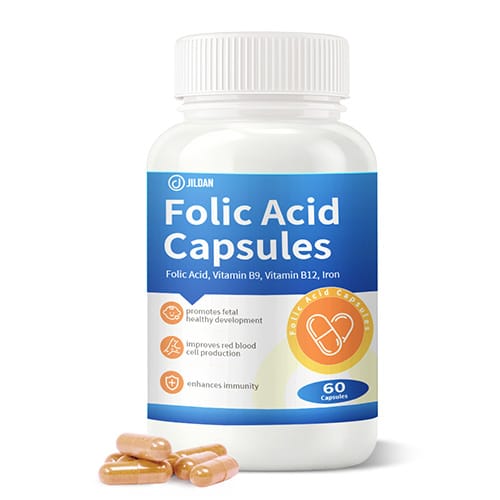
Folic acid tablets remain one of the most straightforward ways to deliver vitamin B9 in a precisely defined serving, but they are no longer the only format supplement brands need to consider. Gummies, capsules, multivitamin combinations, and other delivery systems give brands more ways to position folic acid products around convenience, lifestyle, women’s wellness, and daily nutritional support.
The growing number of formats creates a more important product-development question than simply asking which format is most popular.
A brand needs to determine which format best supports the intended nutrient amount, target consumer, Supplement Facts declaration, manufacturing process, packaging, stability requirements, and commercial positioning.
This matters particularly for folic acid because the nutrient has one of the clearest public-health recommendations in the supplement category. The CDC currently recommends that all women capable of becoming pregnant get 400 micrograms of folic acid every day to help prevent neural tube defects. CDC also emphasizes that these birth defects occur very early in pregnancy, often before a person knows they are pregnant.
For supplement brands, however, that does not mean every product containing folic acid should be marketed as a prenatal supplement.
The stronger development strategy is to determine who the product is for first—and then decide whether folic acid tablets, gummies, capsules, or another format provides the best delivery system.
Table of Contents
Why Folic Acid Tablets Remain Relevant in a Gummy-Heavy Supplement Market
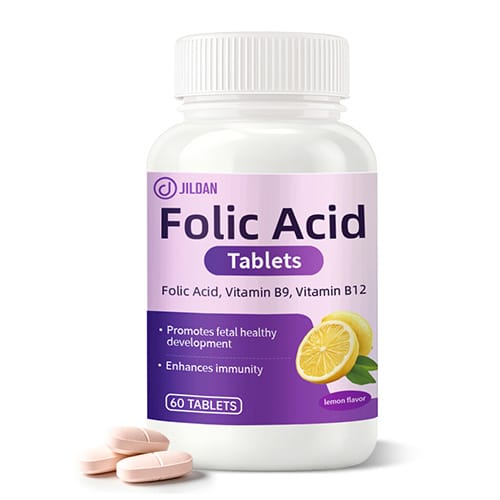
Gummies have become highly visible across vitamin categories because they provide a convenient and enjoyable consumer experience. That does not make traditional formats obsolete.
Folic acid tablets retain several practical advantages for product developers.
A folic acid serving typically requires only a very small amount of active ingredient. Unlike high-dose minerals or botanical extracts, the physical volume of the folic acid itself does not require a large dosage form.
This allows folic acid tablets to remain compact while leaving formulation space for:
- excipients needed for tableting;
- additional B vitamins;
- other micronutrients;
- women’s wellness combinations;
- multivitamin concepts.
Tablets can also provide a clear, medicine-like daily routine that some target audiences may associate with precision and simplicity.
From a brand perspective, this can support positioning such as:
- single-nutrient folic acid supplements;
- preconception nutrition;
- women’s daily vitamins;
- B-complex products;
- multivitamin/mineral products.
The format should therefore be selected according to product strategy rather than simply following the current popularity of gummies.
Folate and Folic Acid Are Not Exactly the Same Term
Before comparing dosage forms, brands need to understand what they are putting into them.
Folate is the general term for forms of vitamin B9. Naturally occurring folates are found in foods including leafy vegetables, beans, peas, and some fruits.
Folic acid is a specific form of folate commonly used in fortified foods and dietary supplements.
The FDA explains that folate is essential for the body’s production of healthy new cells and that folic acid is used in fortified foods and supplements.
The distinction becomes especially important for women’s health positioning.
The CDC states that folic acid is the type of folate that has been shown to help prevent neural tube defects.
For manufacturers developing folic acid tablets, this means ingredient naming and marketing language need to remain precise.
A brand may also encounter other folate forms during formulation, including 5-MTHF or methylfolate. Those ingredients should not automatically be treated as interchangeable with folic acid for every evidence-based or regulatory purpose.
The ingredient specification should therefore identify:
- exact folate form;
- raw-material potency;
- amount per serving;
- supporting documentation;
- intended label declaration.
Folic Acid Tablets Need Correct mcg DFE Labeling
One of the most technically important issues in U.S. folate supplements is the difference between micrograms of folic acid and micrograms of Dietary Folate Equivalents.
FDA requires folate to be declared in micrograms DFE, or mcg DFE, on Nutrition Facts and Supplement Facts labels. When folic acid is added to the product, the amount of folic acid is also declared in parentheses. FDA provides a detailed explanation of the labeling system here.
FDA currently identifies the Daily Value for folate as 400 mcg DFE for most adults. The agency also lists 600 mcg DFE during pregnancy and 500 mcg DFE during breastfeeding as reference amounts.
This means the label for folic acid tablets should not simply copy the weight of the raw ingredient from a purchasing specification.
The formulation team needs to coordinate:
- raw folic acid input;
- amount of folic acid per serving;
- folate declaration in mcg DFE;
- percentage Daily Value;
- serving size;
- number of tablets per serving.
This work should be completed before artwork is approved.
Late changes to the formula can affect the Supplement Facts panel and create unnecessary label revisions.
Why Folic Acid Tablets Can Work Well for Precise Low-Dose Formulation
Folic acid is typically delivered in microgram quantities.
That creates a different manufacturing challenge from high-dose ingredients.
The problem is not fitting the active into a tablet.
The challenge is distributing a very small amount of active ingredient uniformly throughout a production batch.
For folic acid tablets, manufacturers may need to use carefully designed premixing and dilution steps so that the active ingredient is distributed consistently before compression.
Relevant production considerations can include:
- raw-material potency;
- particle characteristics;
- premix preparation;
- blend time;
- blend uniformity;
- tablet weight;
- finished-product potency.
A tablet containing a tiny quantity of folic acid still needs to deliver the intended amount consistently from unit to unit.
This is why supplement brands should ask the manufacturer how low-dose micronutrients are handled rather than assuming that a simple formula automatically means simple manufacturing.
Folic Acid Tablets vs Gummies: Consumer Experience vs Formulation Simplicity
The choice between folic acid tablets and gummies often comes down to a trade-off between consumer experience and formulation complexity.
Advantages of Folic Acid Tablets
Tablets can support:
- compact serving sizes;
- straightforward dosing;
- relatively simple ingredient systems;
- easier incorporation into multivitamin formulas;
- minimal flavor-development requirements;
- efficient packaging.
Consumers also do not need to taste the folic acid or accompanying nutrients directly.
Advantages of Folic Acid Gummies
Gummies can support:
- chewable use;
- easier use for people who dislike swallowing tablets;
- lifestyle-oriented positioning;
- stronger flavor and visual differentiation;
- pectin-based vegan concepts.
However, gummy formulations introduce additional considerations involving:
- sugar or alternative sweeteners;
- acids;
- gelling agents;
- moisture;
- flavor;
- texture;
- processing temperature;
- long-term physical stability.
Brands interested in the gummy format can review JD Nutra’s existing Folic Acid Gummies Formulation Guide for a more detailed discussion of gummy-specific development.
The correct decision is therefore not that folic acid tablets are universally better than gummies.
The better format depends on the product the brand wants to create.
Folic Acid Tablets vs Capsules: Similar Nutrition, Different Manufacturing
Capsules provide another relatively straightforward format for folic acid.
Like folic acid tablets, capsules avoid many of the flavor and texture challenges associated with gummies.
The difference is primarily in the physical delivery system.
Tablets
Tablet manufacturing can involve:
- direct compression;
- granulation where appropriate;
- binders;
- disintegrants;
- lubricants;
- compression pressure;
- hardness controls.
Tablets can also be coated to change:
- appearance;
- swallowing experience;
- odor;
- product differentiation.
Capsules
Capsules usually involve filling a powder blend into a preformed shell.
Key factors include:
- powder flow;
- bulk density;
- fill weight;
- capsule size;
- shell material.
For folic acid alone, the active quantity is so small that both formats generally require excipients to create a practical unit.
This means the decision between capsules and folic acid tablets is less about whether the nutrient physically fits and more about:
- product positioning;
- manufacturing platform;
- target consumers;
- supporting nutrients;
- packaging;
- desired appearance.
Brands considering multiple formats can compare JD Nutra’s tablet manufacturing capabilities with its capsule manufacturing capabilities.
Which Format Better Supports a 400 mcg Folic Acid Product?
For women capable of becoming pregnant, the CDC continues to recommend 400 mcg of folic acid daily to help prevent neural tube defects. CDC’s updated 2026 guidance explains both the recommendation and why intake before pregnancy is important.
From a manufacturing standpoint, 400 mcg is a small active load.
That means the dosage form does not usually need to be selected based on physical active capacity.
Instead:
Folic acid tablets may be attractive when the brand wants a simple, precise, traditional vitamin format.
Gummies may be attractive when consumer convenience and taste are more important.
Capsules may fit brands that prefer a clean-label powder-filled dosage form or want folic acid within a larger capsule-based nutrient blend.
The serving number itself does not determine the best format.
The target consumer does.
Folic Acid Tablets Should Not Automatically Be Marketed as Prenatal Vitamins
The strong association between folic acid and pregnancy makes this an important marketing boundary.
The CDC’s recommendation is clear: women capable of becoming pregnant should get 400 mcg of folic acid daily.
But a standalone bottle of folic acid tablets is not automatically equivalent to a complete prenatal vitamin.
Pregnancy changes nutritional requirements for multiple nutrients.
A prenatal product therefore needs a broader formulation and nutritional review than a simple folic acid supplement.
A responsible folic acid tablets product page can explain:
- what folic acid is;
- why adequate intake matters;
- what amount is provided per serving;
- who the product is designed for;
- how it should fit within broader nutritional guidance.
It should avoid implying that one folic acid product supplies all nutritional requirements associated with pregnancy.
This distinction improves both scientific accuracy and consumer trust.
Folic Acid Tablets vs Methylfolate Products
Consumers increasingly search for comparisons between folic acid and methylfolate.
Brands need to handle this topic carefully.
Folic acid and 5-MTHF are both forms within the broader folate category, but they have different chemical structures and evidence histories.
For neural tube defect prevention, the CDC specifically states that folic acid is the only form of folate shown to help prevent neural tube defects.
This is particularly important when developing folic acid tablets for women capable of becoming pregnant.
It would be inappropriate to imply that another folate form has automatically demonstrated identical evidence for this specific public-health outcome simply because both are vitamin B9 compounds.
At the same time, alternative folate forms can have legitimate nutritional applications.
A supplement brand should choose the ingredient according to:
- target consumer;
- evidence;
- product positioning;
- destination market;
- labeling requirements.
The decision should not be based solely on which ingredient name sounds more advanced.
Folic Acid Tablets May Be Easier to Keep Free From Added Sugars
Sugar is one of the clearest formulation differences between traditional tablets and many gummies.
Folic acid tablets can be formulated without the sweetener system needed to create a palatable gummy.
This may appeal to brands targeting consumers who prefer a conventional supplement with minimal emphasis on taste.
Gummies can also be formulated with reduced sugar or sugar-free systems, but those formulations require careful management because sweeteners contribute to more than taste.
In gummies, the sweetener system can affect:
- texture;
- water activity;
- solids;
- processing behavior;
- shelf stability.
Tablets avoid this particular formulation challenge.
However, that does not mean tablets are automatically the better commercial product.
A sugar-free tablet that consumers do not want to swallow may be less useful for a particular audience than an appropriately formulated gummy that they use consistently.
Format should follow consumer behavior as well as technical simplicity.
Swallowability Can Influence the Best Format
Tablet design is not just a manufacturing issue.
The consumer has to take the product.
For folic acid tablets, this is usually less challenging than for high-dose tablet products because the active ingredient itself occupies very little space.
This can allow manufacturers to create relatively small tablets, depending on the full formula.
Tablet design can consider:
- diameter;
- thickness;
- shape;
- coating;
- surface finish.
When supporting nutrients are added, however, tablet size can increase significantly.
For example, adding substantial amounts of minerals can create a much larger product.
Brands should therefore evaluate actual sample dimensions rather than approving folic acid tablets based only on an ingredient list.
If swallowability becomes difficult, capsules, smaller multi-tablet servings, or gummies may provide alternative solutions.
Stability Still Matters for Folic Acid Tablets
Tablets may provide a relatively dry environment, but stability should not be assumed.
Folic acid potency can still be influenced by:
- moisture;
- light;
- temperature;
- interactions with other ingredients;
- packaging.
The CDC notes that folic acid is more stable than naturally occurring food folates and that this stability is one reason it is used in supplements and fortified foods.
That does not mean every finished tablet formula has identical stability.
A single-ingredient product and a complex multivitamin tablet can behave differently.
For folic acid tablets, brands should ask:
- What shelf life is intended?
- What potency specification applies at release?
- Is an overage used?
- What supports the overage?
- Is the final commercial package part of stability assessment?
Stability needs to apply to the finished product, not simply the folic acid raw material.
Packaging for Folic Acid Tablets Should Protect the Finished Formula
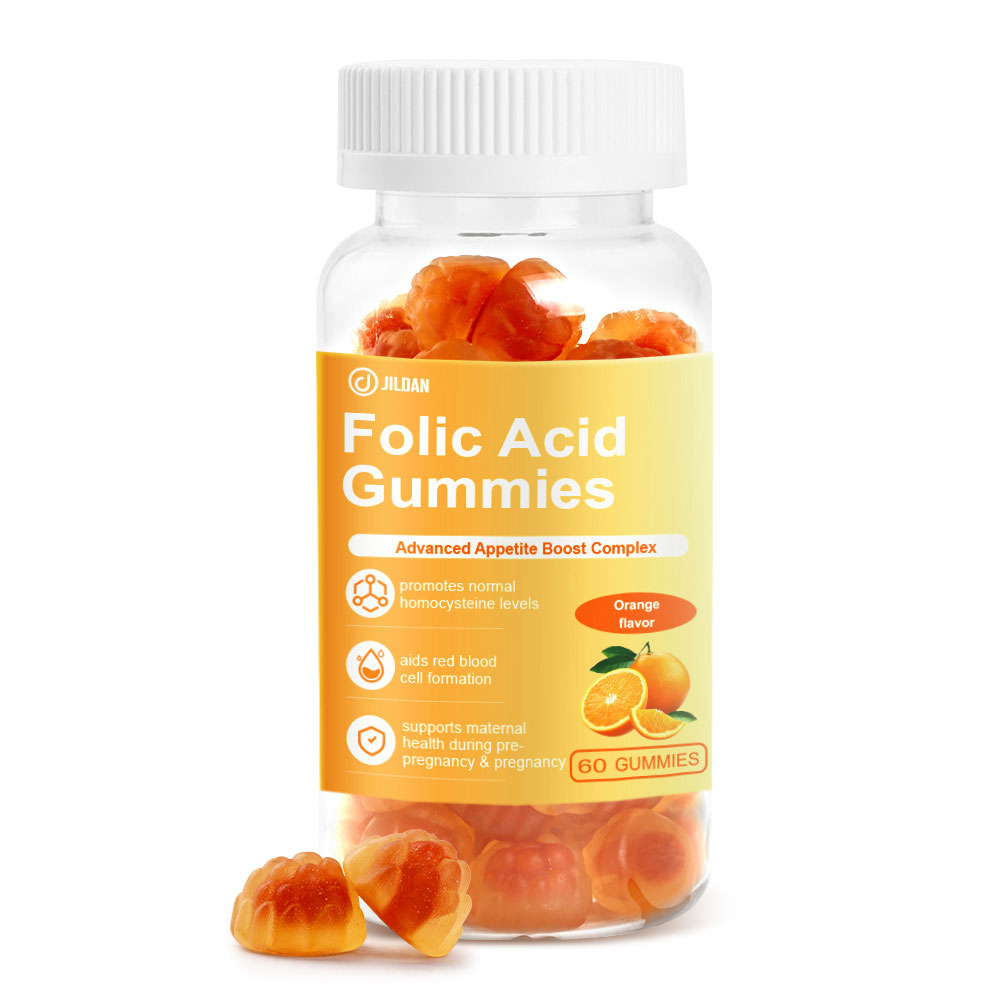
Tablets are commonly packaged in bottles, blister packs, or other solid-dose formats.
The correct packaging for folic acid tablets depends on:
- formula;
- tablet count;
- moisture sensitivity;
- light sensitivity;
- market;
- consumer preference.
A simple folic acid product may have fewer packaging constraints than a complex multivitamin tablet containing several sensitive nutrients.
Still, packaging should be chosen before shelf-life work is finalized.
The manufacturer should consider:
- barrier properties;
- closure;
- seal;
- headspace;
- repeated opening;
- storage instructions.
Packaging is particularly important when folic acid tablets are combined with additional nutrients that have different environmental sensitivities.
The complete formulation—not the hero ingredient alone—should determine the package.
Folic Acid Tablets Require Accurate Low-Dose Mixing
Because folic acid may be present in microgram quantities, mixing deserves particular attention.
Imagine adding a very small amount of active material into a commercial batch weighing many kilograms.
Without an appropriate premixing strategy, consistent distribution becomes more difficult.
Manufacturers of folic acid tablets may therefore use a dilution or premix process before adding the folic acid-containing blend to the full tablet mixture.
Brands should ask:
- How is the low-dose active introduced?
- How is blend uniformity managed?
- Is the premix validated?
- How are samples collected?
- Is finished-product potency tested?
The technical goal is simple:
Each tablet should represent the approved formula consistently.
Low active weight does not eliminate manufacturing complexity—it changes the type of complexity.
Finished-Product Testing Matters More Than Raw-Material Calculations
A formulation spreadsheet can calculate how much folic acid should theoretically be present.
Commercial manufacturing still needs quality controls.
Depending on the product specification, finished folic acid tablets may be evaluated for:
- appearance;
- average tablet weight;
- folate or folic acid potency;
- tablet hardness;
- friability;
- disintegration;
- microbiological requirements;
- relevant contaminants.
The exact test panel depends on the finished formulation and target market.
A brand should ask the manufacturer whether potency is measured on the finished tablet rather than relying only on the amount of raw material added to the batch.
This is especially useful when the product contains a low-dose micronutrient.
Manufacturing records and finished-product results should together demonstrate that the formula was produced as intended.
Tablet Hardness and Disintegration Need to Be Balanced
A tablet needs sufficient mechanical strength to survive:
- manufacturing;
- packaging;
- shipping;
- consumer handling.
But it also needs to perform appropriately as a dosage form.
A folic acid tablets manufacturer may therefore monitor properties such as:
- hardness;
- friability;
- disintegration.
A tablet that is too fragile can chip or break.
A tablet that is excessively hard may create other performance issues.
The optimal specification depends on the formula, manufacturing process, and intended product.
Coating can add another layer of complexity.
A coated tablet may provide:
- smoother swallowing;
- improved appearance;
- product identification;
- additional environmental protection.
However, coating creates another manufacturing step that needs to be controlled consistently.
Combining Folic Acid With Vitamin B12 Requires a Clear Product Rationale
Folate and vitamin B12 are often found together in multivitamin and B-complex supplements.
That does not mean every folic acid tablets formula requires B12.
Combination products should be built around a defined consumer need rather than a desire to create a longer label.
If B12 is added, the formulation team needs to consider:
- B12 form;
- target amount;
- stability;
- low-dose distribution;
- label declaration.
Both nutrients can be present at relatively low amounts, making premixing and uniformity especially relevant.
The stronger commercial story is not:
“We added more vitamins.”
It is:
“Each ingredient has a defined role in the product we designed for this consumer.”
The same rule applies to vitamin B6, iron, vitamin D, and other possible additions.
Iron Changes the Product Significantly
A single-nutrient folic acid tablets product is very different from a folic acid-and-iron tablet.
Iron introduces:
- larger material quantities;
- different raw-material specifications;
- potential sensory effects;
- additional safety considerations.
The target consumer also becomes more important.
Iron supplementation should not be treated as universally appropriate simply because iron and folate are commonly associated with women’s nutrition.
Brands need to evaluate whether the intended audience actually supports the formula.
If iron is added, the final product becomes a broader nutritional formulation rather than simply folic acid tablets with one small supporting ingredient.
That should influence:
- testing;
- claims;
- packaging;
- instructions;
- warnings.
FDA Labeling Requirements Should Be Built Into Product Development
The Supplement Facts panel should not be created after the product is finished.
For U.S. folic acid tablets, FDA’s DFE system needs to be considered during formulation.
FDA states that folate must be declared in mcg DFE and percentage Daily Value. When folic acid has been added, the label also declares the folic acid quantity in parentheses. FDA’s folate labeling page provides an official example.
This means formulation, testing, and labeling should remain connected.
If the serving changes, the label may change.
If the folate form changes, the label may change.
If supporting nutrients are added, the label changes again.
Brands should therefore lock the commercial formula before printing large quantities of packaging.
Folic Acid Tablets Should Be Marketed With Accurate Public-Health Messaging
Folic acid is unusual among supplement ingredients because it has a clear, longstanding public-health recommendation.
The CDC states that women capable of becoming pregnant should get 400 mcg of folic acid each day and explains that adequate folic acid before and during early pregnancy can help prevent serious neural tube defects affecting the brain and spine.
This evidence creates strong consumer relevance for folic acid tablets, but it should not be exaggerated.
Responsible marketing should not imply that folic acid:
- guarantees a healthy pregnancy;
- prevents every birth defect;
- replaces prenatal medical care;
- replaces an overall nutritious diet.
A clear product page should instead state:
- amount per serving;
- intended audience;
- use directions;
- relevant public-health context.
Accuracy is more valuable than aggressive claim language in a sensitive category.
Tablets, Gummies, or Capsules: A Practical Decision Matrix
For supplement brands, the best format depends on the product strategy.
| Product Goal | Format That May Fit |
|---|---|
| Simple single-nutrient vitamin B9 | Folic acid tablets or capsules |
| Traditional daily vitamin | Folic acid tablets |
| Consumer-friendly chewable format | Gummies |
| Vegan chewable concept | Pectin gummies |
| Powder-filled clean-label approach | Capsules |
| Multi-vitamin/mineral solid dosage | Tablets or capsules |
| Strong flavor differentiation | Gummies |
This is not an absolute ranking.
Each format can be developed successfully when the nutrient target, consumer, manufacturing process, packaging, and quality specifications are aligned.
The key is avoiding a format-first strategy.
Brands should choose the dosage form that best supports the product they are trying to build.
How to Evaluate a Folic Acid Tablets Manufacturer
A manufacturer should be evaluated on more than the ability to compress tablets.
For folic acid tablets, ask questions across several areas.
Raw Materials
- What folic acid specification is used?
- How is supplier qualification managed?
- How is identity verified?
- How is raw-material potency controlled?
Low-Dose Manufacturing
- How is folic acid premixed?
- How is blend uniformity controlled?
- How is segregation prevented?
Tablet Production
- How are tablet weight and hardness controlled?
- Is disintegration evaluated?
- Is coating available when required?
Finished-Product Quality
- Is folate or folic acid potency tested?
- What appears on the COA?
- How are out-of-specification results handled?
Stability
- How is shelf life supported?
- What packaging is used in evaluation?
- Are nutrient overages technically justified?
Labeling
- Can the manufacturer provide the formula information needed for mcg DFE declaration?
- Is the final formula reviewed before artwork approval?
Brands can explore JD Nutra’s tablet supplement manufacturing range when evaluating solid-dose development options.
What to Include in a Folic Acid Tablets RFQ
A useful RFQ should clearly define the intended product.
Active Ingredient
Specify:
- folic acid;
- target amount;
- desired mcg DFE declaration;
- raw-material requirements.
Target Consumer
Define:
- general adults;
- women capable of becoming pregnant;
- women’s wellness;
- another defined group.
Tablet Requirements
Include:
- tablet count;
- tablets per serving;
- shape;
- size;
- coating preference;
- color if relevant.
Supporting Ingredients
List any proposed:
- vitamin B12;
- vitamin B6;
- iron;
- vitamin D;
- other nutrients.
Quality Requirements
Define:
- potency;
- microbiological specifications;
- relevant contaminant limits;
- finished-product testing;
- COA requirements.
Packaging
Specify:
- bottle;
- blister;
- unit count;
- label;
- carton.
Market
Identify destination countries because folate labeling and supplement requirements may differ.
Brands can also review JD Nutra’s custom supplement manufacturing services before submitting a technical brief.
When the formula, dosage form, testing requirements, package, and market are ready, contact JD Nutra to discuss manufacturing feasibility.
Common Mistakes Brands Make With Folic Acid Tablets
Copying a Competitor’s Serving Amount
The formula should be based on the target consumer and product strategy.
Confusing Folate With Folic Acid
The terms are related but not identical.
Ignoring mcg DFE
U.S. labeling requires the DFE system for folate declaration.
Treating Low-Dose Manufacturing as Easy
Microgram quantities require controlled premixing and uniformity.
Describing a Standalone Product as a Complete Prenatal
Folic acid tablets do not automatically provide all nutrients needed in prenatal nutrition.
Using “More Is Better” Marketing
Higher nutrient amounts are not automatically more appropriate.
Adding Iron Automatically
Iron changes both formulation and safety considerations.
Finalizing Packaging Before the Formula
Formula and stability requirements should influence package selection.
Relying Only on Raw-Material Calculations
Finished-product testing provides a stronger quality basis.
FAQ
What Are Folic Acid Tablets?
Folic acid tablets are solid dietary supplement dosage forms that provide folic acid, a synthetic form of folate, or vitamin B9.
They can be developed as standalone supplements or as part of broader vitamin and mineral formulas.
Is Folic Acid the Same as Folate?
Folate is the general term for forms of vitamin B9. Folic acid is a specific form commonly used in supplements and fortified foods. FDA explains the distinction here.
How Much Folic Acid Does CDC Recommend?
CDC currently recommends that all women capable of becoming pregnant get 400 mcg of folic acid daily to help prevent neural tube defects.
Are Folic Acid Tablets Better Than Gummies?
Not universally.
Folic acid tablets can support compact dosing and straightforward formulation, while gummies can offer a more enjoyable chewable experience.
The better format depends on the consumer and product strategy.
Are Folic Acid Tablets Better Than Capsules?
Both can work effectively as solid dosage forms.
Tablets use compressed formulations, while capsules usually contain powder blends inside a shell. The best choice depends on manufacturing preferences, supporting nutrients, and consumer experience.
Why Does a Folic Acid Label Show mcg DFE?
FDA requires folate to be declared using Dietary Folate Equivalents because folic acid and naturally occurring food folate have different bioavailability. Added folic acid is also identified separately in parentheses where applicable.
Can Folic Acid Tablets Include Vitamin B12?
Yes.
However, the combination should have a clear nutritional purpose, and both low-dose nutrients need appropriate formulation, uniformity control, stability, and labeling.
What Should Brands Ask a Folic Acid Tablets Manufacturer?
Ask how the manufacturer handles folic acid identity, low-dose premixing, tablet uniformity, potency testing, mcg DFE labeling information, stability, packaging, and batch release.
Conclusion
Choosing between gummies, capsules, and folic acid tablets should begin with the consumer and nutrient strategy rather than with whichever dosage form is currently most fashionable.
For brands that want a compact, straightforward vitamin B9 product, folic acid tablets offer several practical advantages.
The active ingredient is required in a very small quantity, allowing the tablet to remain relatively compact while supporting precise serving design and potential combination with other micronutrients.
But low active weight creates its own manufacturing requirement: uniform distribution.
A strong tablet product therefore depends on:
- a defined folic acid specification;
- controlled premixing;
- blend uniformity;
- tablet-weight consistency;
- finished-product potency testing;
- appropriate stability;
- accurate mcg DFE labeling.
Gummies offer a different value proposition centered on taste and ease of use, while capsules offer another simple solid-dose option.
None is universally superior.
For women capable of becoming pregnant, the nutritional evidence provides a particularly important benchmark: the CDC recommends 400 mcg of folic acid every day to help prevent neural tube defects.
Brands should use that evidence responsibly rather than turning a clear public-health recommendation into exaggerated prenatal marketing.
Companies that already have a folic acid gummy product can review JD Nutra’s Folic Acid Gummies Formulation Guide to compare the additional sensory and stability requirements of a chewable format.
Brands considering folic acid tablets can explore JD Nutra’s tablet supplement manufacturing capabilities and compare them with capsule manufacturing or gummy manufacturing.
When the folic acid amount, target consumer, supporting nutrients, tablet specification, testing requirements, packaging, and destination market are defined, contact JD Nutra to discuss formulation and commercial manufacturing.