
Electrolyte gummies offer supplement brands a portable alternative to powders, tablets, capsules, and ready-to-drink hydration products. They fit naturally into sports nutrition, outdoor wellness, travel, and everyday hydration product lines because consumers can use them without mixing a drink.
That convenience does not make them simple to formulate.
An electrolyte product is fundamentally about minerals, and minerals create several challenges inside gummies. Sodium can produce a strong salty taste. Potassium salts may introduce bitterness. Magnesium can contribute unpleasant flavor, gastrointestinal considerations, and substantial mineral-compound weight. At the same time, a gummy has limited capacity because the formula also needs a gelling system, sweeteners, acids, flavors, water, and other structural ingredients.
Successful electrolyte gummies therefore require a balance between nutritional intent and dosage-form reality.
The formula should begin with three questions:
- Who will use the product?
- Under what conditions will they use it?
- Which electrolytes and amounts make sense for that use case?
The NIH Office of Dietary Supplements notes that potassium is essential for normal cell function, muscle contraction, nerve transmission, and fluid-related physiology. NIH Potassium Fact Sheet Magnesium also participates in muscle and nerve function and hundreds of enzymatic reactions. NIH Magnesium Fact Sheet
For sports applications, hydration needs also vary substantially between individuals. The American College of Sports Medicine’s fluid-replacement position statement notes that sweat rates and sweat electrolyte content differ among individuals and recommends individualized fluid-replacement strategies rather than one universal formula.
For supplement brands, that means electrolyte gummies should be designed around a specific consumer scenario instead of simply adding sodium, potassium, and magnesium because those minerals are expected on the label.
Start Electrolyte Gummies With a Defined Use Case
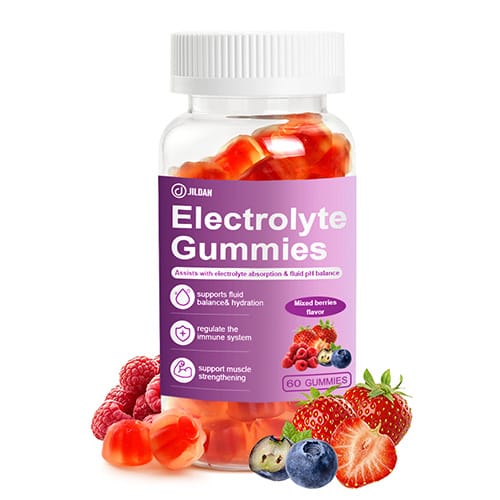
The most important formulation decision comes before mineral selection.
Define when consumers are expected to use the product.
Potential positioning for electrolyte gummies can include:
- endurance sports;
- gym and fitness routines;
- outdoor recreation;
- hot-weather activity;
- travel;
- everyday hydration support.
These concepts may sound similar, but they can imply very different formulas.
A long-distance endurance athlete may experience substantial sweat and sodium losses. A person working out indoors for 30 minutes may not have the same needs. The NIH exercise-performance fact sheet notes that athletes involved in endurance activity lasting more than an hour or training in extreme conditions may need to replace lost fluid and electrolytes, while hydration should be built on an adequate overall diet and fluid intake.
The CDC likewise advises athletes exercising in hot conditions to drink more water than usual and not wait until thirst develops. CDC Heat and Athletes Guidance
This context matters because electrolyte gummies themselves do not provide significant fluid.
They provide minerals in a portable solid format.
That means a sports-oriented product should generally be positioned as part of a hydration strategy rather than presented as a replacement for drinking water.
Sodium Is Often the Most Important Formulation Decision
Sodium deserves special attention in sports-focused electrolyte gummies because sodium is a major electrolyte lost in sweat.
The ACSM fluid-replacement position statement explains that electrolyte-containing beverages can provide advantages under certain exercise conditions and emphasizes individual variation in sweat and electrolyte losses.
For formulators, sodium creates both nutritional and sensory challenges.
Common sodium-containing ingredients can contribute:
- saltiness;
- mineral aftertaste;
- changes in acidity perception;
- additional solids.
A formula with a meaningful sodium level may therefore require more flavor work than a generic vitamin gummy.
Brands should define:
- elemental sodium per serving;
- sodium source;
- gummies per serving;
- intended use scenario.
One major mistake is designing electrolyte gummies around a visually attractive low serving count first and then discovering that the desired sodium load makes the gummy too salty.
The serving architecture should come from the mineral target.
Not the other way around.
More Sodium Is Not Automatically Better
Hydration products have increasingly differentiated themselves through high-sodium positioning.
That does not mean the highest sodium number is appropriate for every consumer.
Sweat rates and sweat sodium concentrations vary considerably.
The correct sodium strategy therefore depends on whether electrolyte gummies are being designed for:
- long-duration endurance exercise;
- heavy sweaters;
- hot climates;
- general fitness;
- everyday wellness.
A product aimed at casual daily use should not automatically copy the sodium profile of a product intended for prolonged endurance exercise.
This is an important product-development principle:
The intended use should define the electrolyte profile.
Brands should also remember that users may consume sodium from food, beverages, sports drinks, gels, and other supplements on the same day.
The gummy should be designed within that broader consumption context.
Potassium Adds Balance but Also Formulation Constraints
Potassium is another common ingredient in electrolyte gummies.
NIH identifies potassium as the primary intracellular cation and notes its important roles in fluid balance, muscle contraction, and nerve transmission.
However, the total daily potassium requirements of adults are measured in grams rather than the relatively small quantities commonly found in supplements. NIH lists an Adequate Intake of 3,400 mg per day for adult men and 2,600 mg per day for adult women.
These are total daily intake reference values, not suggested amounts for electrolyte gummies.
Most people receive substantial potassium through foods such as:
- fruits;
- vegetables;
- legumes;
- potatoes;
- dairy foods;
- meat and fish.
For gummy formulation, the more relevant question is how much potassium fits the intended hydration concept while maintaining acceptable taste and serving size.
Potassium salts can also have a noticeable mineral or bitter profile.
That means a high-potassium formula may require substantial flavor masking.
Brands should not choose the amount only because a larger number looks better on the Supplement Facts panel.
Potassium Safety Requires Consumer Context
Potassium also illustrates why electrolyte products should avoid universal messaging.
NIH notes that people with impaired potassium excretion, including some individuals with kidney disease or those taking certain medications, can be at risk of excessive blood potassium levels.
This does not mean ordinary electrolyte gummies are unsafe for healthy consumers.
It means the product should not imply that increasing electrolyte intake is appropriate for everyone under every circumstance.
The target population and warning language should be reviewed as part of product development.
This is particularly important if a brand intends to formulate substantially higher potassium levels than commonly used in general wellness supplements.
Magnesium Can Differentiate Electrolyte Gummies—but Dose and Form Matter
Magnesium is frequently included in modern hydration products because consumers associate it with muscle function, recovery, and general wellness.
NIH explains that magnesium contributes to muscle and nerve function, energy production, and the transport of calcium and potassium ions across cell membranes.
However, magnesium can become technically difficult in electrolyte gummies.
The mineral compound itself can occupy considerable physical space.
Different magnesium forms also have different:
- elemental-magnesium percentages;
- solubility;
- taste profiles;
- bulk properties.
A manufacturer therefore needs to distinguish between:
the weight of the magnesium compound
and
the amount of elemental magnesium provided.
NIH specifically notes that Supplement Facts panels declare elemental magnesium rather than the total weight of the magnesium-containing compound.
This distinction is essential when evaluating whether a requested formula can physically fit into the desired gummy size.
Magnesium Form Can Affect Formula Size
Suppose a brand asks for several hundred milligrams of magnesium glycinate.
That number could refer to:
- magnesium glycinate compound weight;
- elemental magnesium.
Those are very different requirements.
For electrolyte gummies, this can materially change:
- gummy size;
- texture;
- flavor;
- number of gummies per serving.
The manufacturer should therefore clarify the elemental target before prototype development.
NIH also notes that magnesium forms vary in absorption and solubility. Forms that dissolve more readily tend to be more completely absorbed than some less soluble forms.
That does not mean the most soluble form is automatically the best gummy ingredient.
Formulators must also consider:
- taste;
- process compatibility;
- active loading;
- stability.
The best ingredient is the one that works for the complete product.
High Magnesium Levels Can Create Gastrointestinal Concerns
A higher magnesium number is not automatically better.
NIH reports that high intakes of supplemental magnesium can cause diarrhea, nausea, and abdominal cramping. It lists an adult Tolerable Upper Intake Level of 350 mg per day for magnesium from supplements and medications, excluding magnesium naturally present in food.
This is especially relevant when electrolyte gummies are positioned for repeated use during the day.
Brands should consider:
- amount per serving;
- maximum suggested servings;
- magnesium from other supplements.
A consumer using a hydration gummy may also be using a separate magnesium supplement.
The formula should therefore be designed as part of a realistic supplement routine rather than in isolation.
Electrolyte Gummies vs Electrolyte Powder
Powders remain one of the most practical hydration formats.
JD Nutra currently publishes an electrolyte powder concept containing sodium, potassium, magnesium, chloride, calcium, phosphorus, and supporting micronutrients.
Powder and electrolyte gummies solve different consumer problems.
| Product Factor | Electrolyte Gummies | Electrolyte Powder |
|---|---|---|
| Requires mixing | No | Yes |
| Provides fluid directly | No | Only when mixed with fluid |
| Mineral-loading capacity | More limited | Greater |
| Portability | High | High |
| Flavor challenge | Mineral taste concentrated in gummy | Diluted in beverage |
| Serving flexibility | Fixed units | Flexible scoop or sachet |
| Packaging | Bottle or pouch | Tub, pouch, or stick pack |
| Best fit | Convenience-oriented use | Higher-load hydration formulas |
Brands should avoid assuming one format is universally superior.
Electrolyte gummies can be excellent for portability and convenience.
Powders are usually better when the formula needs substantial sodium, potassium, carbohydrates, or other ingredients per serving.
JD Nutra’s existing Electrolyte Powder Supplement Development Guide provides a useful comparison point for brands evaluating the two formats.
Electrolyte Gummies Do Not Replace Water
This deserves explicit communication.
A gummy cannot rehydrate the body by itself because it contains little water compared with a beverage.
The ACSM position statement describes hydration as replacement of both fluid and electrolyte deficits according to individual conditions.
For that reason, electrolyte gummies should usually be designed to accompany fluid intake.
This distinction is especially important in:
- hot weather;
- endurance sports;
- prolonged outdoor work;
- situations involving substantial sweating.
A brand should not encourage users to believe that eating several gummies eliminates the need to drink.
Responsible marketing can instead focus on:
- portable electrolyte delivery;
- convenient mineral supplementation;
- use alongside appropriate fluid intake.
That is both more accurate and easier to defend.
Sugar Can Serve More Than One Function
Sugar is often discussed negatively in wellness supplements, but in sports-oriented products it can have multiple roles.
Within electrolyte gummies, sugars can contribute to:
- sweetness;
- solids;
- texture;
- water activity;
- palatability.
Carbohydrates may also be intentionally relevant to some endurance-sport formulations.
However, that does not mean every electrolyte product needs a high-sugar formula.
A brand needs to decide whether the product is primarily:
- sports fuel;
- electrolyte supplementation;
- everyday wellness.
These are different concepts.
A hydration gummy positioned for a long endurance event may justify a different carbohydrate strategy from a daily wellness gummy designed for consumers trying to limit added sugar.
Sugar-Free Electrolyte Gummies Need Separate Formulation
Sugar-free electrolyte gummies are possible, but they should not be created by simply removing sugar from an existing formula.
Replacing sugar changes the gummy matrix.
Alternative sweetener and bulking systems can influence:
- hardness;
- chewiness;
- moisture;
- water activity;
- aftertaste;
- processing.
The mineral profile can make sugar-free formulation even more difficult because sodium, potassium, and magnesium already contribute strong sensory notes.
A sweetener system that works in a simple vitamin gummy may not successfully mask a high-electrolyte formula.
The sugar strategy should therefore be defined before flavor development.
Flavor Is a Major Commercial Risk
A hydration formula can be nutritionally sensible and still fail because it tastes too salty, metallic, bitter, or medicinal.
Flavor development for electrolyte gummies should use the actual intended mineral sources.
Do not approve a blank gummy base first and assume the flavor will remain the same after electrolytes are added.
Common directions can include:
- lemon;
- lime;
- orange;
- mixed citrus;
- berry;
- watermelon;
- tropical fruit.
Acidic fruit profiles often pair naturally with mineral-containing supplements because they can help integrate certain salty or mineral notes.
The finished balance still depends on:
- sodium level;
- potassium source;
- magnesium source;
- sweetener system;
- acidity.
Sample approval should always use a formula that closely represents commercial production.
Pectin vs Gelatin Changes Electrolyte Gummies Performance
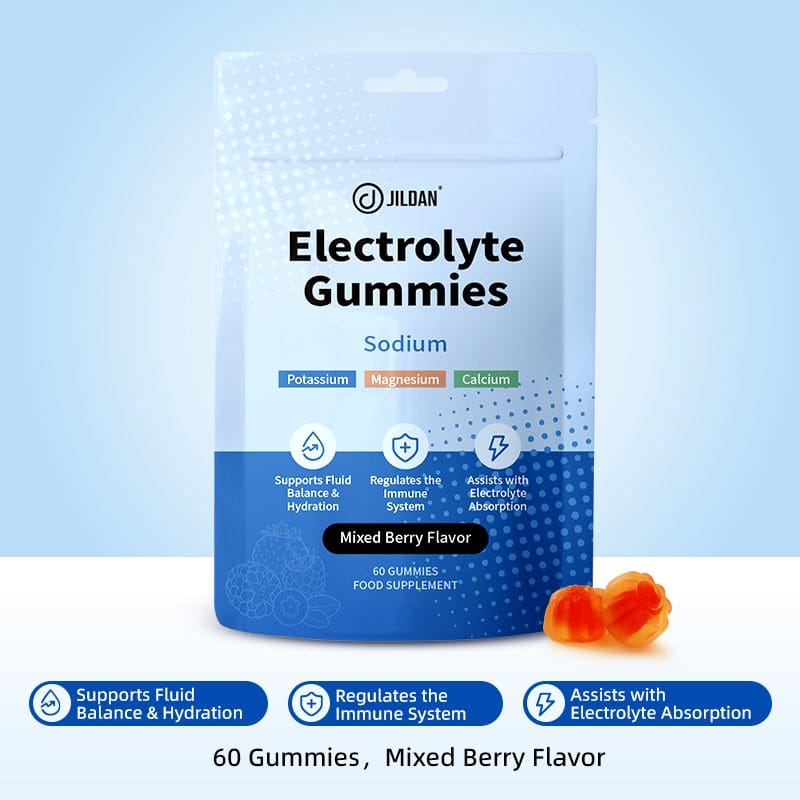
Both pectin and gelatin can be used for gummy supplements.
Pectin Electrolyte Gummies
Pectin supports gelatin-free and potentially vegan product positioning when every ingredient meets the relevant requirements.
It requires control of:
- pH;
- temperature;
- soluble solids;
- setting conditions.
Mineral salts can interact with formulation conditions, so the manufacturer should evaluate the actual electrolyte system rather than relying on a generic pectin base.
Gelatin Electrolyte Gummies
Gelatin produces a more elastic chew and has different processing characteristics.
The correct choice depends on:
- target texture;
- brand positioning;
- mineral loading;
- manufacturing platform.
Brands can review JD Nutra’s gummy supplement manufacturing range when comparing available gummy development routes.
JD Nutra also showcased electrolyte gummies within its sports-nutrition gummy range at HNC 2026.
Mineral Interactions Can Change Gummy Texture
Electrolytes are ionic compounds.
That matters in gel systems.
Calcium, magnesium, sodium, and potassium salts can influence:
- pH;
- ionic strength;
- gel formation;
- texture.
A high-mineral electrolyte gummies formula may therefore behave differently from a multivitamin gummy even when both use the same nominal pectin or gelatin base.
The manufacturer should optimize:
- mineral addition sequence;
- gummy solids;
- acid system;
- cooking conditions;
- depositing conditions.
This is why stock gummy formulations have limits.
A manufacturer cannot always add several hundred milligrams of new mineral ingredients to an existing gummy and expect texture to remain unchanged.
Stability Should Cover Both Minerals and Physical Quality
Minerals themselves can be relatively stable, but the complete product still needs shelf-life evaluation.
For electrolyte gummies, stability should consider:
- gummy hardness;
- stickiness;
- moisture;
- color;
- flavor;
- microbiological quality;
- packaging integrity.
If vitamins or other sensitive ingredients are added, potency may also need to be monitored.
The package should be included in stability planning because gummies can exchange moisture with their environment.
A product that is acceptable immediately after production may become:
- hard;
- sticky;
- wet;
- crystallized
after extended storage if formulation and packaging are not properly aligned.
Finished-Product Testing Should Confirm the Commercial Formula
Raw-material COAs are only one part of quality control.
A finished batch of electrolyte gummies has passed through:
- weighing;
- mixing;
- cooking;
- depositing;
- conditioning;
- packaging.
Finished-product specifications can include:
- appearance;
- average gummy weight;
- relevant mineral content;
- moisture-related characteristics;
- microbiological requirements;
- packaging integrity.
The exact test panel depends on the formula and destination market.
For U.S. products, manufacturers should operate within the applicable dietary supplement CGMP framework and maintain specifications and quality controls appropriate to the product.
Brands should ask:
- Which minerals are tested in the finished product?
- Which values are calculated?
- What appears on the COA?
- What acceptance ranges apply?
- Who releases the batch?
Supplement Facts Should Show Elemental Mineral Amounts Correctly
Mineral labeling can become confusing when formulators focus on raw-material weights.
For example, magnesium glycinate compound weight is not the same as elemental magnesium.
Likewise, potassium citrate weight is not identical to elemental potassium.
A Supplement Facts panel should reflect the amount of the nutrient being declared according to applicable labeling requirements.
FDA’s dietary supplement labeling guidance lists magnesium, chloride, sodium, and potassium among nutrients declared within the Supplement Facts framework.
For electrolyte gummies, formula development should therefore maintain a clear calculation file showing:
- mineral compound;
- elemental percentage;
- raw-material quantity;
- elemental amount per gummy;
- elemental amount per serving.
This prevents one of the most common formulation errors: marketing the compound weight as though it were the elemental mineral amount.
Avoid Calling Every Electrolyte Gummy a Sports Performance Product
Some consumers want electrolyte gummies for daily lifestyle use rather than endurance sports.
That creates a useful market opportunity.
But the claims should fit the formula.
A low-sodium wellness gummy should not necessarily use the same messaging as a high-sodium endurance formula.
Likewise, the presence of electrolytes does not automatically prove that a product:
- improves endurance;
- prevents cramps;
- prevents heat illness;
- improves athletic performance.
The NIH exercise-performance fact sheet emphasizes that adequate diet and hydration form the foundation of athletic performance and that supplement effects depend heavily on the specific ingredient and use case.
Brands should therefore build claims around the actual mineral content and intended product use.
Electrolyte Gummies and Muscle Cramps Need Careful Messaging
Muscle cramps are frequently associated with electrolytes in consumer marketing.
The reality is more complex.
Cramps can have multiple contributing factors, and the presence of sodium, potassium, or magnesium in a product does not prove that the finished gummy prevents exercise-associated cramping in every consumer.
For electrolyte gummies, brands should avoid turning general mineral physiology into a treatment claim.
It is more defensible to explain that minerals such as sodium, potassium, and magnesium contribute to normal physiological functions while keeping consumer education within the evidence for the actual formula.
How to Evaluate an Electrolyte Gummies Manufacturer
A strong manufacturer should be able to discuss much more than gummy flavor and shape.
Formula Design
Ask:
- Which electrolytes are proposed?
- What is the elemental amount of each?
- Why were those amounts chosen?
Mineral Sources
Ask:
- Which sodium salt?
- Which potassium salt?
- Which magnesium form?
- How do they affect flavor and loading?
Gummy Engineering
Ask:
- Is pectin or gelatin recommended?
- How do minerals affect texture?
- What is the maximum realistic active load?
Flavor
Ask:
- Has the flavor been tested with the final mineral system?
- How is saltiness or bitterness managed?
Quality
Ask:
- Which minerals are tested?
- What appears on the finished COA?
- How is batch consistency controlled?
Stability
Ask:
- Is the commercial package evaluated?
- Are texture and moisture monitored?
The manufacturer should be willing to explain when a requested electrolyte gummies formula is unrealistic.
That technical resistance can protect the brand from a poor launch.
What to Include in an Electrolyte Gummies RFQ
A detailed request for quotation should define the project before commercial discussion.
Include:
Target Consumer
Define:
- endurance athletes;
- gym users;
- outdoor consumers;
- general wellness users.
Electrolytes
Specify target elemental amounts of:
- sodium;
- potassium;
- magnesium;
- calcium if required.
Serving
Define:
- gummies per serving;
- suggested servings per day;
- preferred gummy weight.
Gummy System
Specify:
- pectin or gelatin;
- conventional sugar, reduced sugar, or sugar free;
- flavor direction;
- color preferences.
Supporting Ingredients
List any intended:
- vitamins;
- carbohydrates;
- other functional ingredients.
Testing
Request:
- raw-material specifications;
- finished-product specifications;
- mineral verification;
- microbiological testing;
- finished-product COA.
Packaging
Define:
- bottle or pouch;
- count;
- closure;
- label;
- carton if required.
For formulation, testing, packaging, and commercial production support, brands can review JD Nutra’s supplement CDMO services.
Common Electrolyte Gummies Formulation Mistakes
Starting With the Gummy Size
Mineral targets should determine the serving architecture.
Treating Compound Weight as Elemental Mineral
The two values can differ substantially.
Adding Magnesium Without Checking Serving Tolerance
Supplemental magnesium can cause gastrointestinal effects at higher intakes.
Making a High-Potassium Formula Without Consumer Review
Certain consumers may need to restrict potassium intake.
Assuming Electrolyte Gummies Replace Water
They supply minerals, not meaningful fluid volume.
Developing Flavor Before Finalizing Mineral Sources
Different salts can change taste dramatically.
Making One Formula for Every Consumer
Endurance athletes and everyday wellness consumers do not necessarily need identical products.
Choosing a Manufacturer Only by MOQ
Technical capability matters more than the smallest first production run.
FAQ
What Are Electrolyte Gummies?
Electrolyte gummies are chewable supplements containing minerals commonly associated with fluid and electrolyte balance, such as sodium, potassium, magnesium, and sometimes calcium or chloride.
Do Electrolyte Gummies Hydrate You?
They can provide electrolytes, but gummies contain relatively little water.
Consumers still need appropriate fluid intake.
What Electrolytes Should Be in Electrolyte Gummies?
The most common choices include sodium, potassium, and magnesium.
The appropriate combination depends on the target user, serving size, and product positioning.
Should Electrolyte Gummies Contain Sodium?
Sports-oriented formulas often include sodium because sodium is an important electrolyte lost in sweat.
The appropriate amount varies according to the intended consumer and use scenario.
Can Electrolyte Gummies Contain Magnesium?
Yes.
Manufacturers need to consider the elemental magnesium amount, magnesium form, gummy loading, taste, and total supplemental intake.
Are Electrolyte Gummies Better Than Powder?
Not universally.
Electrolyte gummies are more convenient when users do not want to mix a drink, while powders usually support larger mineral quantities and simultaneous fluid consumption.
Can Electrolyte Gummies Be Sugar-Free?
Yes, but sugar-free formulations need dedicated development because alternative sweetener systems affect texture, taste, water activity, and mineral flavor masking.
Are Electrolyte Gummies Vegan?
They can be formulated with pectin instead of gelatin, provided all other ingredients also meet the intended vegan specification.
What Should a Brand Ask an Electrolyte Gummies Manufacturer First?
Ask whether the target elemental sodium, potassium, and magnesium amounts can realistically fit into the desired serving while maintaining acceptable flavor, texture, stability, and finished-product quality.
Conclusion
Successful electrolyte gummies are not created by simply combining sodium, potassium, and magnesium in a flavored gummy.
The formula needs a defined consumer and use case.
Sports hydration, hot-weather activity, outdoor recreation, and everyday wellness can require very different product strategies. Exercise-hydration guidance also emphasizes that sweat rates and electrolyte losses vary considerably among individuals.
For supplement brands, the best development process is therefore:
consumer scenario → electrolyte targets → elemental amounts → mineral forms → serving size → gummy matrix → flavor → testing → packaging
Sodium deserves particular attention because it can be important in sweat replacement while creating substantial flavor challenges.
Potassium contributes to normal cellular, nerve, and muscle functions, but its role should be considered within overall dietary intake.
Magnesium can strengthen the wellness positioning of electrolyte gummies, but brands need to distinguish elemental magnesium from compound weight and consider supplemental intake limits and gastrointestinal tolerance.
The biggest format limitation is also simple:
electrolyte gummies provide minerals, not enough fluid to replace drinking.
This makes them particularly useful as a portable companion to an appropriate hydration strategy rather than as a substitute for water.
Brands comparing dosage forms can read JD Nutra’s Electrolyte Powder Supplement Development Guide and explore the company’s gummy supplement manufacturing capabilities. JD Nutra also publicly showcased electrolyte gummies as part of its sports-nutrition product development portfolio in 2026.
For a custom electrolyte gummies project involving formula development, mineral selection, flavor optimization, finished-product testing, and packaging, review JD Nutra’s custom supplement manufacturing services or contact JD Nutra with your target electrolyte profile and market requirements.


