
Choosing a magnesium gummies manufacturer requires more technical review than comparing gummy flavor, shape, bottle count, or the number printed on the front label.
Magnesium gummies are unusually easy to misunderstand because two different numbers can describe the same raw material:
- the weight of the magnesium-containing compound; and
- the amount of elemental magnesium that compound actually provides.
These numbers are not interchangeable.
A formula might contain hundreds of milligrams of magnesium glycinate, citrate, malate, or another magnesium ingredient while supplying a much smaller amount of elemental magnesium. The U.S. National Institutes of Health specifically explains that a Supplement Facts panel declares elemental magnesium, not the total weight of the magnesium-containing compound. NIH Magnesium Health Professional Fact Sheet
For a supplement brand, this distinction affects virtually every part of product development:
- gummy size;
- gummies per serving;
- raw-material quantity;
- percentage Daily Value;
- claims;
- finished-product testing;
- consumer expectations.
A professional magnesium gummies manufacturer should therefore begin with the target elemental magnesium amount rather than with an attractive raw-material number.
That single practice can prevent one of the biggest problems in magnesium gummy development: creating a product that sounds highly concentrated on the front label but delivers much less elemental magnesium than buyers or consumers expect.
Why a Magnesium Gummies Manufacturer Needs Mineral-Specific Expertise
Gummy manufacturing experience alone is not enough.
A manufacturer may know how to create an excellent fruit gummy but still lack experience handling high-load mineral ingredients.
Magnesium compounds can influence:
- bitterness;
- mineral aftertaste;
- chalkiness;
- gummy solids;
- moisture;
- pH;
- texture;
- serving size.
A competent magnesium gummies manufacturer therefore needs to understand both gummy technology and mineral formulation.
The manufacturer should be able to answer questions such as:
- Which magnesium form is being proposed?
- How much elemental magnesium does it provide?
- How much raw material is needed per serving?
- Can that amount physically fit in the gummy?
- What flavor problems does the ingredient create?
- How will elemental magnesium be verified?
- Which specifications appear on the finished-product COA?
If the answer focuses only on flavor and gummy appearance, the technical review is incomplete.
Elemental Magnesium Is the Number That Matters Most
One of the first questions every buyer should ask a magnesium gummies manufacturer is:
How much elemental magnesium does the proposed serving provide?
This is more useful than asking only how many milligrams of magnesium glycinate or magnesium citrate are present.
NIH explains that supplement labels declare the amount of elemental magnesium rather than the weight of the entire magnesium compound. NIH Magnesium Guidance
For example, the following statements describe very different pieces of information:
“300 mg magnesium glycinate”
and
“300 mg magnesium.”
The first can describe the weight of a magnesium-containing raw material.
The second implies an elemental magnesium quantity unless the surrounding wording clearly says otherwise.
The exact elemental contribution depends on the composition and assay of the selected raw material.
That is why a magnesium gummies manufacturer should maintain a formula calculation connecting:
raw-material quantity → magnesium percentage → elemental magnesium per gummy → elemental magnesium per serving
This calculation should remain aligned with:
- the master formula;
- raw-material specification;
- Supplement Facts panel;
- finished-product testing.
FDA Daily Value Is Based on Elemental Magnesium
For U.S. labeling, the current FDA Daily Value for magnesium is 420 mg for adults and children age four and older. FDA Daily Value Reference Guide
That Daily Value relates to magnesium itself—not the total mass of magnesium glycinate, citrate, oxide, or another compound.
This matters when a magnesium gummies manufacturer calculates percentage Daily Value.
Suppose a raw-material specification changes.
The new supplier’s material may have a different assay or composition.
Even if the same amount of powder is added to the gummy, the elemental magnesium result may change.
That means supplier changes should trigger appropriate technical review rather than being treated as simple one-for-one substitutions.
Brands should ask whether elemental magnesium calculations are tied to:
- a nominal ingredient specification;
- an actual raw-material assay;
- finished-product analytical verification.
The quality system should make that distinction clear.
Magnesium Glycinate Is Popular, but the Raw-Material Number Can Be Misleading
Magnesium glycinate has become one of the most visible forms in consumer supplements.
JD Nutra already discusses the ingredient in its current magnesium formulation guide, including the important distinction between ingredient weight and elemental magnesium. JD Nutra Magnesium Glycinate Formulation Guide
This is especially relevant for a magnesium gummies manufacturer because glycinate requires substantially more physical material than the elemental magnesium number alone suggests.
That affects:
- gummy weight;
- active loading;
- texture;
- serving count.
A brand should therefore avoid beginning a product brief with:
“We want a 300 mg magnesium glycinate gummy.”
Instead, specify whether the target means:
- 300 mg of the magnesium glycinate ingredient; or
- 300 mg of elemental magnesium supplied from magnesium glycinate.
Those are technically different products.
A qualified magnesium gummies manufacturer should identify the ambiguity immediately.
Magnesium Glycinate vs Citrate vs Oxide
Different magnesium forms create different formulation trade-offs.
NIH notes that magnesium absorption varies among forms and reports that forms that dissolve more readily in liquid tend to be more completely absorbed. It specifically identifies citrate, chloride, lactate, and aspartate as having greater bioavailability than oxide or sulfate in some studies. NIH Magnesium Forms and Absorption
That does not mean one magnesium form is automatically the best choice for every gummy.
A magnesium gummies manufacturer also needs to consider manufacturing characteristics.
| Magnesium Form | Product-Development Consideration |
|---|---|
| Magnesium glycinate | Strong consumer recognition; compound weight vs elemental magnesium must be made clear |
| Magnesium citrate | Relatively soluble and commonly used; can influence acidity and sensory profile |
| Magnesium oxide | Higher elemental magnesium proportion by weight, but lower solubility and bioavailability than several other forms |
| Magnesium malate | Can support differentiated formulation concepts; active loading still needs to be calculated from elemental magnesium |
| Blended magnesium | Allows multiple forms but increases formula, label, and testing complexity |
The best choice depends on:
- target elemental amount;
- target consumer;
- product positioning;
- gummy capacity;
- sensory performance.
The form should not be selected solely because it is currently popular in search results.
Do Not Assume “Glycinate” Automatically Means a Better Product
Magnesium glycinate can be a legitimate ingredient choice, but the word itself does not prove product quality.
A professional magnesium gummies manufacturer should still verify:
- raw-material identity;
- magnesium assay;
- elemental magnesium contribution;
- purity;
- contaminant specifications;
- supplier consistency.
Brands should also determine whether a product described as magnesium glycinate uses:
- only magnesium glycinate;
- a combination of magnesium forms;
- another magnesium form alongside glycinate.
The Supplement Facts and ingredient statement should accurately represent the finished formula.
Consumers increasingly search by magnesium form, which makes transparency especially important.
A strong product should not rely on a familiar ingredient name while obscuring what actually supplies the declared elemental magnesium.
Gummy Capacity Is One of the Biggest Formulation Constraints
Magnesium requires much more physical space than many vitamins.
A vitamin such as B12 may be used in microgram quantities.
Magnesium often needs a substantially larger mineral-compound mass to deliver a meaningful elemental amount.
This creates a core challenge for every magnesium gummies manufacturer.
The gummy also needs room for:
- pectin or gelatin;
- sweeteners;
- water;
- acids;
- flavors;
- colors;
- processing ingredients.
If the magnesium load becomes too high, the result may be:
- an oversized gummy;
- several gummies per serving;
- poor texture;
- excessive bitterness;
- chalkiness.
This is why a manufacturer should conduct feasibility review before promising a target dosage.
A realistic product sometimes requires changing the serving architecture rather than forcing more mineral into a small gummy.
Two Gummies May Be Better Than One Oversized Gummy
Brands often prefer one gummy per serving because it looks convenient.
Technically, that is not always the best solution.
A magnesium gummies manufacturer may recommend two or more gummies per serving when a higher elemental magnesium target would otherwise create:
- poor chew;
- excessive size;
- unacceptable mineral taste;
- manufacturing instability.
Serving design should therefore balance:
elemental magnesium + gummy size + sensory quality + consumer convenience
One large gummy is not automatically more consumer friendly than two smaller gummies.
The brand should evaluate actual prototypes rather than deciding serving count from packaging aesthetics.
Compound Magnesium Formulas Add Another Layer of Complexity
Magnesium gummies are increasingly combined with ingredients positioned around evening routines, relaxation, or daily wellness.
JD Nutra currently presents a compound magnesium gummy concept combining magnesium glycinate with ingredients such as ashwagandha, chamomile, L-theanine, selenium, and vitamin B6. JD Nutra Supplement Manufacturing Portfolio
For a magnesium gummies manufacturer, every additional ingredient can affect:
- active load;
- taste;
- gummy color;
- stability;
- serving size;
- claim strategy.
A formula containing magnesium plus several botanicals can be considerably harder to manufacture than a magnesium-only gummy.
Botanical extracts may introduce:
- bitterness;
- strong aroma;
- color;
- moisture sensitivity.
Brands should therefore determine whether supporting ingredients genuinely strengthen the product concept before adding them.
Sleep Claims Require More Caution Than Consumer Trends Suggest
Magnesium gummies are frequently positioned around sleep.
Current evidence does not support treating that association as settled science.
A 2026 systematic review evaluated randomized controlled trials of oral magnesium for adult sleep outcomes. It included 12 trials in the main sleep analysis and found inconsistent results across different measures. The authors rated the certainty of evidence low to very low and concluded that current evidence does not support routine oral magnesium use as a treatment for insomnia, although modest benefits may occur for selected subjective outcomes. 2026 Magnesium and Sleep Systematic Review on PubMed
For a magnesium gummies manufacturer and its brand customers, this has an important marketing implication.
Consumer interest in “magnesium gummies for sleep” can justify product-development attention.
It does not justify claiming that the product:
- treats insomnia;
- cures sleep disorders;
- guarantees faster sleep;
- replaces medical treatment.
The evidence and the claim are separate issues.
Magnesium Bisglycinate Sleep Research Shows Why Product Specificity Matters
A randomized placebo-controlled trial published in 2025 evaluated magnesium bisglycinate in 155 adults reporting poor sleep.
Participants received 250 mg of elemental magnesium daily, and researchers reported a statistically significant but small improvement in insomnia severity after four weeks compared with placebo. Other measured psychological outcomes did not differ significantly. Magnesium Bisglycinate Randomized Trial on PubMed
This illustrates why a magnesium gummies manufacturer should connect claims with:
- the exact magnesium form;
- elemental magnesium amount;
- study population;
- outcome;
- study duration.
A low-dose gummy cannot automatically borrow the results of a capsule study providing a materially different elemental magnesium amount.
Likewise, magnesium glycinate plus several other ingredients is no longer the same intervention as magnesium alone.
FDA Claim Rules Should Be Reviewed Before Packaging
FDA distinguishes structure/function claims from disease claims.
Structure/function claims can describe how a dietary ingredient affects normal structure or function, but manufacturers must have substantiation that the claim is truthful and not misleading. Applicable claims also require the standard disclaimer and notification to FDA within the required period after marketing. FDA Structure/Function Claims Guidance
For brands working with a magnesium gummies manufacturer, claim review should happen before final artwork.
Formula and claims need to stay aligned.
Changing from magnesium glycinate to another magnesium form after the marketing language has already been written can affect:
- product story;
- supporting evidence;
- ingredient statement.
Quality control should therefore include version control between the formula and packaging.
Supplemental Magnesium Has an Established Upper Intake Level
Brands should distinguish between magnesium needs from the total diet and the upper limit that applies specifically to supplemental magnesium.
NIH currently lists Recommended Dietary Allowances for adults ranging from 310 to 420 mg per day, depending on age and sex. These amounts include magnesium from all dietary sources. NIH Magnesium Intake Recommendations
NIH also lists a 350 mg per day Tolerable Upper Intake Level for magnesium from dietary supplements and medications in adults. This upper limit does not include magnesium naturally occurring in food. NIH Supplemental Magnesium Upper Limit
This distinction should be understood by every magnesium gummies manufacturer developing higher-strength formulas.
The 350 mg value is not a recommended target.
It is an upper intake reference for supplemental magnesium in healthy adults.
A brand should not design toward the UL simply because it represents a larger front-label number.
Magnesium Can Cause Gastrointestinal Effects at Higher Supplemental Intakes
NIH reports that high supplemental magnesium intakes can cause:
- diarrhea;
- nausea;
- abdominal cramping.
Extremely high intakes can produce more serious toxicity. NIH Magnesium Safety Information
For a magnesium gummies manufacturer, this is particularly relevant when the product recommends multiple gummies or repeated servings.
The development team should evaluate:
- elemental magnesium per serving;
- recommended number of servings;
- magnesium from additional products the consumer may use.
Brands should also avoid describing gastrointestinal effects as proof that the product is “working.”
Tolerance is a safety and consumer-experience consideration.
Kidney Function Is an Important Safety Context
Healthy kidneys eliminate excess magnesium efficiently.
NIH notes that the risk of magnesium toxicity rises when kidney function is impaired because the body’s ability to remove excess magnesium decreases. NIH Magnesium Safety and Kidney Function
This does not mean a normal magnesium gummy is inherently unsafe.
It demonstrates why brands should avoid universal statements such as:
“Everyone should take magnesium every day.”
Product directions and warnings should reflect the intended market and receive appropriate regulatory review.
A responsible magnesium gummies manufacturer should be prepared to support the brand with accurate specification information needed for that review.
Taste Is Often the Hidden Limitation in Magnesium Gummies
The formula may fit mathematically and still fail commercially.
Magnesium compounds can contribute:
- bitterness;
- mineral notes;
- chalkiness;
- dryness.
A manufacturer may technically fit the required active ingredients into the gummy while producing a product that consumers do not enjoy.
For a magnesium gummies manufacturer, flavor development should therefore occur using the real commercial magnesium material.
A blank gummy base is not enough.
The final or near-final sample should include:
- intended magnesium form;
- intended raw-material load;
- intended supporting ingredients;
- final sweetener system.
Only then can the brand meaningfully evaluate:
- flavor;
- texture;
- aftertaste;
- mouthfeel.
Pectin vs Gelatin Needs to Be Tested With the Actual Mineral Load
Both pectin and gelatin can support magnesium gummies.
Pectin Gummies
Pectin can support gelatin-free and vegan positioning when all other ingredients meet the appropriate requirements.
However, pectin systems are sensitive to formulation conditions such as:
- pH;
- mineral ions;
- soluble solids;
- temperature.
Gelatin Gummies
Gelatin provides a different elastic texture and processing system.
It may handle certain formulas differently from pectin but does not support vegan positioning.
A capable magnesium gummies manufacturer should therefore test the selected magnesium form inside the actual gummy base.
A formula that works with low mineral loading may change considerably when the magnesium content is increased.
Sugar-Free Magnesium Gummies Require Separate Development
Sugar-free gummies are increasingly requested by brands targeting adult wellness consumers.
However, removing conventional sugars changes more than sweetness.
It can affect:
- gummy solids;
- water activity;
- texture;
- processing;
- aftertaste.
This becomes especially important with magnesium because the sweetener system also helps mask mineral flavors.
A sugar-free magnesium gummies manufacturer project should therefore be treated as a dedicated formulation.
Do not assume that the same flavor system will perform equally well after the sweetener system changes.
Raw-Material Specifications Should Include Magnesium Assay
Quality begins with the ingredient.
Before commercial production, the magnesium gummies manufacturer should have an approved specification for the selected magnesium source.
Depending on the material, relevant information can include:
- ingredient identity;
- magnesium assay;
- elemental magnesium percentage;
- purity;
- physical appearance;
- moisture;
- contaminant specifications;
- microbiological requirements.
The supplier COA should be reviewed against that approved specification.
If the raw-material assay changes, the manufacturer should determine whether the amount added to the formula needs adjustment to maintain the intended elemental magnesium target.
This is much more rigorous than simply adding the same raw-material weight to every batch.
Finished-Product Testing Should Verify the Gummy, Not Only the Raw Material
An approved raw material does not prove the finished product is correct.
Commercial gummy manufacturing involves:
- weighing;
- mixing;
- cooking;
- ingredient addition;
- depositing;
- conditioning;
- packaging.
A finished-product specification for a magnesium gummies manufacturer project may address:
- appearance;
- gummy weight;
- elemental magnesium;
- relevant supporting nutrients;
- microbiological requirements;
- moisture-related characteristics;
- package integrity.
Brands should ask whether elemental magnesium is analytically verified on the finished gummy.
If the result is calculated rather than tested, that distinction should be clear.
How to Read a Magnesium Gummies COA
A finished COA should help the brand understand what was actually produced.
A useful document can include:
- product name;
- batch number;
- specification;
- analytical method;
- acceptance limits;
- actual results;
- quality approval.
For a magnesium gummies manufacturer, buyers should pay particular attention to the magnesium line.
Ask:
Does this result show elemental magnesium or magnesium compound weight?
That wording matters.
A report showing “magnesium glycinate” is not automatically the same as an elemental magnesium assay.
The test method and reporting unit should make the measurement clear.
Stability Testing Should Include the Commercial Package
Magnesium itself can be relatively stable, but the gummy matrix still changes over time.
Potential shelf-life issues include:
- hardening;
- softening;
- stickiness;
- moisture migration;
- flavor change;
- discoloration.
Combination formulas can add additional stability concerns if they contain:
- vitamins;
- botanicals;
- amino acids.
A magnesium gummies manufacturer should therefore evaluate the finished product rather than assuming mineral stability guarantees complete gummy stability.
The commercial bottle or pouch should also be considered because packaging influences moisture exposure during storage.
Change Control Protects the Label After Launch
Imagine a brand approves a magnesium glycinate gummy and prints large quantities of packaging.
Several months later, the manufacturer switches to another magnesium supplier.
The new material has a different elemental magnesium assay.
Even if both ingredients are called magnesium glycinate, that change can affect the formula.
A professional magnesium gummies manufacturer should have change-control procedures covering significant changes to:
- magnesium supplier;
- magnesium form;
- raw-material assay;
- gummy base;
- sweetener;
- flavor;
- package;
- analytical method.
Brands should establish which changes require approval before implementation.
This prevents the finished product from drifting away from its approved label specification.
How to Audit a Magnesium Gummies Manufacturer
A structured audit makes suppliers easier to compare.
Magnesium Specification
Ask:
- Which magnesium form is used?
- What is the elemental magnesium percentage?
- How is the assay verified?
Formula Calculation
Ask:
- How is raw-material weight converted to elemental magnesium?
- Is the formula adjusted for assay variation?
Active Loading
Ask:
- What is the realistic elemental magnesium amount per gummy?
- How many gummies are required per serving?
Gummy Technology
Ask:
- Is pectin or gelatin recommended?
- How does magnesium affect texture?
- Can sugar-free formulas be supported?
Flavor
Ask:
- Has the real commercial mineral load been included in samples?
- How is bitterness or chalkiness managed?
Testing
Ask:
- Is elemental magnesium tested on the finished product?
- What appears on the COA?
Stability
Ask:
- How is shelf life established?
- Is the commercial package used?
Change Control
Ask:
- Will changes to the magnesium source require review?
A qualified magnesium gummies manufacturer should be able to provide technical answers to these questions rather than only sales claims.
What to Include in a Magnesium Gummies RFQ
A detailed RFQ should distinguish ingredient mass from elemental magnesium.
Include:
Magnesium Requirement
Specify:
- magnesium form;
- target elemental magnesium per serving;
- preferred raw-material requirements.
Gummy Serving
Define:
- gummies per serving;
- preferred gummy size;
- servings per container.
Supporting Ingredients
List any requested:
- vitamin B6;
- L-theanine;
- botanicals;
- other minerals or vitamins.
Gummy System
Specify:
- pectin or gelatin;
- conventional or sugar-free;
- flavor;
- color.
Quality Requirements
Request:
- raw-material specification;
- magnesium assay;
- finished-product elemental magnesium testing;
- microbiological requirements;
- finished COA;
- stability information.
Packaging
Define:
- bottle or pouch;
- gummy count;
- closure;
- label;
- carton if required.
Brands can review JD Nutra’s current magnesium ingredient guide before preparing the brief. Magnesium Glycinate Supplement Formulation Guide
For formulation, testing, manufacturing, and packaging support, JD Nutra also provides integrated supplement CDMO services. JD Nutra Supplement CDMO Services
Common Mistakes When Choosing a Magnesium Gummies Manufacturer
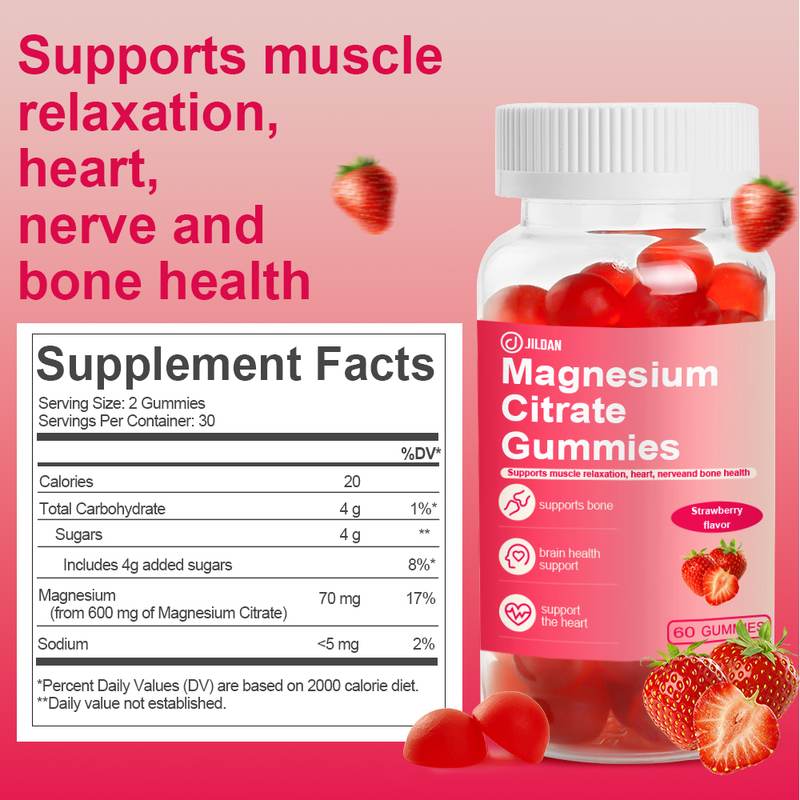
Confusing Magnesium Compound Weight With Elemental Magnesium
This is the most important mistake to avoid.
Choosing the Largest Front-Label Number
A larger magnesium-compound number does not necessarily mean more elemental magnesium.
Selecting Magnesium Form Only From Marketing Trends
Form should fit the product’s dosage, evidence, sensory, and manufacturing requirements.
Forcing Too Much Magnesium Into One Gummy
A larger serving count may create a better finished product.
Approving Flavor Before the Final Mineral Load
Magnesium can materially change taste.
Assuming Sleep Benefits Are Proven
A 2026 systematic review found inconsistent sleep outcomes and low-to-very-low certainty of evidence.
Ignoring Supplemental Magnesium Limits
The adult UL of 350 mg applies specifically to magnesium from supplements and medications, not naturally occurring magnesium in food.
Relying Only on a Raw-Material COA
Finished-product verification provides more meaningful information about the gummy consumers actually receive.
FAQ
What Should I Ask a Magnesium Gummies Manufacturer First?
Ask how much elemental magnesium the proposed serving provides.
A reliable magnesium gummies manufacturer should clearly distinguish elemental magnesium from the weight of magnesium glycinate, citrate, malate, oxide, or another compound.
Is 300 mg Magnesium Glycinate the Same as 300 mg Magnesium?
No.
Magnesium glycinate is a compound containing magnesium. The entire compound weight is not the same as the amount of elemental magnesium it provides.
Which Magnesium Form Is Best for Gummies?
There is no universal answer.
The best form depends on elemental magnesium target, gummy capacity, sensory performance, evidence, and positioning.
Is Magnesium Glycinate Better Than Magnesium Oxide?
NIH reports that several more soluble magnesium forms have shown greater absorption than magnesium oxide in studies. However, a magnesium gummies manufacturer must also consider active loading, flavor, and finished-product design.
Can Magnesium Gummies Provide 100% of the Daily Value?
The FDA Daily Value is 420 mg of magnesium. Whether that amount is practical or appropriate in gummies is a separate formulation and safety question. The adult supplemental-magnesium UL is 350 mg per day unless otherwise directed by a healthcare provider.
Do Magnesium Gummies Help With Sleep?
Research is mixed.
A 2026 systematic review found inconsistent results and low-to-very-low certainty of evidence, so magnesium should not be marketed as a proven treatment for insomnia.
Can Magnesium Gummies Be Sugar-Free?
Yes.
However, sugar-free gummies require dedicated formulation because alternative sweeteners and bulking systems can change taste, texture, moisture, and processing.
What Should Be on a Magnesium Gummies COA?
A useful finished-product COA can include batch identity, specifications, test methods, actual analytical results, microbiological results where applicable, and quality approval.
For magnesium, the reporting basis should clearly identify whether the value represents elemental magnesium.
How Do I Choose a Magnesium Gummies Manufacturer?
Evaluate the manufacturer’s ability to manage elemental magnesium calculations, raw-material assay, active loading, flavor masking, gummy technology, finished-product testing, COAs, stability, packaging, and change control.
Conclusion
Choosing a magnesium gummies manufacturer should begin with one number:
elemental magnesium per serving.
Everything else follows from that target.
The manufacturer then needs to determine:
- which magnesium form fits the concept;
- how much raw material is required;
- whether that amount fits the gummy;
- how many gummies are needed;
- whether the flavor remains acceptable;
- how elemental magnesium will be tested;
- how the finished label will communicate the result.
This is particularly important for magnesium glycinate products because compound weight and elemental magnesium are different measurements.
NIH explicitly states that Supplement Facts labels declare elemental magnesium rather than total magnesium-compound weight. NIH Magnesium Fact Sheet
For brands, this creates a clear quality standard.
A strong magnesium gummies manufacturer should be able to connect:
raw-material specification → elemental magnesium calculation → commercial formula → finished testing → Supplement Facts → COA
The manufacturer should also recognize the limits of gummy technology.
A technically realistic two-gummy serving is better than an oversized one-gummy formula with poor texture or misleading nutrient presentation.
Brands should be equally cautious with benefit claims. The magnesium-and-sleep category is commercially popular, but the latest 2026 systematic review found that randomized trial results remain inconsistent and the certainty of evidence is low or very low. 2026 Magnesium Sleep Systematic Review
For a deeper explanation of magnesium forms and elemental magnesium calculations, review JD Nutra’s existing magnesium formulation guide. JD Nutra Magnesium Glycinate Supplement Guide
JD Nutra also currently develops compound magnesium gummy concepts and supports formula development, manufacturing, testing, and packaging for gummy supplement brands. JD Nutra Supplement Manufacturing Portfolio JD Nutra CDMO Services
When the target elemental magnesium level, magnesium form, serving size, supporting ingredients, gummy system, testing requirements, packaging, and destination market are defined, contact JD Nutra to discuss your magnesium gummies manufacturer project. Contact JD Nutra


