
Choosing an ashwagandha manufacturer requires more than comparing extract ratios, withanolide percentages, capsule counts, gummy flavors, or minimum order quantities.
Ashwagandha is a botanical ingredient, and botanical materials introduce quality variables that do not exist in the same way for highly purified vitamins or minerals. The plant species, plant part, agricultural source, extraction process, carrier system, chemical profile, microbiological quality, contaminants, and storage conditions can all influence the finished ingredient.
For a supplement brand, that makes supplier qualification especially important.
Ashwagandha is botanically identified as Withania somnifera. The NIH Office of Dietary Supplements notes that the chemical composition of the root and leaf differs and that commercial supplements may use root extracts or combinations of root and leaf. NIH also explains that withanolides are an important group of naturally occurring constituents found in the plant.
That creates the first major sourcing question:
Does your ashwagandha manufacturer know exactly what botanical material is entering production?
A professional quality system should be able to answer that question with specifications, analytical data, supplier documentation, and batch traceability—not with marketing language alone.
An Ashwagandha Manufacturer Should Start With Botanical Identity
Before discussing potency or dosage, an ashwagandha manufacturer should establish the identity of the incoming botanical material.
A useful raw-material specification may include:
- scientific name: Withania somnifera;
- plant part;
- country or region of origin where relevant;
- raw botanical or extract;
- extraction process;
- extract ratio where relevant;
- carrier materials;
- standardized constituents;
- physical description;
- storage requirements.
Plant part is particularly important.
The NIH ashwagandha fact sheet states that root and leaf have different chemical compositions.
This means a root extract should not quietly become a root-and-leaf extract during a later production run simply because both materials can be labeled ashwagandha.
Brands should ask the ashwagandha manufacturer:
- Which plant part is used?
- Is that plant part stated in the approved specification?
- Can the source be traced by lot?
- What method is used to verify identity?
- What happens if the raw-material supplier changes?
Those questions should be answered before the product reaches flavor development or packaging design.
Root and Leaf Are Not Interchangeable Quality Specifications
The distinction between root and leaf has become even more important as analytical research on commercial ashwagandha products has expanded.
A 2025 study comparing British Pharmacopoeia and U.S. Pharmacopeia approaches evaluated 25 commercial ashwagandha supplement products. The researchers reported that more than 44% failed to meet the British Pharmacopoeia criteria and 60% failed to meet the USP criteria, while only 10 of 25 products met both standards. The authors also identified plant-part-related chemical variation and reported undisclosed aerial material in a number of samples. Read the study on PubMed.
Those results do not mean that the entire market has the same failure rate.
They do show why an ashwagandha manufacturer should take plant-part verification seriously.
The brand should be able to connect:
approved botanical specification → incoming raw material → analytical result → finished batch
If the ingredient specification says root, the quality system should be capable of supporting that statement.
Withanolides Are Useful Markers, but They Are Not the Whole Ingredient
Withanolides are among the best-known compounds associated with ashwagandha, and commercial extracts are frequently standardized according to a stated withanolide level.
That can be useful.
But a percentage on a specification sheet does not automatically establish complete product quality.
An ashwagandha manufacturer should be able to explain:
- which withanolides are included in the analytical method;
- whether the reported result represents total withanolides or selected compounds;
- which analytical method is used;
- which reference standards are used;
- what the acceptance range is;
- whether every incoming lot is evaluated.
An older analytical study developed an HPLC method for compounds including withaferin A and withanolide D and demonstrated that constituent profiles vary across different parts of Withania somnifera. Review the study on PubMed.
The practical implication is straightforward:
A single “5% withanolides” statement should lead to further technical questions.
A strong ashwagandha manufacturer should be able to define exactly how that number is established.
Recent Testing Shows Why Label Claims Need Analytical Verification
Another 2025 study analyzed 19 ashwagandha extract-based products and five root-powder products using HPLC coupled with advanced mass-spectrometry techniques.
Researchers identified 19 withanolides and withanosides and compared measured values with label specifications. They reported deviations between measured content and stated specifications ranging from approximately two-fold to 35-fold in the products examined. Read the study on PubMed.
Again, this study should not be used to claim that every ashwagandha product is inaccurate.
It demonstrates why an ashwagandha manufacturer should not depend only on supplier marketing documents.
Brands should ask:
- Is withanolide content verified analytically?
- Is the result lot specific?
- Is the method appropriate for the raw material?
- Does the finished product remain aligned with the approved specification?
When a label emphasizes a standardized botanical compound, analytical verification becomes part of brand credibility.
Extract Ratio and Standardization Should Not Be Confused
Ashwagandha raw materials are often described using extract ratios such as 10:1, 20:1, or other concentration statements.
An extract ratio can provide useful processing information, but it does not automatically tell the buyer how much of a specific constituent is present.
For this reason, an ashwagandha manufacturer should distinguish between:
- extraction ratio;
- constituent standardization;
- assay result.
These three concepts answer different questions.
Extract ratio: How much starting botanical material relates to the extract?
Standardization: Which chemical constituent or group of constituents is controlled?
Assay: What did the laboratory actually measure in this lot?
Brands should not select an ingredient simply because its extract ratio appears numerically larger.
A lower-ratio extract with well-defined botanical identity and analytical specifications can be easier to evaluate than a dramatic concentration claim with weak supporting documentation.
Supplier Qualification Happens Before Incoming Testing
Testing every incoming lot is important, but testing does not eliminate the need for supplier qualification.
A capable ashwagandha manufacturer should maintain an approved-supplier program for botanical ingredients.
Supplier qualification may consider:
- company identity;
- manufacturing or extraction site;
- quality-system documentation;
- botanical sourcing controls;
- specification history;
- representative COAs;
- analytical performance;
- previous lot consistency;
- complaint history;
- audit results where appropriate.
The objective is to determine whether the supplier can reliably provide material meeting the approved specification.
A qualified supplier relationship should also include change-control expectations.
If the extractor changes:
- plant source;
- plant part;
- extraction solvent;
- carrier;
- manufacturing location;
- standardization method,
the ashwagandha manufacturer should evaluate whether that change affects the approved product.
Supplier qualification is therefore not a one-time paperwork exercise.
It is ongoing risk management.
Incoming Ashwagandha Should Be Quarantined Until Quality Release
When botanical material reaches a manufacturing facility, it should not automatically become available for production.
A controlled receiving system may include:
- receiving inspection;
- lot-number verification;
- packaging inspection;
- quarantine;
- sampling;
- identity verification;
- specification review;
- COA review;
- quality release.
For U.S.-market dietary supplements, FDA’s Current Good Manufacturing Practice framework under 21 CFR Part 111 requires appropriate component specifications and quality-control procedures. The FDA dietary supplement CGMP guide provides detailed guidance for manufacturing, packaging, labeling, and holding operations.
A professional ashwagandha manufacturer should therefore be able to explain the difference between:
material received
and
material approved for manufacturing
If those two statuses are effectively the same, the quality system deserves closer review.
Identity Testing Should Be Appropriate for the Material
Botanical identity testing is more complicated than matching a name on a COA.
The appropriate method depends on whether the material is:
- intact botanical;
- powdered root;
- concentrated extract;
- highly processed extract.
Possible tools for botanical characterization include:
- microscopy;
- chromatography;
- HPTLC;
- HPLC;
- LC-MS;
- DNA-based approaches where technically appropriate;
- other validated analytical methods.
No single method is ideal for every form.
Highly processed extracts, for example, may no longer contain intact DNA in the same way a minimally processed botanical does.
A review of Withania somnifera metabolomics highlights the value of techniques including LC-MS, GC-MS, HPTLC, and NMR for detailed chemical profiling and quality-control applications. Read the review on PubMed.
A strong ashwagandha manufacturer should therefore choose identity and characterization methods based on the actual raw material—not use one generic botanical test for everything.
Heavy Metals Need Defined Limits and Actual Results
Ashwagandha is an agricultural botanical material.
Like other botanicals, quality programs should consider environmental contaminants that may be relevant to the source and processing method.
Depending on the approved specification and destination market, heavy-metal testing may address substances such as:
- lead;
- cadmium;
- arsenic;
- mercury.
The important procurement question is not whether the supplier says the ingredient is “heavy-metal tested.”
Brands should ask the ashwagandha manufacturer:
- What limits apply?
- Which method is used?
- Which laboratory performs the test?
- Are actual results reported on the COA?
- Are specifications based on the finished product or raw material?
Quality language should also be precise.
“Not detected” does not always mean zero.
Every analytical method has a detection capability.
A technical specification is more useful than an absolute marketing statement such as “100% heavy-metal free.”
Microbiological Controls Are Important for Botanical Ingredients
Botanical raw materials can also carry microbiological risks.
The exact specification depends on the material, manufacturing process, intended use, and destination market.
A quality program may consider:
- total aerobic count;
- yeast and mold;
- specified pathogens where relevant.
An ashwagandha manufacturer should be able to explain whether controls are applied:
- at the botanical supplier;
- during incoming inspection;
- in the finished product;
- at multiple stages.
The manufacturing environment also matters.
A compliant raw material can still become part of a poor product if manufacturing or storage controls are weak.
Brands should therefore look beyond the raw-material COA and understand the entire production environment.
Pesticide Residues Should Be Considered According to Source Risk
Agricultural sourcing introduces another possible quality variable: pesticide residues.
Not every product requires the same testing strategy.
The appropriate program depends on factors such as:
- country of origin;
- agricultural practices;
- supplier history;
- organic claims;
- market requirements;
- risk assessment.
A responsible ashwagandha manufacturer should be able to explain how pesticide risk is assessed rather than automatically responding that “everything is tested for everything.”
Risk-based testing is more technically meaningful than a generic checklist.
If pesticide specifications are important to the product or destination market, those requirements should appear in the purchasing specification before the raw material is ordered.
Residual Solvents Matter for Extracts
Extracted botanicals introduce another possible quality consideration.
If solvents are used in the extraction process, the specification may need to address residual solvents where relevant.
Ask the ashwagandha manufacturer:
- Which extraction solvent is used?
- Is the solvent defined in the raw-material specification?
- Are residual solvent limits established where applicable?
- Does the supplier provide lot-specific analytical data?
The answer matters because two extracts with the same plant name and withanolide percentage can still be manufactured very differently.
Understanding the extraction process helps brands compare ingredients on more than concentration alone.
The COA Should Tell You More Than “Pass”
A Certificate of Analysis should communicate what was actually evaluated.
A representative ashwagandha COA may include:
- material name;
- scientific name;
- plant part;
- lot number;
- appearance;
- identity;
- withanolide assay;
- moisture;
- microbiological specifications;
- heavy-metal specifications;
- other relevant contaminant tests;
- analytical methods;
- acceptance limits;
- actual results.
Brands evaluating an ashwagandha manufacturer should distinguish between:
Specification: what the lot is required to meet.
Result: what the laboratory actually measured.
For quantitative tests, actual numerical results are often more informative than a generic “Pass.”
The brand should also confirm whether the COA belongs to:
- incoming raw material;
- bulk blend;
- finished product.
Those documents answer different quality questions.
Finished-Product Testing Should Follow the Manufacturing Process
A strong raw material does not guarantee a strong finished supplement.
Once approved ashwagandha enters manufacturing, it may be:
- weighed;
- blended;
- mixed with excipients;
- exposed to processing conditions;
- filled into capsules;
- compressed into tablets;
- incorporated into gummies;
- packaged.
Each step creates potential sources of variation.
A professional ashwagandha manufacturer should therefore establish finished-product specifications in addition to raw-material specifications.
Depending on dosage form, finished specifications may address:
- appearance;
- unit weight;
- active or marker content;
- microbiological quality;
- contaminants;
- dosage-form performance;
- packaging.
FDA’s dietary supplement CGMP guidance explains the requirement for component, in-process, and finished-product specifications in U.S. dietary supplement manufacturing.
Capsule Manufacturing Creates Its Own Quality Questions
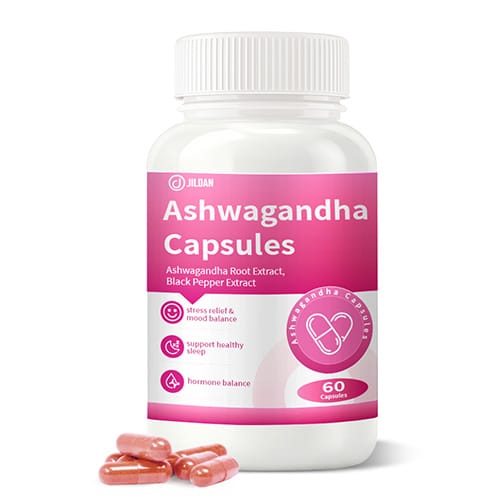
Capsules are a logical format for ashwagandha because they allow dry botanical extracts to be delivered without requiring consumers to taste them.
However, an ashwagandha manufacturer still needs to evaluate:
- bulk density;
- powder flow;
- capsule size;
- fill weight;
- excipients;
- moisture sensitivity.
If raw-material density changes significantly from one lot or supplier to another, filling behavior can also change.
Finished capsules may therefore have specifications covering:
- average fill weight;
- appearance;
- capsule integrity;
- active content;
- relevant microbiological and contaminant criteria.
Brands exploring a capsule project can review JD Nutra’s capsule supplement manufacturing capabilities.
Gummy Manufacturing Makes Ashwagandha More Difficult
Ashwagandha gummies create a more complex quality problem.
The botanical may have:
- bitterness;
- earthy aroma;
- strong color;
- relatively high solid load.
A gummy also introduces:
- heat;
- moisture;
- acid;
- sweeteners;
- gelling ingredients.
For an ashwagandha manufacturer, the challenge is maintaining both the botanical specification and an acceptable consumer experience.
Quality control may need to monitor:
- active loading;
- gummy weight;
- texture;
- moisture;
- color;
- flavor;
- relevant marker compounds.
The final product should not rely solely on the quality data from the original dry botanical extract.
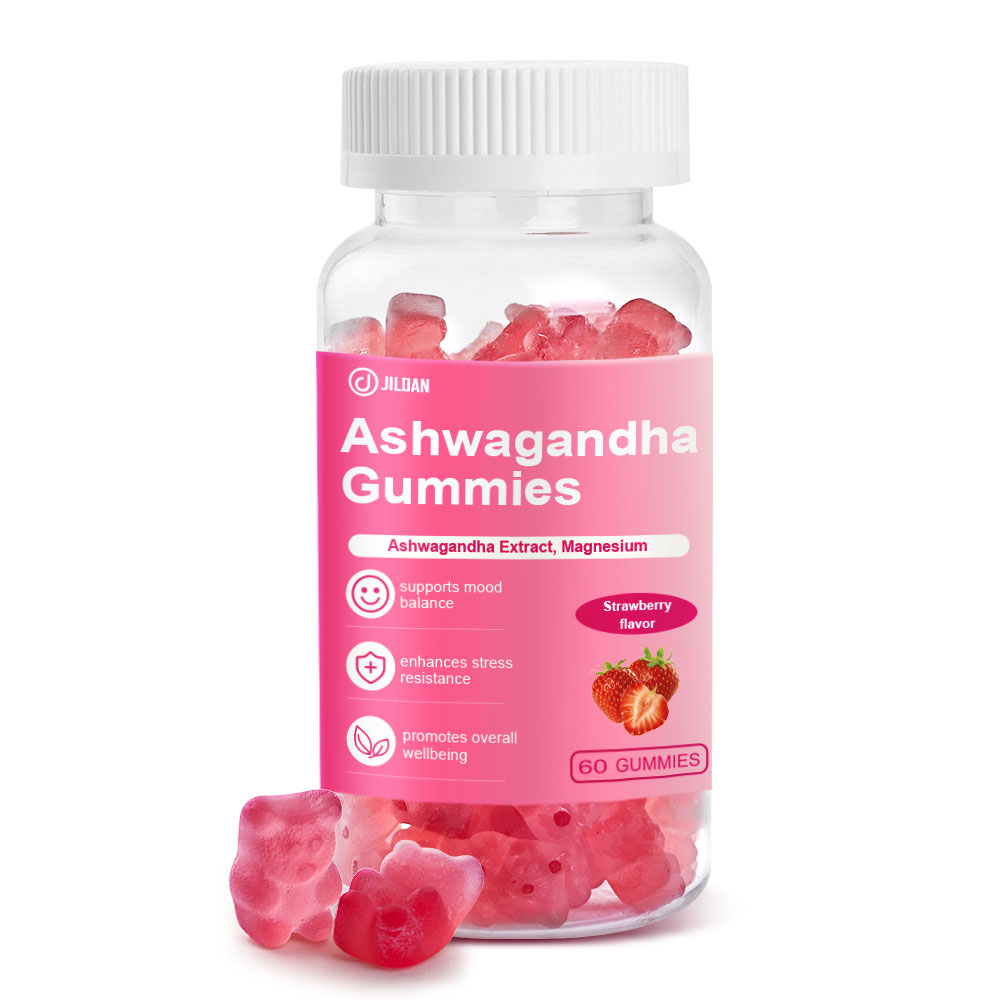
Brands interested in this format can review JD Nutra’s Ashwagandha Gummies product page and the broader gummy supplement manufacturing category.
For formulation details, JD Nutra’s existing Ashwagandha Gummies Formulation Guide explains extract selection, active loading, taste masking, stability, and gummy-system choices.
Standardization Needs Batch-to-Batch Control
Standardization becomes commercially meaningful only when repeat production remains within the approved range.
If a brand launches a standardized ashwagandha supplement, later batches should not move unpredictably between substantially different chemical profiles.
An ashwagandha manufacturer should therefore be able to show:
- specification range;
- incoming assay result;
- supplier consistency;
- investigation procedure for unusual results;
- change control.
A quality agreement can also define what happens if a new raw-material lot falls near the edge of the specification.
The objective is not to force a botanical to behave like a fully synthetic chemical.
Natural variation exists.
The objective is to control that variation within a defined commercial specification.
Change Control Is Critical for Botanical Products
Botanical supply chains change.
Agricultural conditions vary.
Suppliers change.
Extraction sites change.
Carriers change.
A mature ashwagandha manufacturer should have formal procedures for evaluating changes that can affect the approved product.
Changes that may deserve review include:
- botanical supplier;
- growing region;
- plant part;
- extract ratio;
- standardization;
- carrier material;
- extraction process;
- manufacturing site;
- analytical method.
A change may require:
- new raw-material approval;
- additional testing;
- formulation review;
- stability review;
- label review.
The brand should establish which changes require notification before commercial production.
This prevents the product from gradually drifting away from the formula originally approved.
Stability Should Be Evaluated in the Finished Dosage Form
Ashwagandha raw material can meet specification when it enters the factory and still behave differently after formulation.
The finished product may contain:
- other botanicals;
- minerals;
- vitamins;
- flavors;
- sweeteners;
- moisture.
Packaging adds another environmental variable.
For this reason, a responsible ashwagandha manufacturer should consider stability at the finished-product level.
Depending on format, stability may evaluate:
- active or marker compounds;
- appearance;
- moisture;
- texture;
- flavor;
- microbiological quality;
- packaging integrity.
Gummies need different stability criteria from capsules.
A combination product may require different monitoring from a single-ingredient product.
Shelf-life statements should therefore be supported by the actual formulation and package.
Packaging Can Influence Botanical Quality
Packaging is often viewed mainly as a branding decision, but it is part of the product environment.
A bottle, pouch, or blister can influence exposure to:
- moisture;
- oxygen;
- light;
- repeated opening.
An ashwagandha manufacturer should select packaging according to the finished dosage form and formula.
For capsules, moisture protection may be important.
For gummies, the package can influence:
- stickiness;
- hardness;
- flavor;
- moisture migration.
Brands should ideally evaluate the commercial package during stability work.
Changing packaging after stability has already been established can weaken the relevance of previous data.
Product Claims Should Match the Extract Being Manufactured
Quality control and marketing are connected.
If a brand cites human research about ashwagandha, the commercial extract should be characterized well enough to determine whether the research is relevant.
The NIH Office of Dietary Supplements notes that clinical studies have used different preparations, including root extracts and root-and-leaf extracts, at different doses. NIH therefore states that it is difficult to identify a single recommended preparation or amount.
This matters for an ashwagandha manufacturer because the technical specification affects the scientific story.
Brands should avoid saying:
“Studies prove ashwagandha does X.”
when the study actually evaluated:
- a particular plant part;
- a particular extract;
- a particular standardization;
- a particular dose.
A more accurate content strategy connects evidence with the actual ingredient being sold.
JD Nutra’s Ashwagandha Benefits Guide provides a more detailed discussion of the research and its limitations.
Safety Information Should Also Connect With Raw-Material Quality
Safety cannot be evaluated solely from the common botanical name.
The NIH fact sheet reports that ashwagandha appears reasonably well tolerated for short-term use in many studies but notes that long-term safety remains uncertain. NIH also discusses mild gastrointestinal effects, drowsiness, potential thyroid effects, medication interactions, and reports of liver injury.
Those issues make identity and composition controls even more relevant.
When adverse-event information is associated with a botanical category, brands need confidence that the commercial product actually contains the botanical and plant part described on the label.
A qualified ashwagandha manufacturer should therefore support both:
- ingredient authenticity;
- responsible safety communication.
How to Audit an Ashwagandha Manufacturer
A structured audit can make manufacturers much easier to compare.
Botanical Identity
Ask:
- Is the ingredient Withania somnifera?
- Which plant part is used?
- How is identity verified?
Supplier Qualification
Ask:
- How is the raw-material supplier approved?
- How often is performance reviewed?
- What changes trigger requalification?
Standardization
Ask:
- Which withanolides are measured?
- What specification applies?
- What analytical method is used?
Contaminants
Ask about appropriate controls for:
- heavy metals;
- microbiology;
- pesticides;
- residual solvents.
Manufacturing
Ask:
- How is the extract weighed?
- How is blend uniformity managed?
- What in-process controls are used?
Finished Product
Ask:
- Which specifications are verified?
- What appears on the finished-product COA?
- Who releases the batch?
Stability
Ask:
- How is shelf life established?
- Is the final dosage form tested?
- Is the commercial package included?
Traceability
Ask:
- Can the finished lot be traced to the raw-material lot?
An ashwagandha manufacturer that can answer these questions with documented procedures is easier to qualify than one relying mainly on claims such as “premium botanical quality.”
Red Flags When Comparing Ashwagandha Manufacturers
Several warning signs deserve additional investigation.
Plant Part Is Not Specified
“Ashwagandha extract” alone is incomplete information.
Only Extract Ratio Is Discussed
Extract ratio does not replace botanical identity or analytical standardization.
Withanolide Percentage Has No Analytical Method
Ask how the result is measured.
The COA Is Generic
Lot-specific results are more useful.
Supplier Changes Do Not Require Review
Botanical source changes can alter chemical composition.
The Same Specification Is Used for Root and Leaf Materials
Research shows meaningful plant-part-specific chemical differences. See the 2025 pharmacopoeial comparison on PubMed.
No Finished-Product Testing Is Performed
Raw-material data do not automatically prove the finished supplement meets specification.
Quality Questions Receive Only Sales Answers
A professional ashwagandha manufacturer should make quality or technical personnel available when appropriate.
What to Include in an Ashwagandha Manufacturing RFQ
A detailed RFQ helps manufacturers quote equivalent products.
Botanical Specification
Include:
- Withania somnifera;
- plant part;
- extract type;
- extract ratio where relevant;
- withanolide requirements;
- carrier requirements.
Dosage Form
Define:
- capsule;
- gummy;
- tablet;
- powder;
- another format.
Serving
Specify:
- amount per serving;
- units per serving;
- servings per package.
Quality Requirements
Define:
- botanical identity;
- assay;
- microbiology;
- heavy metals;
- pesticides where required;
- residual solvents where applicable;
- finished-product testing.
Documentation
Request:
- raw-material specification;
- representative COA;
- finished-product specification;
- representative finished COA;
- relevant quality documentation.
Packaging
Specify:
- bottle;
- pouch;
- blister;
- carton;
- destination market.
Commercial Planning
Include:
- sample requirements;
- initial production needs;
- forecast repeat demand;
- launch timeline.
Brands can review JD Nutra’s existing Private Label Ashwagandha Gummies Manufacturer Guide for additional procurement considerations.
For broader product-development and manufacturing support, review JD Nutra’s supplement CDMO services.
FAQ
What Should I Ask an Ashwagandha Manufacturer First?
Ask for the exact botanical specification.
A professional ashwagandha manufacturer should be able to identify Withania somnifera, the plant part, extract type, standardization, and relevant quality specifications.
Does Ashwagandha Root Differ From Ashwagandha Leaf?
Yes.
NIH states that the chemical composition of root and leaf differs, and recent analytical studies have also documented substantial plant-part-related chemical variation. NIH Ashwagandha Fact Sheet.
What Are Withanolides?
Withanolides are a group of steroidal lactones naturally present in ashwagandha and frequently used in chemical characterization and extract standardization.
They are useful quality markers, but the ashwagandha manufacturer should still control botanical identity and other specifications.
Is a Higher Withanolide Percentage Always Better?
No.
A higher percentage does not automatically mean a product is better for every intended use.
The extract should be evaluated according to its identity, plant part, composition, supporting evidence, serving level, and safety profile.
What Should Be Tested in Ashwagandha Raw Material?
The appropriate specification depends on the ingredient and market but can include botanical identity, selected constituents, microbiological quality, heavy metals, pesticide residues, residual solvents, and other relevant parameters.
Should Finished Ashwagandha Supplements Be Tested?
Yes, an appropriate finished-product verification and batch-release program should be established according to the dosage form, specification, and applicable manufacturing requirements.
Why Is the COA Important?
A COA provides lot-specific information about whether tested characteristics meet established specifications.
Brands should verify which tests are included and whether the document represents raw material or the finished product.
What Makes a Reliable Ashwagandha Manufacturer?
A reliable ashwagandha manufacturer should demonstrate botanical identity, plant-part control, supplier qualification, meaningful standardization, contaminant controls, batch-specific analytical data, controlled manufacturing, finished-product verification, traceability, and change control.
Conclusion
Choosing an ashwagandha manufacturer should be treated as a botanical quality-control decision—not simply a search for the lowest-cost extract or the highest withanolide percentage.
Ashwagandha is chemically complex.
The root and leaf differ.
Extraction changes the material.
Standardization methods differ.
Raw-material sources can change.
Analytical research published in 2025 further demonstrates why these distinctions matter. One study reported large deviations between labeled and measured withanolide-related content among the commercial products tested, while another found substantial failure rates when 25 commercial products were compared with British and U.S. pharmacopoeial approaches. PubMed: analytical product study and PubMed: pharmacopoeial comparison.
These studies should not be used to condemn an entire category.
They demonstrate why specification-driven manufacturing matters.
A strong ashwagandha manufacturer should be able to connect:
- botanical identity;
- plant part;
- supplier qualification;
- withanolide specifications;
- incoming testing;
- contaminant control;
- manufacturing records;
- finished-product verification;
- COAs;
- traceability;
- stability;
- change control.
For supplement brands, this creates a more defensible product and a more reliable supply chain.
Brands developing a gummy project can review JD Nutra’s Ashwagandha Gummies and Ashwagandha Gummies Formulation Guide.
For supplier-selection questions, read the Private Label Ashwagandha Gummies Manufacturer Guide and JD Nutra’s broader Dietary Supplement Supplier Quality Control Guide.
When your botanical source, plant part, standardization, dosage form, testing requirements, packaging, and destination market are defined, contact JD Nutra to discuss your ashwagandha manufacturer requirements and commercial production plan.


