Creatine has traditionally been associated with athletes, bodybuilders, and high-intensity training. That perception is changing quickly.
Today, consumers are searching for creatine monohydrate benefits from a much broader perspective. Fitness enthusiasts remain an important audience, but interest is also expanding among women, recreational exercisers, wellness-focused consumers, and people looking for convenient ways to support active lifestyles.
Current supplement trend data places creatine monohydrate among the fastest-growing supplement topics, with substantial search growth in 2026. One trend analysis reports approximately 368,000 monthly searches and 50% year-over-year growth for the term, while other search datasets show even higher global demand.
The shift is important for supplement brands.
Creatine is no longer simply a bodybuilding ingredient. It is becoming part of a much broader conversation around physical performance, exercise routines, recovery, and everyday wellness.
For brands and supplement developers, understanding the creatine monohydrate benefits consumers are searching for can help create products that better match today’s market.
Why Creatine Monohydrate Is Moving Beyond Traditional Sports Nutrition
For years, creatine was primarily marketed to people participating in strength training and competitive sports.
The category has now become much more mainstream.
Search behavior suggests that consumers are moving from broad searches such as “creatine” toward more specific questions about creatine monohydrate, supplementation, benefits, dosage formats, and everyday use. One 2026 analysis identified more than 22,000 creatine-related keywords in the U.S., illustrating how much deeper the category has become.
Several factors are contributing to this change.
First, consumers have greater access to nutritional information than ever before. People can research individual ingredients, compare forms, and read scientific literature before choosing a supplement.
Second, fitness itself has become more mainstream. Consumers do not necessarily identify as athletes, but many participate in resistance training, recreational sports, functional fitness, walking, cycling, or other activities.
Third, the definition of wellness is expanding.
Consumers increasingly view strength, mobility, physical activity, and healthy aging as connected parts of a long-term wellness strategy.
This has created a much larger potential audience for creatine products.
What Is Creatine Monohydrate?
Creatine is a naturally occurring compound involved in the body’s energy systems.
It is stored primarily in skeletal muscle, where it contributes to the rapid regeneration of adenosine triphosphate, commonly known as ATP.
ATP is one of the body’s primary energy currencies. During short periods of high-intensity activity, the body needs to regenerate ATP quickly.
Creatine participates in this energy system through the phosphocreatine pathway.
Creatine monohydrate is a specific form of creatine that has been extensively studied and is widely used in dietary supplements.
For manufacturers, the popularity of this form provides several advantages.
Consumers recognize the ingredient name, research is relatively extensive, and it can be incorporated into multiple supplement formats.
The International Society of Sports Nutrition has published a position stand reviewing creatine supplementation and its applications in exercise, sports performance, and related areas.
This established research base is one reason creatine monohydrate continues to be an important ingredient for sports and wellness supplement development.
How Creatine Supports Energy Production
To understand the creatine monohydrate benefits, it helps to understand its role in cellular energy.
During intense physical activity, ATP can be used rapidly.
The body needs systems capable of regenerating ATP so that muscle contraction can continue.
Creatine is stored in muscle partly as phosphocreatine. When energy demand rises, phosphocreatine can contribute to the regeneration of ATP.
This mechanism is particularly relevant during short-duration, high-intensity activities.
Examples include:
- Resistance training
- Sprinting
- Jumping
- Repeated high-intensity intervals
- Explosive athletic movements
This does not mean creatine is a substitute for proper training, nutrition, sleep, or recovery.
Instead, it is one nutritional component that can support the body’s existing energy system.
For supplement brands, this distinction is important because effective product education should explain the ingredient’s role without overstating what supplementation can accomplish.
Key Creatine Monohydrate Benefits for Active Consumers
The most established interest in creatine comes from exercise and physical performance.
Research has consistently investigated creatine supplementation in relation to high-intensity exercise and strength-oriented training.
Potential areas of interest include:
Strength and Training Performance
Creatine supplementation can increase the availability of phosphocreatine in muscle, which may support repeated high-intensity efforts.
For consumers following resistance-training programs, this is one of the most important reasons for choosing a creatine product.
Muscle-Related Goals
Creatine is frequently used as part of nutrition strategies designed to support muscle development and training adaptations.
However, results depend on many factors, including training consistency, overall nutrition, individual response, and total dietary intake.
Exercise Recovery
Creatine has also been studied in relation to recovery and training adaptation.
For active consumers, this makes creatine relevant beyond the actual workout itself.
High-Intensity Activity
Creatine’s role in rapid energy regeneration makes it particularly relevant to activities requiring repeated short bursts of effort.
This broadens its relevance from traditional bodybuilding to functional training, recreational sports, and other active lifestyles.
The key takeaway is that the creatine monohydrate benefits most strongly supported by research are closely connected to exercise and physical performance.
Why More Women Are Exploring Creatine Supplements
One of the most interesting developments in the creatine category is the growing interest among women.
Historically, creatine marketing was heavily associated with male bodybuilding audiences.
That positioning is increasingly outdated.
Women participate in strength training, running, recreational sports, functional fitness, and other forms of exercise at large scale.
As a result, creatine is increasingly being discussed as a mainstream nutritional ingredient rather than a bodybuilding-only supplement.
For brands, this creates an opportunity to rethink product positioning.
A modern creatine product does not necessarily need to use aggressive sports imagery or bodybuilding-focused messaging.
Instead, brands can build products around:
- Strength-focused lifestyles
- Active women
- Everyday fitness
- Healthy aging
- Convenient supplementation
- General exercise support
This broader positioning can make creatine more accessible to consumers who previously assumed that the ingredient was only relevant to serious athletes.
Creatine and the Shift Toward Everyday Wellness
The expansion of creatine into mainstream wellness is one of the most important developments in the category.
Search trend data shows that creatine is increasingly crossing over from traditional sports nutrition into broader wellness conversations.
This does not mean that every claimed benefit associated with creatine has the same level of scientific evidence.
In fact, consumers are increasingly asking questions about cognition, healthy aging, and other potential applications.
Some research in these areas is promising, but evidence varies by population, outcome, and study design.
For responsible supplement brands, this creates an important opportunity.
Instead of making broad claims, brands can provide educational content explaining what is well established, what remains under investigation, and why creatine continues to attract scientific interest.
That approach is more credible and better aligned with modern consumer expectations.
Creatine Monohydrate Powder vs Other Supplement Formats
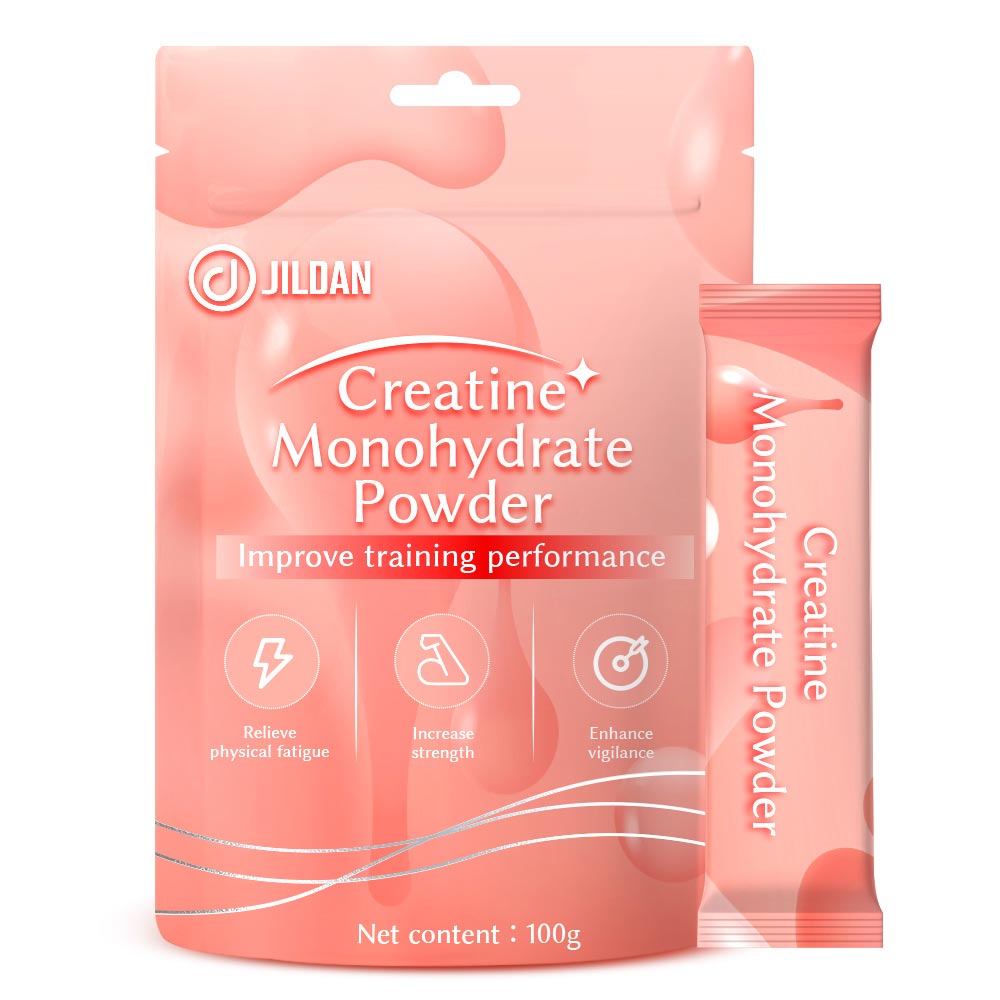
Creatine monohydrate has traditionally been associated with powder supplements.
But the market is changing.
Search data shows strong growth across multiple formats, including creatine powder and creatine gummies.
Powder Formulas
Powder remains a practical format for creatine products.
It offers flexibility in serving size and can be incorporated into beverages, shakes, and other nutritional routines.
From a manufacturing perspective, powder formulas also provide opportunities for customized flavoring and combination products.
However, taste, solubility, moisture control, and packaging should be carefully evaluated.
Capsules and Tablets
Capsules and tablets provide convenience for consumers who prefer a pre-measured format.
The main challenge is serving size.
Because creatine is often used in gram-level quantities, manufacturers need to evaluate the amount of active ingredient that can realistically fit into the chosen dosage form.
Creatine Gummies
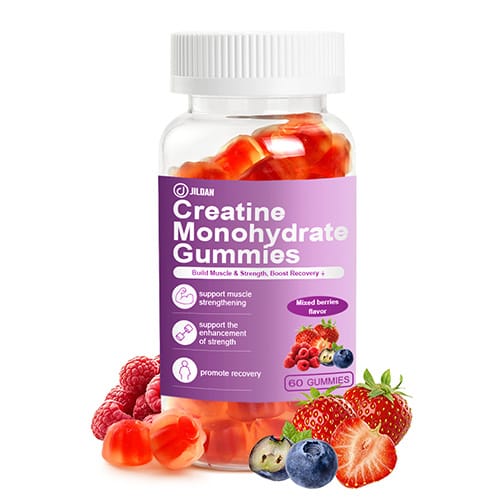
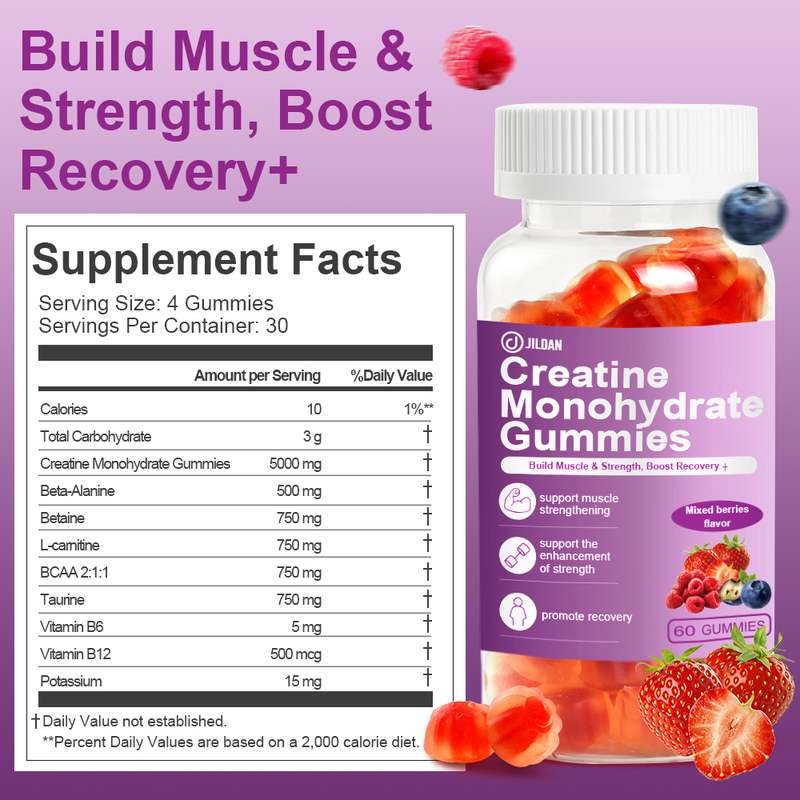
Gummies are one of the most interesting developments in the category.
Current market analysis shows strong growth in searches for creatine gummies, suggesting increasing consumer interest in more convenient and approachable formats.
JD Nutra also lists creatine gummies among its supplement manufacturing capabilities, making this format particularly relevant for brands exploring new creatine product concepts.
However, gummy development requires careful attention to texture, stability, flavor, ingredient loading, and manufacturing process.
Ready-to-Use Formats
Ready-to-use products can further simplify supplementation.
For example, brands may explore liquid or functional beverage concepts where creatine is incorporated into a broader nutritional formula.
These products require additional stability and compatibility testing because the active ingredient is exposed to a different formulation environment.
What Supplement Brands Should Consider When Formulating Creatine Products
Choosing creatine monohydrate is only the beginning of product development.
Brands should consider the complete product architecture.
Target Consumer
A product designed for serious athletes may have very different formulation and packaging requirements from a product designed for general wellness consumers.
Serving Format
Powder, gummies, capsules, tablets, and liquids each create different technical challenges.
Ingredient Compatibility
If creatine is combined with other ingredients, manufacturers should evaluate:
- Stability
- Solubility
- Flavor
- Moisture sensitivity
- Processing conditions
- Shelf-life requirements
Packaging
Creatine products can require packaging that protects the formula from environmental conditions such as moisture.
Packaging selection should therefore be considered during formulation rather than treated as a final-stage decision.
Regulatory Compliance
Claims and labeling requirements vary between markets.
Brands targeting international consumers need to review the regulatory requirements applicable to each destination market.
The U.S. Food and Drug Administration’s dietary supplement resources provide useful background for companies developing products for the U.S. market.
How to Build a More Consumer-Friendly Creatine Product
The modern creatine consumer does not always want a complicated product.
In many cases, simplicity is an advantage.
A successful product may focus on:
Clear ingredient information
Consumers should be able to understand exactly what the product contains.
Convenient use
The easier a product is to incorporate into an existing routine, the more approachable it becomes.
Appropriate dosage format
The product format should match the target customer’s lifestyle.
Useful education
Brands can explain how creatine works, what research says, and how the ingredient fits into a broader nutrition strategy.
Consistent quality
Quality control is essential for building long-term trust.
For brands developing a new creatine product, partnering with a professional dietary supplement manufacturer can provide support across formulation, production, testing, and packaging.
Explore JD Nutra’s dietary supplement manufacturing capabilities to learn more about custom supplement development and production options.
Common Mistakes When Developing Creatine Supplements
The growing popularity of creatine can make the category look simple.
In reality, product development still requires careful planning.
Mistake 1: Treating Every Consumer as an Athlete
The market has expanded.
Brands that only communicate with bodybuilders may miss large groups of potential customers.
Mistake 2: Choosing a Format Without Considering Serving Size
A formula may work well as a powder but become impractical in another format.
The delivery system should be considered from the beginning.
Mistake 3: Adding Too Many Ingredients
More ingredients do not automatically create a better product.
Every additional component can affect formulation complexity, stability, taste, labeling, and manufacturing.
Mistake 4: Overstating the Evidence
The strongest creatine evidence relates to exercise and physical performance.
Emerging areas such as cognitive health and healthy aging are interesting, but brands should communicate them responsibly.
Mistake 5: Ignoring the Consumer Experience
Even a technically strong formula can struggle if it tastes unpleasant, is difficult to use, or does not fit the consumer’s routine.
Product development should therefore consider both scientific evidence and practical usability.
Future Opportunities for Creatine in the Global Supplement Market
The future of creatine appears increasingly diverse.
The category is moving in several directions simultaneously.
One is the continued growth of sports nutrition.
Another is mainstream wellness.
A third is format innovation.
Search data already shows that consumers are increasingly searching for creatine supplements rather than only the traditional powder format.
This creates opportunities for manufacturers and brands to develop:
- Creatine powders
- Creatine gummies
- Combination formulas
- Functional beverage powders
- Convenient capsule products
- Lifestyle-oriented creatine supplements
The broader opportunity is not simply selling more creatine.
It is creating products that make the ingredient easier to understand and easier to incorporate into different lifestyles.
As the consumer base expands, product education and formulation quality will become increasingly important competitive advantages.
Conclusion
The growing interest in creatine monohydrate benefits reflects a major transformation in the supplement industry.
Creatine is moving beyond its traditional bodybuilding image and becoming a mainstream ingredient across sports nutrition, fitness, and broader wellness markets.
Its established role in energy metabolism and exercise performance gives creatine monohydrate a strong foundation, while emerging research continues to generate interest in additional applications.
For supplement brands, the opportunity lies in translating this ingredient into products that are convenient, well-formulated, clearly positioned, and supported by responsible education.
Whether the final product is a powder, capsule, gummy, or another format, the most important step is understanding the target consumer before developing the formula.
As consumer interest continues to expand, brands that combine strong formulation strategy with quality manufacturing and clear communication will be better positioned to build the next generation of creatine supplements.