
Choosing a kids multivitamin gummies manufacturer is more complicated than selecting a standard adult gummy supplier.
Children’s supplements require tighter control over age-appropriate nutrient levels, serving sizes, flavor, texture, ingredient sourcing, labeling, packaging, and quality testing. A formula that works well for adults may not be appropriate for children simply because the nutrient quantities, serving instructions, or safety considerations are different.
The CDC notes that micronutrients are important for children’s healthy development and growth, while the NIH Office of Dietary Supplements explains that children’s multivitamin/mineral products generally provide age-appropriate amounts of nutrients.
For supplement brands, this creates a different product-development standard.
A successful kids multivitamin gummies manufacturer needs to manage four objectives simultaneously:
- nutritional formulation;
- child-appropriate serving design;
- sensory acceptance;
- manufacturing and regulatory quality.
The product also needs to communicate clearly to parents rather than simply looking attractive to children.
This guide explains how brands can evaluate a manufacturer, design the formula, choose nutrient forms, manage safety issues, develop flavors, validate finished products, and prepare a private-label kids gummy for commercial launch.
Why Kids Multivitamin Gummies Require a Different Formulation Strategy
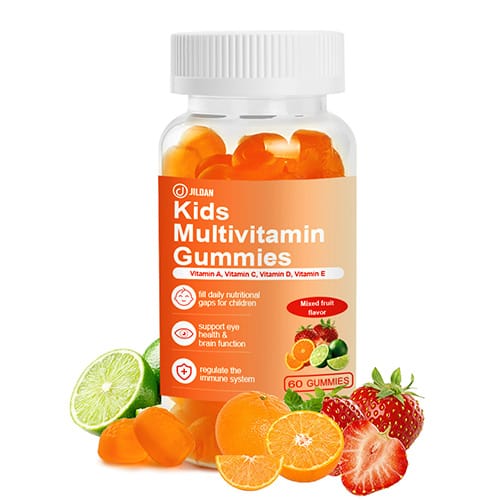
Adult multivitamins are often formulated around broad nutrient coverage and adult Daily Values.
Children’s formulas need a more age-specific approach.
The NIH Multivitamin/Mineral Fact Sheet notes that children’s multivitamins generally provide nutrient amounts appropriate for children rather than simply using adult formulations at a smaller serving size.
That distinction is critical.
A kids multivitamin gummies manufacturer should begin by defining the target age group before selecting nutrient quantities.
Possible segments include:
- ages 2–3;
- ages 4–8;
- ages 9–13;
- teenagers.
These groups have different nutrient reference values and different upper intake considerations.
A product intended for children ages 4–8 should not automatically use the same Supplement Facts panel as a product intended for teenagers.
The age range should therefore be established before the formulation is finalized.
Define the Target Age Before Choosing Nutrient Amounts
The first question in a formulation brief should be:
Who is the product for?
This affects:
- nutrient amounts;
- serving size;
- gummy size;
- flavor intensity;
- texture;
- packaging;
- directions;
- warnings.
The CDC’s child nutrition resources specifically identify vitamin D, iron, and zinc as important nutrients during childhood and provide age-specific information about children’s nutritional needs.
A kids multivitamin gummies manufacturer should therefore build the formula around the selected age group instead of developing a generic “children’s formula” first and assigning an age range later.
For example, a brand may decide that its product is designed for children ages 4–8.
The formulation team can then evaluate:
- vitamin A;
- vitamin C;
- vitamin D;
- vitamin E;
- B vitamins;
- folate;
- vitamin B12;
- iodine;
- zinc;
- other nutrients appropriate to the concept.
The final formula should be evaluated as a complete nutritional system.
Children’s Multivitamins Should Complement the Diet
A kids multivitamin is a dietary supplement, not a replacement for a balanced diet.
This distinction matters for marketing.
A kids multivitamin gummies manufacturer should not build a product around the assumption that parents need a gummy to replace vegetables, fruit, dairy, protein foods, or other nutrient-rich foods.
Instead, the commercial positioning can focus on convenient nutrient supplementation within an overall healthy dietary pattern.
That approach also helps keep marketing claims scientifically responsible.
Vitamin A Requires Careful Form Selection
Vitamin A is one of the nutrients that deserves particular attention in children’s multivitamins.
Vitamin A can be supplied as preformed vitamin A, such as retinol or retinyl esters, or as provitamin A carotenoids such as beta-carotene.
The NIH Vitamin A Fact Sheet distinguishes between these forms and explains that established upper intake levels apply to preformed vitamin A.
For children, the upper limit for preformed vitamin A is age-dependent.
NIH lists:
- 600 mcg/day for ages 1–3;
- 900 mcg/day for ages 4–8;
- 1,700 mcg/day for ages 9–13;
- 2,800 mcg/day for ages 14–18.
These values include intake from food, beverages, and supplements.
A kids multivitamin gummies manufacturer therefore needs to consider the vitamin A form before determining the amount in the finished gummy.
This is one reason “high potency” should not automatically be treated as a selling point for children’s products.
Vitamin D Is Common in Kids Multivitamin Gummies
Vitamin D is another frequently included nutrient.
The NIH Vitamin D Fact Sheet explains that vitamin D supports calcium absorption and is important for bone health.
The CDC’s children’s vitamin and mineral guidance also identifies vitamin D as an important nutrient during childhood.
For a kids multivitamin gummies manufacturer, the formulation question is not simply whether vitamin D should be included.
The team should determine:
- target age;
- form of vitamin D;
- amount per serving;
- source and potency;
- stability;
- label requirements.
Vitamin D is commonly supplied as cholecalciferol, or vitamin D3.
The finished label should accurately communicate the amount and unit.
Vitamin C Is Useful but Should Not Drive the Whole Formula
Vitamin C is another familiar ingredient in children’s gummies.
It has strong consumer recognition and can support a straightforward general-wellness positioning.
However, brands should avoid turning the formula into a collection of oversized nutrient percentages.
A kids multivitamin gummies manufacturer should consider the overall nutrient profile rather than maximizing every ingredient.
High percentages of Daily Value can make a label look impressive, but they may also:
- increase formulation complexity;
- create unnecessary potency;
- increase taste challenges;
- complicate stability;
- move the formula away from age-appropriate nutrition.
The best children’s multivitamin is not necessarily the one with the highest number on every line of the Supplement Facts panel.
B Vitamins Need to Be Considered as a Group
B vitamins are often included in kids multivitamin gummies because they support normal metabolic processes and have broad recognition among consumers.
A typical formula may consider:
- thiamin;
- riboflavin;
- niacin;
- vitamin B6;
- folate;
- vitamin B12;
- biotin;
- pantothenic acid.
However, the form of each nutrient matters.
For example, folate can be supplied through different ingredient forms, and vitamin B12 can also appear in different forms.
A kids multivitamin gummies manufacturer should provide the exact ingredient identity and specification rather than only listing a generic nutrient category.
That information becomes important for:
- purchasing;
- quality control;
- Supplement Facts preparation;
- regulatory review;
- supplier changes.
Iron Is a Major Decision in Children’s Multivitamins
Iron requires particular care.
Some children’s multivitamins contain iron, while others intentionally do not.
The decision depends on:
- target age;
- nutritional positioning;
- intended use;
- serving size;
- regulatory requirements;
- safety considerations.
At the same time, accidental ingestion of iron-containing products can create serious safety concerns.
For a kids multivitamin gummies manufacturer, an iron-containing formula therefore requires a higher level of packaging and labeling review.
Brands should not add iron simply because it appears nutritionally attractive.
Should Kids Multivitamin Gummies Contain Iron?
There is no universal answer.
An iron-containing formula can be appropriate for a specific product concept, but it introduces additional considerations.
An iron-free formula may be easier to position as a general daily multivitamin, particularly when the brand does not intend to target a specific nutritional need.
An iron-containing product requires:
- precise formulation;
- clear labeling;
- appropriate warning language;
- child-resistant storage considerations where applicable;
- stronger safety communication.
The final decision should be made with qualified regulatory and formulation professionals.
Zinc Is Popular, but More Is Not Automatically Better
Zinc is commonly included in children’s multivitamins.
The CDC identifies zinc as one of the important nutrients for children.
A kids multivitamin gummies manufacturer should nevertheless determine the amount from the target age and total nutritional profile.
Excessive zinc intake can interfere with copper absorption and create other nutritional problems.
The formulation should therefore avoid the common “more is better” approach.
A balanced children’s formula can be more commercially defensible than a high-dose formula designed primarily to produce impressive percentage-DV numbers.
Iodine Deserves Attention in a Complete Formula
Iodine may be included in children’s multivitamins because it is important for thyroid hormone production and normal development.
However, it is another nutrient where excessive intake is not desirable.
A kids multivitamin gummies manufacturer should therefore evaluate:
- iodine source;
- elemental iodine amount;
- age-specific nutritional references;
- interactions with the rest of the formula.
Low-dose minerals also introduce manufacturing challenges because the actual amount added to a large production batch may be very small.
That makes controlled premixing and accurate weighing particularly important.
The Gummy Serving Size Should Be Designed Around the Child
Serving size is one of the most important commercial decisions.
A children’s gummy may use:
- one gummy per day;
- two gummies per day;
- another defined serving.
The correct number depends on:
- nutrient loading;
- gummy size;
- flavor;
- texture;
- target age;
- label requirements.
A kids multivitamin gummies manufacturer should not automatically use two gummies simply because that is common in the market.
If one gummy can provide the desired nutrient profile while maintaining good sensory quality, a one-gummy format may be simpler.
If the formula requires more physical space, two gummies may be more practical.
The formulation should determine the serving architecture.
Gummy Size Matters More for Children
A gummy designed for adults may be physically large for a young child.
Children’s products should therefore be evaluated from the actual user’s perspective.
The manufacturer should consider:
- gummy diameter;
- thickness;
- chewability;
- hardness;
- serving quantity;
- ease of consumption.
A kids multivitamin gummies manufacturer should provide physical samples for evaluation before commercial production.
Parents should also be given clear directions based on the intended age range.
Taste Is a Core Product-Development Requirement
Children are highly sensitive to taste.
A technically excellent formula can fail commercially if children consistently reject it.
This makes flavor development one of the most important parts of working with a kids multivitamin gummies manufacturer.
Potential challenges include:
- vitamin bitterness;
- mineral notes;
- acidity;
- sweetness;
- aftertaste;
- flavor persistence.
Some nutrients are naturally unpleasant at higher concentrations.
The manufacturer therefore needs to develop the flavor around the final formula rather than flavoring an empty gummy base first.
Fruit Flavor Selection Should Match the Target Age
Common directions for children’s gummies include:
- strawberry;
- orange;
- grape;
- mixed berry;
- peach;
- tropical fruit.
The choice should be based on target-market research and actual sensory testing.
A kids multivitamin gummies manufacturer may also offer multiple flavor samples for parent and child testing.
The testing process should ask two different questions:
Will the child want to eat the gummy?
and
Will the parent consider the flavor appropriate for a daily nutritional product?
Those are not necessarily the same question.
Sweetness Needs to Be Controlled
A children’s gummy is designed to be pleasant, but it should not be treated like candy.
The brand should establish its sweetener strategy early.
Possible approaches include:
- conventional sugar;
- reduced-sugar formulas;
- sugar-free systems;
- alternative sweeteners.
Each system affects:
- texture;
- sweetness;
- water activity;
- stability;
- mouthfeel.
For this reason, a kids multivitamin gummies manufacturer should be able to discuss the nutritional consequences of the chosen sweetener system rather than treating sweetness only as a flavor issue.
Pectin vs Gelatin for Kids Multivitamin Gummies
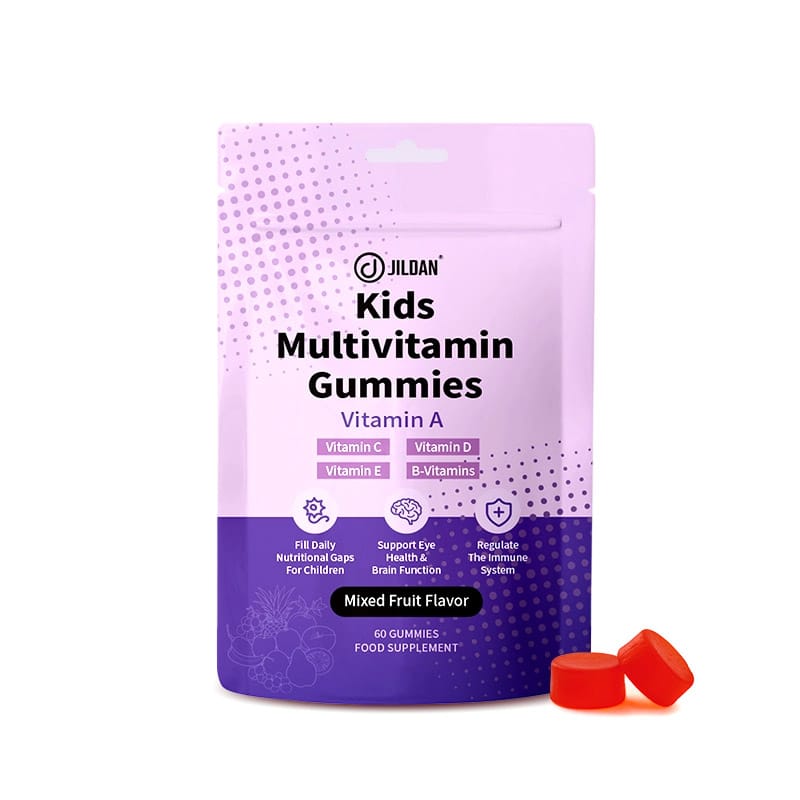
Both pectin and gelatin can be used for gummy products.
Pectin
Pectin can support:
- vegetarian positioning;
- vegan formulations when all other ingredients qualify;
- a different chew profile.
Gelatin
Gelatin can provide:
- elastic texture;
- familiar gummy characteristics;
- a different manufacturing process.
The choice should depend on:
- target market;
- dietary positioning;
- sensory requirements;
- raw-material availability;
- stability.
A kids multivitamin gummies manufacturer should develop the actual vitamin formula with the selected gummy base rather than treating the base as a cosmetic choice.
Sugar-Free Kids Multivitamin Gummies Require Dedicated Development
Sugar-free children’s gummies can be commercially attractive, but they should not be created simply by removing sugar from a standard formula.
The sweetener system affects:
- gummy structure;
- sweetness;
- moisture;
- water activity;
- flavor release;
- shelf stability.
Some alternative sweeteners can introduce cooling sensations or aftertastes.
The formulation team should therefore develop the sugar-free version separately.
The same principle applies to reduced-sugar products.
Low-Dose Nutrients Create a Uniformity Challenge
Many vitamins and minerals in children’s multivitamins are used at relatively small quantities.
This creates a manufacturing challenge.
Imagine a large production batch containing thousands of gummies. Some vitamins may be added in relatively small quantities compared with the total mass of the batch.
A kids multivitamin gummies manufacturer therefore needs a controlled method for:
- weighing;
- premixing;
- dispersion;
- batch mixing;
- sampling.
The goal is not simply to add the correct total amount.
The nutrients need to be distributed consistently throughout the batch.
Premixes Can Improve Low-Dose Handling
Vitamin premixes can help manufacturers manage low-dose ingredients.
A premix may combine the active nutrient with a carrier so that the ingredient can be handled and distributed more consistently.
For children’s gummies, the manufacturer should document:
- active concentration;
- carrier;
- assay;
- batch quantity;
- mixing procedure.
A supplier change should also be reviewed.
Two vitamin premixes can contain the same named nutrient while having different potencies or carrier systems.
This can affect the finished formula.
Raw-Material Specifications Should Be Approved Before Production
A strong kids multivitamin gummies manufacturer should have documented specifications for incoming ingredients.
Depending on the material, specifications may include:
- identity;
- assay;
- purity;
- moisture;
- microbiological requirements;
- contaminants;
- physical properties.
The brand should know whether the manufacturer’s raw-material specifications match the product’s finished requirements.
This is particularly important for nutrients such as:
- vitamin A;
- vitamin D;
- folate;
- B12;
- zinc;
- iodine;
- iron.
The supplier’s certificate should be reviewed as part of the quality system rather than treated as a marketing document.
Finished-Product Testing Is More Important Than a Formula Spreadsheet
A formulation document tells the manufacturer what should be added.
Finished-product testing provides evidence about what is actually present in the production batch.
For kids multivitamin gummies, a finished-product specification may include:
- appearance;
- average gummy weight;
- active nutrient testing;
- microbiological criteria;
- moisture-related parameters;
- packaging requirements.
The exact analytical program should be determined according to the formula, market, and quality system.
Brands should ask whether the nutrients that matter most commercially are actually verified on the finished product.
The COA Should Be Batch-Specific
A Certificate of Analysis should be connected to the actual production batch.
For a kids multivitamin gummies manufacturer, a useful finished-product COA can identify:
- product;
- batch number;
- specification;
- test method;
- result;
- approval status.
Brands should ask whether the COA represents:
- raw-material testing;
- finished-product testing;
- calculated values;
- laboratory analysis.
Those are different forms of evidence.
The finished-product COA should also use units that correspond clearly with the Supplement Facts panel.
Stability Testing Should Use the Commercial Package
Children’s gummies need to remain acceptable throughout their intended shelf life.
Stability testing may evaluate:
- vitamin potency;
- mineral potency;
- appearance;
- color;
- texture;
- moisture;
- flavor;
- microbiological quality.
Packaging is part of that system.
A bottle that provides different moisture protection from another package can produce different stability results.
A kids multivitamin gummies manufacturer should therefore evaluate the final commercial packaging rather than treating stability and packaging as separate projects.
Packaging Is Also a Child-Safety Decision
Packaging for children’s supplements should be evaluated beyond appearance.
The FDA emphasizes safe storage and specifically advises keeping supplements out of children’s reach; its consumer guidance also highlights the importance of child-resistant packaging where applicable and particular caution with iron-containing products.
See the FDA guidance on safe use of supplements and products around children and the FDA warning requirements for iron-containing supplements.
For a kids multivitamin gummies manufacturer, packaging decisions may include:
- bottle type;
- closure;
- tamper evidence;
- label visibility;
- serving instructions;
- warning statements;
- storage instructions.
The objective is not merely attractive packaging.
It is packaging that supports responsible use.
Children’s Gummies Should Not Look Like Candy Without Clear Differentiation
The gummy format naturally resembles confectionery.
That creates a branding challenge.
A kids multivitamin gummies manufacturer can help create:
- fruit shapes;
- animal shapes;
- stars;
- simple geometric forms.
However, the final packaging should clearly communicate that the product is a dietary supplement and that the recommended serving should not be exceeded.
A product that looks highly similar to candy can create avoidable consumer confusion.
The brand should balance child appeal with responsible supplement presentation.
Age Grading Should Be Clear on the Label
The intended age range should be easy for parents to identify.
A product may be designed for:
- children 4+;
- children 4–8;
- children 9–13;
- teenagers.
The formulation, serving size, and directions should all align.
A kids multivitamin gummies manufacturer should not leave age positioning until the final artwork stage.
The target age needs to be defined during formulation because nutrient reference values and safety considerations change across childhood.
Claims Need to Match the Nutrient Evidence
Children’s supplements often attract aggressive marketing claims such as:
- supports immunity;
- supports brain health;
- supports growth;
- supports healthy development;
- supports energy;
- supports focus.
Some claims may be possible depending on the nutrient and jurisdiction.
Others may require stronger substantiation or may cross into disease claims.
A kids multivitamin gummies manufacturer should therefore provide accurate ingredient information, but the brand should also conduct a separate regulatory review of its final claims.
Do not build the formula around a claim that has not been legally and scientifically reviewed.
“Boosts Immunity” Needs More Care Than It Appears
Immune-support language is commercially popular.
However, the presence of several vitamins does not automatically prove that the finished gummy “boosts immunity.”
The claim should be considered in relation to:
- the nutrient;
- amount supplied;
- evidence;
- intended age;
- applicable jurisdiction.
The CDC’s current children’s nutrition resources describe adequate nutrition as supporting healthy development and immune function, but this does not mean any particular multivitamin formula can guarantee an immune outcome.
A responsible kids multivitamin gummies manufacturer should provide the technical documentation needed for the brand’s regulatory review rather than making broad health promises on behalf of the product.
Avoid Disease Claims for Children’s Gummies
Claims such as:
- prevents anemia;
- prevents ADHD;
- treats developmental delay;
- prevents infections;
- treats immune disorders
can create significant regulatory problems.
A dietary supplement should not be positioned as a substitute for medical treatment.
The FDA’s consumer guidance on dietary supplements explains that supplements are not intended to diagnose, treat, cure, or prevent diseases.
This is especially important in children’s products because parents may interpret health claims more seriously.
How to Choose a Kids Multivitamin Gummies Manufacturer
A useful supplier evaluation should cover more than production capacity.
Formulation Capability
Ask whether the manufacturer can customize:
- nutrient amounts;
- nutrient forms;
- age range;
- serving size;
- flavor;
- gummy base.
Quality System
Ask:
- How are raw materials qualified?
- What finished-product tests are performed?
- Is a batch-specific COA available?
- How are deviations handled?
Children’s Product Experience
Ask whether the manufacturer understands:
- age-specific formulations;
- low-dose nutrient distribution;
- child-oriented sensory development;
- packaging considerations.
Regulatory Support
Ask whether the manufacturer can provide:
- ingredient specifications;
- technical documents;
- test reports;
- label-support information.
The brand remains responsible for its final market compliance, but a strong manufacturing partner should provide the technical information needed for review.
What to Include in Your RFQ
A good RFQ makes supplier comparison easier.
Target Age
State the intended age group.
Nutrient Formula
List preferred:
- vitamins;
- minerals;
- forms;
- target amounts.
Iron
State clearly whether iron is:
- required;
- optional;
- excluded.
Gummy Format
Specify:
- pectin or gelatin;
- size;
- shape;
- gummies per serving.
Flavor
Provide preferred flavor directions.
Sweetener
Define:
- conventional;
- reduced sugar;
- sugar free.
Packaging
Specify:
- bottle or pouch;
- count;
- closure;
- label;
- carton.
Quality Requirements
Request information on:
- raw-material specifications;
- finished-product testing;
- COA;
- stability;
- microbiological testing;
- contaminant controls.
JD Nutra’s Kids Multivitamin Gummies product page provides an example of the available development route, including customization of flavor, color, shape, gummy base, serving size, and packaging.
Brands can also review JD Nutra’s gummy supplement manufacturing services when comparing a broader private-label development project.
Common Mistakes When Developing Kids Multivitamin Gummies

Using an Adult Formula at a Lower Serving
Children have different nutrient requirements.
Maximizing Every Percentage Daily Value
Higher numbers do not automatically create a better children’s formula.
Adding Iron Without a Safety Strategy
Iron requires additional safety and labeling consideration.
Using Too Much Preformed Vitamin A
Age-specific upper limits need to be considered.
Choosing Flavor Before Finalizing the Formula
Minerals and vitamin premixes can change taste.
Ignoring Low-Dose Uniformity
Microgram-level ingredients require controlled manufacturing.
Treating Packaging as an Afterthought
Packaging can affect stability and child safety.
Making Broad Disease Claims
Children’s supplements need especially careful regulatory review.
Approving Samples Without the Final Nutrient Load
The sensory result can change after the complete formula is incorporated.
FAQ
What Are Kids Multivitamin Gummies?
Kids multivitamin gummies are chewable dietary supplements formulated with selected vitamins and minerals for children within a defined age range.
They are designed to supplement the diet rather than replace nutritious foods.
What Age Should Kids Multivitamin Gummies Be For?
There is no universal age range.
The manufacturer and brand should define the target age during formulation because nutrient requirements and upper intake considerations vary by age.
Should Kids Multivitamin Gummies Contain Iron?
Not necessarily.
Iron can be appropriate for certain formulations, but it introduces additional safety and labeling considerations. The FDA has specific warning requirements for certain iron-containing supplements.
Are Kids Multivitamin Gummies Safe?
Safety depends on the complete formula, dosage, age range, manufacturing quality, labeling, and proper use.
Can Kids Multivitamin Gummies Be Sugar-Free?
Yes.
However, sugar-free products require dedicated formulation because changing the sweetener system can affect texture, flavor, water activity, and stability.
Can Kids Multivitamin Gummies Be Vegan?
Yes, depending on the complete ingredient set.
Pectin can support a vegan gummy base, but the vitamin sources, carriers, flavors, colors, and other ingredients also need to meet the brand’s vegan requirements.
What Should a Manufacturer Test?
Testing depends on the formula and target market, but brands should establish specifications for identity, potency, microbiological quality, physical characteristics, and other relevant quality parameters.
Should the Finished Product Have a COA?
A batch-specific finished-product COA is a useful quality document and should clearly identify the tested product, batch, specifications, methods, and results.
Conclusion
The right kids multivitamin gummies manufacturer should do more than produce a colorful gummy.
The manufacturer needs to understand that children’s products require age-specific formulation, controlled nutrient levels, accurate low-dose ingredient distribution, sensory development, finished-product testing, stable packaging, and careful safety communication.
The development process should begin with the target age.
From there, the brand can determine:
- nutrient selection;
- nutrient forms;
- serving size;
- gummy size;
- flavor;
- sweetener;
- gummy base;
- packaging;
- testing.
Vitamin A, vitamin D, iron, zinc, iodine, and other nutrients each bring different formulation considerations. The NIH Office of Dietary Supplements and CDC children’s nutrition resources are useful references when evaluating age-specific nutritional requirements.
For manufacturers, low-dose nutrient uniformity is one of the most important technical challenges.
The production process needs to connect:
raw-material specification → premix → batch mixing → gummy production → finished-product testing → COA → shelf-life control
Safety should receive equal attention.
Iron-containing formulas require specific consideration under U.S. labeling requirements, while vitamin A and other nutrients need age-specific evaluation. Packaging should also help prevent inappropriate access and clearly communicate the recommended serving.
The best kids multivitamin gummies manufacturer is therefore not necessarily the one offering the largest nutrient formula or the most elaborate gummy shape.
It is the manufacturer capable of delivering an age-appropriate product with:
- controlled nutrient levels;
- reliable raw materials;
- accurate dosing;
- acceptable taste;
- stable texture;
- appropriate packaging;
- finished-product testing;
- clear documentation.
For brands developing a children’s gummy line, JD Nutra’s Kids Multivitamin Gummies can serve as a starting point for discussing formula, serving, flavor, gummy base, shape, and packaging requirements.
Brands can also review the broader gummy supplement manufacturing services before preparing a custom project brief.
For a new children’s multivitamin project, the most useful first step is to define the target age, nutrient profile, serving size, gummy format, flavor, packaging, and destination market before requesting production samples. Once those requirements are clear, contact JD Nutra to discuss formulation and private-label manufacturing options.


