
Magnesium supplements are no longer a one-form-fits-all category. As consumers become more familiar with different types of magnesium, they are increasingly looking beyond the word “magnesium” and paying attention to the specific form used in a product.
Among these options, magnesium glycinate supplement products have become a popular choice for brands developing capsules, gummies, powders, and other daily wellness products.
But what actually makes magnesium glycinate different? How does it compare with other magnesium forms, and what should supplement brands consider when developing a product around it?
Understanding the ingredient before choosing the finished dosage form can help brands create products with a clearer purpose, more appropriate serving sizes, and a better overall consumer experience.
Magnesium Is an Essential Mineral With Many Roles in the Body
Magnesium is an essential mineral that the body needs for numerous normal physiological processes.
According to the National Institutes of Health Office of Dietary Supplements, magnesium is involved in muscle and nerve function, blood glucose regulation, blood pressure regulation, protein production, bone formation, and DNA production.
The amount people need varies by age, sex, and life stage. For adults, the recommended dietary allowance ranges from 310 to 420 mg per day. Adult men generally need 400–420 mg, while adult women generally need 310–320 mg. (NIH Office of Dietary Supplements)
These values represent total dietary intake from food, beverages, supplements, and other sources. They should not be interpreted as a recommended amount that must come entirely from a supplement.
Magnesium is naturally present in foods such as:
- Nuts and seeds
- Legumes
- Whole grains
- Green leafy vegetables
- Some dairy products
- Fortified foods
For supplement manufacturers, this broader nutritional context is important when developing responsible product positioning.
What Is Magnesium Glycinate?
Magnesium glycinate is a magnesium compound associated with glycine.
It belongs to the broader group of magnesium ingredients used in dietary supplements, alongside forms such as magnesium citrate, magnesium oxide, magnesium chloride, and magnesium lactate.
The form matters because magnesium compounds can differ in their physical and nutritional characteristics.
The NIH magnesium fact sheet notes that the absorption of magnesium varies between different forms. It also reports that magnesium forms that dissolve well in liquid tend to be absorbed more completely than less soluble forms.
This is one reason consumers and supplement brands pay attention to the specific magnesium compound rather than evaluating every magnesium product as though it were identical.
For brands, magnesium glycinate can therefore be considered as part of a broader formulation strategy rather than simply another source of magnesium.
Elemental Magnesium Is the Number Brands Need to Watch
One of the most important details in magnesium formulation is the difference between the weight of the magnesium compound and the amount of elemental magnesium.
These numbers are not the same.
A finished formula may contain a certain quantity of magnesium glycinate as a raw ingredient, but the nutritional declaration focuses on the amount of elemental magnesium supplied by that compound.
The NIH Office of Dietary Supplements specifically explains that supplement labels declare the amount of elemental magnesium rather than the total weight of the magnesium-containing compound.
This distinction is particularly important when comparing raw materials or developing a new formula.
Why Elemental Magnesium Changes the Formulation
Suppose a brand wants to establish a specific amount of elemental magnesium per serving.
The manufacturer must determine how much of the selected magnesium compound is required to reach that target.
This affects:
- Serving size
- Capsule capacity
- Tablet dimensions
- Gummy size
- Powder formulation
- Number of units per serving
For this reason, brands should establish the target elemental magnesium level early in the product development process.
It is much more practical to determine the nutritional target first and then calculate the appropriate raw material quantity than to select a raw material amount without considering the final nutritional declaration.
Magnesium Glycinate Compared With Other Magnesium Forms
Different magnesium forms can serve different formulation purposes.
There is no universal magnesium form that is automatically the right choice for every product.
| Magnesium Form | Key Consideration | Common Supplement Formats |
|---|---|---|
| Magnesium Glycinate | Often selected for ingredient-specific product positioning | Capsules, tablets, gummies, powders |
| Magnesium Citrate | Commonly used magnesium form with good solubility | Capsules, powders, liquids |
| Magnesium Oxide | Provides a relatively high proportion of elemental magnesium by weight | Tablets, capsules |
| Magnesium Chloride | Relatively soluble magnesium form | Liquids, capsules |
| Magnesium Lactate | Used in a variety of supplement formulations | Capsules, tablets |
The NIH Office of Dietary Supplements explains that magnesium citrate, lactate, chloride, and aspartate have demonstrated greater bioavailability than magnesium oxide and magnesium sulfate in some studies.
This does not mean that one form should automatically replace another.
The best choice depends on the desired formula, dosage, delivery format, target consumer, and product positioning.
Why Magnesium Glycinate Fits Several Supplement Formats
One reason magnesium glycinate is attractive for product development is its flexibility.
It can be incorporated into different dosage forms depending on the intended consumer experience.
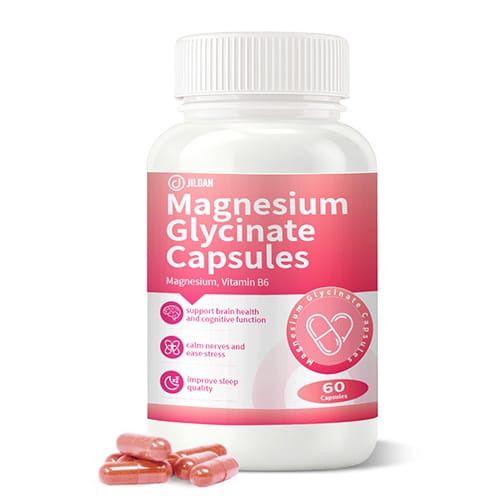
Magnesium Glycinate Capsules
Capsules are one of the most straightforward ways to develop a focused magnesium product.
They allow brands to emphasize the specific magnesium form while keeping the product concept relatively simple.
Capsules can also be suitable for consumers who already have established supplement routines and prefer conventional formats.
JD Nutra currently offers compound magnesium hard capsule formulations that include magnesium glycinate alongside other magnesium forms.
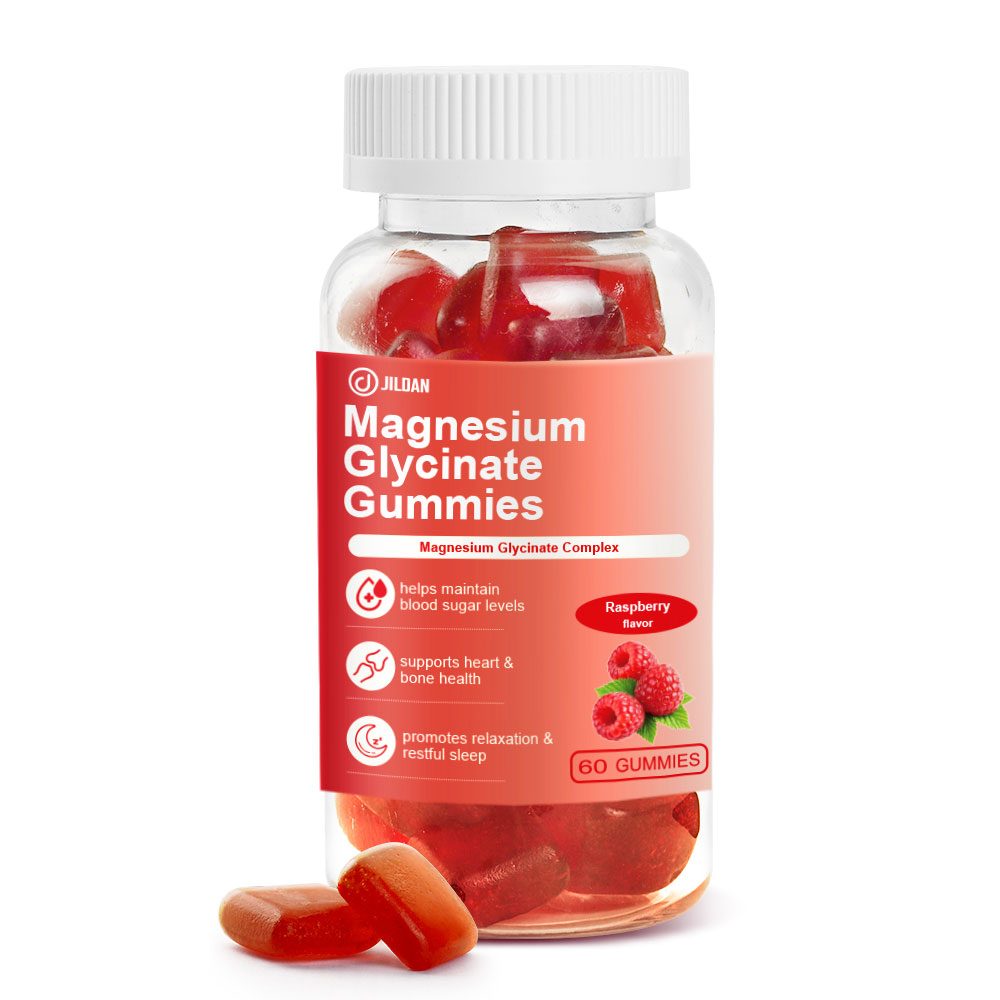
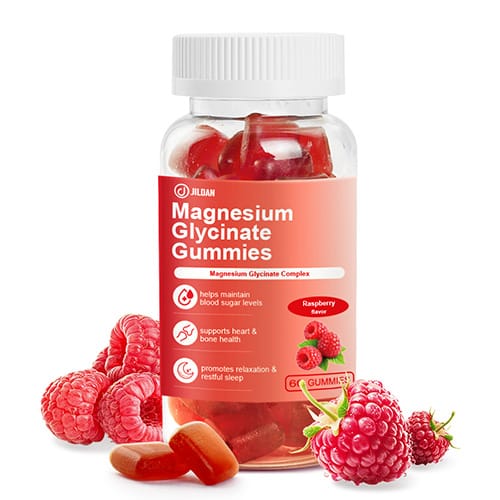
Magnesium Glycinate Gummies
Gummies offer a very different consumer experience.
Instead of swallowing a capsule, consumers receive the ingredient in a chewable format with flavor and texture becoming part of the product concept.
JD Nutra also develops magnesium gummy supplements, demonstrating how magnesium can be incorporated into more consumer-oriented dosage formats.
However, gummy development introduces additional challenges because the formulation needs to balance active ingredient levels with:
- Taste
- Texture
- Sweetness
- Serving size
- Stability
Magnesium Glycinate Powder
Powders provide another option for brands targeting consumers who prefer mixing supplements into beverages.
A powder formula may also provide more flexibility when a brand wants to develop a flavored product or combine magnesium with other nutritional ingredients.
The appropriate format ultimately depends on how the target consumer is expected to use the product.
Taste Can Become a Major Issue in Magnesium Formulation
A magnesium product may have a strong nutritional concept but still struggle if the finished product does not provide an acceptable consumer experience.
This becomes particularly important for:
- Gummies
- Drink powders
- Chewable supplements
- Liquid products
Flavor development should therefore begin alongside formulation rather than being treated as a final packaging-stage decision.
For a powder, the manufacturer needs to evaluate how the magnesium ingredient interacts with the flavor system.
For gummies, additional factors such as sweetness, acidity, chewiness, and mouthfeel need to be considered.
The goal is to create a finished product in which the active ingredient and sensory characteristics work together.
How Much Magnesium Is Appropriate for a Supplement?
There is an important difference between the amount of magnesium people need from their entire diet and the amount supplied by a supplement.
The NIH reports that adult men generally need 400–420 mg of magnesium per day, while adult women generally need 310–320 mg per day, depending on age. (NIH Office of Dietary Supplements)
However, the tolerable upper intake level for magnesium from dietary supplements and medications is 350 mg per day for adults. This upper limit does not include magnesium naturally present in food. (NIH Office of Dietary Supplements)
This distinction is important because a person may obtain magnesium from both food and supplements.
For brands, product development should therefore consider the intended serving size, target market, regulatory requirements, and the amount of elemental magnesium delivered by the finished product.
Why Magnesium Has Become Part of the Sleep and Relaxation Conversation
Magnesium is frequently discussed online in connection with sleep and relaxation.
This has created strong consumer interest in magnesium products, particularly among people looking for products that fit into an evening wellness routine.
However, product claims need to remain aligned with scientific evidence.
The National Center for Complementary and Integrative Health reports that research on magnesium supplements for insomnia and sleep disorders remains limited. A 2021 review involving three studies and 151 participants suggested a possible effect on sleep-onset latency in older adults with insomnia, but the researchers considered the evidence insufficient for firm conclusions. Another review covering nine studies and 7,582 participants reported conflicting findings.
This is an important distinction for supplement brands.
Consumer interest can help identify a market opportunity, but it should not be confused with established clinical evidence.
A responsible magnesium product should use accurate ingredient information and comply with the applicable rules for health-related claims in its target market.
Magnesium Glycinate and Daily Wellness Product Positioning
Magnesium products can be positioned in several ways depending on the formula and intended consumer.
A simple magnesium glycinate capsule may appeal to consumers who already understand different magnesium forms and want a straightforward daily supplement.
A gummy can target consumers who prioritize taste and convenience.
A powder can fit consumers who prefer mixing nutritional products into beverages.
The same core ingredient can therefore support very different product concepts.
For brands, this creates opportunities to develop multiple products without treating the ingredient as a single fixed product category.
The important part is keeping the positioning consistent with the actual formulation.
What Brands Should Consider Before Developing a Magnesium Glycinate Product
Choosing magnesium glycinate is only the beginning of product development.
A complete product brief should address several questions.
Who Is the Product For?
The target consumer influences almost every other decision.
A product for general adult wellness may require a different approach from one designed around sports nutrition or a specific lifestyle.
What Is the Desired Dosage Form?
Capsules, gummies, tablets, and powders all have different technical requirements.
The selected format should work with the intended elemental magnesium level.
What Is the Elemental Magnesium Target?
This needs to be established before the final formula is calculated.
It also affects the physical size and serving structure of the finished product.
Are Additional Ingredients Necessary?
Some products are designed around magnesium alone.
Others combine magnesium with vitamins, botanical ingredients, amino acids, or other nutrients.
Every additional ingredient can affect taste, stability, dosage, and manufacturing complexity.
What Are the Target-Market Requirements?
Supplement regulations vary between markets.
Brands selling internationally should evaluate ingredient requirements, labeling rules, permitted claims, and documentation requirements before finalizing a formula.
Quality Control Starts With the Raw Material
A high-quality finished magnesium product depends on more than the final capsule, tablet, gummy, or powder.
The raw material itself needs appropriate specifications.
Important considerations include:
- Ingredient identity
- Purity
- Elemental magnesium content
- Batch consistency
- Supplier documentation
- Finished-product testing
For brands working with a contract supplement manufacturer, quality documentation can also play an important role in supplier qualification.
JD Nutra describes its supplement manufacturing services as covering formulation development, manufacturing, testing, and packaging, providing brands with support across multiple stages of product development.
A well-controlled manufacturing process helps ensure that the finished product matches the specifications established during formulation.
What Makes a Magnesium Glycinate Product Stand Out?
Magnesium is already a familiar supplement category, so simply launching another magnesium product may not be enough to create meaningful differentiation.
Brands can build a stronger concept by focusing on several elements together.
A Clearly Defined Magnesium Form
Consumers who specifically search for magnesium glycinate should be able to identify the form easily from the product information.
A Practical Dosage Format
The product format should match how the intended consumer prefers to take supplements.
A Comfortable Consumer Experience
For gummies and powders in particular, taste and texture can influence whether consumers continue using the product.
Transparent Product Information
Clear information about the magnesium form, elemental magnesium amount, serving size, and other ingredients can help consumers make informed choices.
Consistent Quality
Reliable raw materials, manufacturing controls, and finished-product testing are essential for long-term product credibility.
When Should a Brand Consider Magnesium Glycinate?
Magnesium glycinate may be worth considering when a brand wants to build a product around a clearly identified magnesium form and a specific consumer proposition.
It can work across several dosage formats, but the right approach depends on the complete product concept.
Before moving into production, brands should evaluate:
- Target consumer
- Elemental magnesium requirement
- Desired dosage form
- Ingredient compatibility
- Taste requirements
- Stability
- Packaging
- Regulatory considerations
The goal is not simply to choose a popular magnesium ingredient. It is to choose a form that makes sense for the finished product.
Conclusion
A magnesium glycinate supplement is more than a conventional magnesium product with a different ingredient name.
The magnesium form affects formulation decisions, elemental magnesium calculations, dosage format, product positioning, and the consumer experience.
For brands, understanding these factors before production can make product development more efficient and help avoid problems related to serving size, taste, stability, or labeling.
Whether developed as a capsule, gummy, tablet, or powder, a successful magnesium product needs a clear target consumer, an appropriate elemental magnesium level, reliable raw materials, and consistent manufacturing.
For supplement brands looking to develop a customized magnesium product, JD Nutra provides formulation and manufacturing support for different supplement formats.
FAQ
What Is Magnesium Glycinate?
Magnesium glycinate is a form of magnesium combined with glycine and is commonly used in dietary supplement formulations.
Why Do Consumers Choose Magnesium Glycinate Supplements?
Consumers may choose magnesium glycinate when they specifically prefer this form of magnesium for their daily supplement routine.
How Is Magnesium Glycinate Different From Magnesium Oxide?
Magnesium glycinate and magnesium oxide are different magnesium compounds, with differences in elemental magnesium content, solubility, and formulation characteristics.
Can Magnesium Glycinate Be Made Into Gummies?
Yes. Magnesium glycinate can be developed in gummy formats, although taste, texture, serving size, and stability need to be carefully considered.
What Should Brands Consider When Developing Magnesium Glycinate Supplements?
Brands should consider the magnesium form, elemental magnesium level, dosage format, ingredient compatibility, taste, stability, packaging, and target-market requirements.


