
Private label collagen gummies combine two of the most recognizable supplement trends in the beauty and wellness market: collagen supplementation and convenient chewable delivery.
For supplement brands, that combination can look commercially attractive. Consumers already associate collagen with skin, joints, hair, nails, and healthy aging, while gummies provide a familiar format for people who do not want to mix powders or swallow capsules.
The technical challenge is that collagen is usually consumed in gram-level quantities, while gummies have limited physical capacity.
That means developing private label collagen gummies is not simply a matter of taking a collagen powder formula and adding it to a gummy base.
The development team has to balance:
- collagen source;
- collagen amount per serving;
- gummy size;
- gummies per serving;
- texture;
- flavor;
- sweetener system;
- moisture;
- processing conditions;
- stability;
- finished-product testing;
- packaging;
- scientifically supportable claims.
The scientific evidence also deserves careful interpretation. A 2025 systematic review and meta-analysis evaluated 23 randomized controlled trials involving 1,474 participants. Although the pooled analysis found improvements in several skin-aging measures, those effects were not observed in higher-quality studies or studies without pharmaceutical-company funding. Review the 2025 collagen meta-analysis on PubMed
For brands sourcing private label collagen gummies, this creates an important principle:
Build the formula around a defined collagen ingredient and realistic serving—not around the largest possible beauty claim.
Start Private Label Collagen Gummies With the Collagen Specification
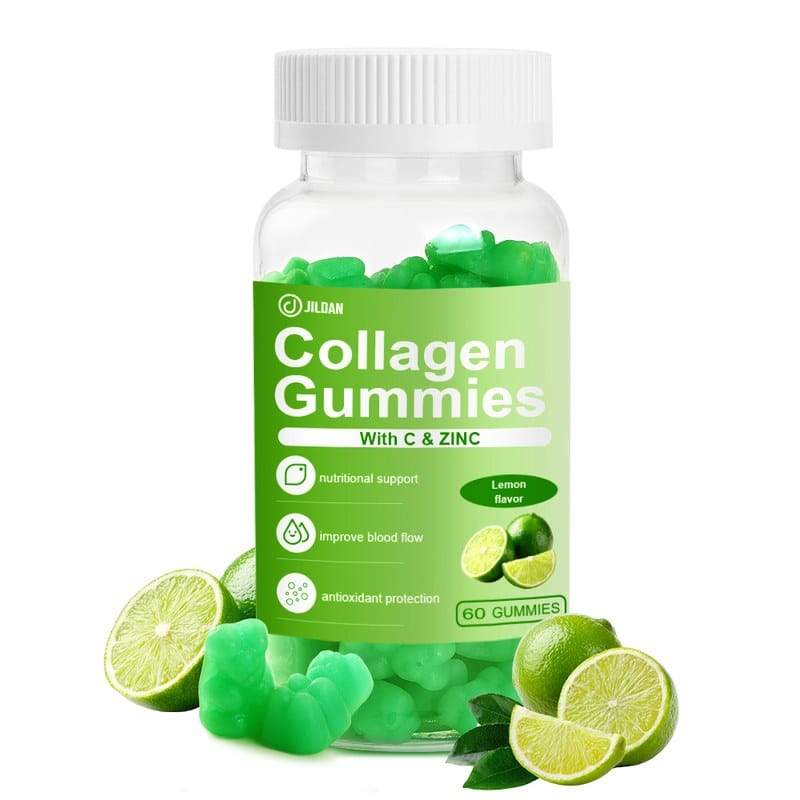
The words “collagen gummies” are not a complete formulation brief.
Before discussing flavor, bottle shape, gummy color, or MOQ, the brand should define the collagen material.
A useful specification for private label collagen gummies may identify:
- collagen source;
- animal species where relevant;
- collagen peptides or another collagen form;
- protein specification;
- molecular-weight information where commercially relevant;
- sensory properties;
- microbiological requirements;
- contaminant requirements;
- allergen status;
- storage conditions;
- supporting technical documentation.
The source can materially affect the product.
Common commercial directions include:
- bovine collagen peptides;
- marine collagen peptides;
- other animal-derived collagen materials.
These ingredients are not necessarily interchangeable.
A marine ingredient may bring different allergen-labeling requirements and sensory characteristics from bovine collagen. A collagen tripeptide ingredient may also have a different technical specification from a conventional hydrolyzed collagen peptide material.
Brands can review JD Nutra’s existing Collagen Peptides vs Tripeptides vs Gelatin Guide before deciding which ingredient category fits the project.
Active Loading Is the Central Challenge in Private Label Collagen Gummies
Collagen is very different from a microgram-level vitamin.
Many clinical studies evaluate gram-level oral collagen intake.
A 2025 systematic review of collagen supplementation and skin outcomes reported trials using approximately 1–10 grams per day, with substantial differences between studies and collagen preparations. Review the dosage analysis on PubMed
This does not mean every collagen product should provide a dose within that range.
It does mean that brands developing private label collagen gummies need to compare the proposed gummy serving with the research they plan to reference.
A gummy has to contain much more than collagen.
Depending on the formulation, it may also require:
- pectin or gelatin;
- sweeteners;
- water;
- acids;
- flavor;
- color;
- coating ingredients.
As collagen loading increases, several things can happen:
- gummy size increases;
- texture becomes harder to control;
- flavor becomes more difficult;
- several gummies may be needed per serving;
- production becomes less forgiving.
This is why the collagen amount should be defined before the final gummy size is approved.
Do Not Copy a Powder Dosage Directly Into Gummies
A common development mistake is to identify a successful collagen powder and ask the gummy manufacturer to reproduce the same amount in two small gummies.
That may not be realistic.
Powders are well suited to gram-level ingredients because the entire serving can consist largely of active powder.
Private label collagen gummies require a structural gummy matrix around the active.
If a desired collagen serving does not fit practically, the brand has several options:
- increase gummies per serving;
- increase gummy size;
- use a more concentrated product positioning with a different ingredient strategy;
- reduce collagen loading while changing the intended claims;
- choose powder or liquid instead.
The correct solution depends on the product concept.
A manufacturer should explain these trade-offs during feasibility review rather than accepting an unrealistic brief and solving the problem later by quietly reducing active loading.
Evidence Should Match the Actual Collagen Amount
This is one of the most important marketing issues in private label collagen gummies.
Suppose a clinical study used several grams of a characterized collagen peptide preparation daily.
A finished gummy formula supplies only a small fraction of that amount.
The brand should not imply that the finished product is equivalent to the clinical protocol simply because both products contain collagen.
The 2026 systematic literature review of 25 randomized controlled trials found that some studies reported improvements in hydration, elasticity, wrinkles, and other skin-related measures, but also emphasized inconsistency and substantial risk of bias across the evidence base. Review the 2026 systematic review on PubMed
For private label collagen gummies, responsible evidence review should compare:
- collagen preparation;
- daily amount;
- study population;
- study duration;
- outcome measured;
- finished-product formula.
A marketing team should not start with a desired claim and work backward to find any study containing the word collagen.
Bovine Collagen Can Offer a Practical Gummy Route
Bovine collagen peptides are widely used in supplement development.
Potential advantages can include:
- broad raw-material availability;
- established powder applications;
- familiar sourcing channels;
- compatibility with beauty and joint-health concepts.
However, the ingredient still needs a defined specification.
For bovine private label collagen gummies, brands should confirm:
- source documentation;
- protein specification;
- sensory profile;
- microbiological criteria;
- contaminant requirements;
- dietary or certification requirements where relevant.
Source-related marketing claims should also be verified.
Terms such as grass-fed, pasture-raised, or particular geographic-origin claims should not be added to packaging unless the underlying supply chain documentation supports them.
Marine Collagen Requires Allergen and Sensory Review
Marine collagen can support a differentiated beauty-oriented positioning, but it introduces additional considerations.
If collagen protein is derived from fish, U.S. allergen-labeling requirements become relevant. FDA identifies fish as one of the nine major food allergens and requires the fish species to be declared where applicable. FDA food allergen guidance
This means marine private label collagen gummies need clear control over:
- species source;
- allergen documentation;
- raw-material identity;
- label declaration;
- cross-contact controls.
Marine collagen can also have a different sensory profile.
The manufacturer may need additional flavor work to manage marine or protein-related notes.
A brand should never assume that a berry flavor developed with bovine collagen can be transferred unchanged to marine collagen.
Collagen Source Does Not Automatically Determine Better Results
Marketing sometimes creates a simple hierarchy in which one collagen source is presented as universally superior.
The research does not support such a broad conclusion.
A 2023 meta-analysis covering 26 randomized controlled trials and 1,721 participants reported positive pooled findings for skin hydration and elasticity, but also identified variation by collagen source, study duration, and other study characteristics. Review the collagen skin meta-analysis on PubMed
For brands sourcing private label collagen gummies, source should therefore be chosen according to:
- formula requirements;
- target consumer;
- allergen considerations;
- sensory profile;
- supporting evidence;
- supply-chain documentation.
“Marine” or “bovine” alone is not a complete quality claim.
Pectin vs Gelatin Changes the Product Strategy
The gummy base affects manufacturing, texture, and commercial positioning.
Pectin-Based Private Label Collagen Gummies
Pectin may support a plant-based gummy-base claim, although that does not make an animal-derived collagen product vegan.
This distinction is important.
A bovine or marine collagen gummy made with pectin still contains animal-derived collagen.
Pectin formulations require management of:
- acidity;
- temperature;
- soluble solids;
- moisture;
- setting behavior.
Gelatin-Based Private Label Collagen Gummies
Gelatin creates a different chew and elasticity profile.
It can also contribute animal-derived protein to the overall formula.
Brands should confirm:
- gelatin source;
- collagen source;
- dietary positioning;
- finished-label wording.
The choice between pectin and gelatin should be based on manufacturing and consumer strategy—not simply which base is currently more fashionable.
Do Not Market Animal Collagen Gummies as Vegan
This deserves a separate section because it is a common positioning mistake.
A pectin gummy is not automatically vegan.
If private label collagen gummies contain bovine, porcine, marine, or another animal-derived collagen ingredient, a vegan claim would generally be inconsistent with the ingredient composition.
Pectin can still support benefits such as:
- different texture;
- gelatin-free gummy base;
- specific manufacturing characteristics.
But the complete finished product determines dietary-positioning claims.
The brand should review every active and inactive ingredient before finalizing statements such as:
- vegan;
- vegetarian;
- gelatin free;
- fish free;
- dairy free.
Sugar-Free Collagen Gummies Need Their Own Development Program
Sugar-free is another popular product request.
But converting conventional private label collagen gummies into a sugar-free formula requires more than removing sucrose.
Sugar and syrup systems influence:
- sweetness;
- solids;
- texture;
- water activity;
- processing;
- shelf stability.
Alternative sweeteners and bulking systems can introduce:
- cooling sensations;
- aftertaste;
- digestive-tolerance considerations;
- altered gummy hardness.
Collagen itself may also contribute a mild protein flavor.
A sugar-free system needs enough sensory support to manage both the collagen and the sweetener profile.
Brands should therefore specify the sugar strategy before flavor development begins.
Vitamin C Is a Common Supporting Ingredient—but Should Have a Reason
Vitamin C is frequently paired with collagen supplements because vitamin C contributes to normal collagen formation in the body.
For private label collagen gummies, this can create a logical formulation direction.
But brands should still define:
- vitamin C form;
- amount;
- stability;
- label claim;
- contribution to acidity.
Vitamin C can also interact with the overall gummy environment because ascorbic acid contributes acidity.
That may affect:
- flavor;
- pH;
- gummy processing;
- stability.
A supporting nutrient should therefore be treated as part of the formulation—not simply added because it looks familiar on competing labels.
Hyaluronic Acid Can Create a Beauty-Focused Combination
Hyaluronic acid is another ingredient commonly paired with collagen in beauty-from-within products.
A combination of collagen peptides and sodium hyaluronate may create a clear skin-focused concept.
However, a manufacturer still needs to determine:
- amount;
- raw-material specification;
- compatibility;
- processing stability;
- analytical approach.
Adding hyaluronic acid also changes the product’s evidence requirements.
Research supporting collagen is not automatically evidence for the exact collagen-plus-hyaluronic-acid formula.
Each ingredient should have a defined role.
JD Nutra’s current portfolio includes collagen-based liquid concepts using combinations such as collagen peptides, vitamin C, and sodium hyaluronate, illustrating how beauty formulations can be developed across different dosage forms.
Biotin Should Not Be Added Only Because It Is Popular
Biotin frequently appears in hair, skin, and nail supplements.
That does not mean every batch of private label collagen gummies needs biotin.
Adding it changes:
- ingredient specification;
- Supplement Facts;
- product positioning;
- testing requirements.
The brand should ask whether biotin materially improves the product concept.
If the core proposition is collagen for beauty-oriented supplementation, adding several unrelated vitamins simply to create a longer Supplement Facts panel may weaken clarity.
A focused product with an appropriate collagen serving may be easier for consumers to understand.
Flavor Development Needs the Real Collagen Material
Flavor should not be approved using a blank gummy base.
The actual collagen ingredient can affect:
- aroma;
- sweetness perception;
- aftertaste;
- mouthfeel.
For this reason, samples of private label collagen gummies should contain the intended commercial collagen material whenever possible.
Common flavor directions can include:
- strawberry;
- mixed berry;
- peach;
- raspberry;
- citrus;
- tropical fruit.
The ideal flavor depends on:
- collagen source;
- active loading;
- gummy base;
- sugar system;
- supporting ingredients.
Marine collagen, high protein loading, vitamin C, and mineral additions may all require different flavor strategies.
The approved prototype should therefore be representative of the final commercial formula.
Heat Exposure Should Be Evaluated During Gummy Processing
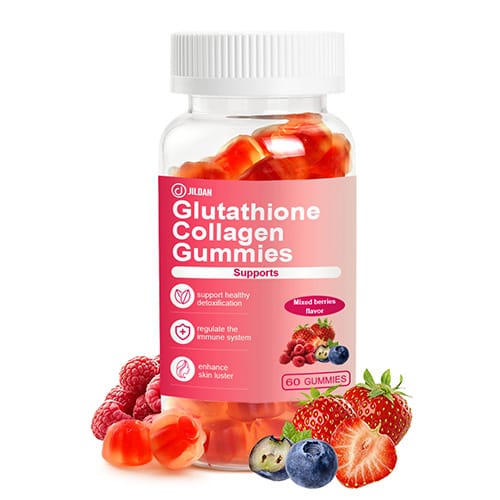
Gummy manufacturing can involve elevated temperatures.
Collagen peptides are generally suitable for many food and supplement applications, but commercial private label collagen gummies should still be assessed under the actual manufacturing process.
Brands should ask:
- when collagen is added;
- the temperatures involved;
- duration of exposure;
- whether protein or other relevant specifications are checked after processing.
If the formula also contains heat-sensitive vitamins or botanical ingredients, the process may need additional optimization.
The complete formula determines the manufacturing challenge.
Moisture and Texture Are Part of Finished-Product Quality
A gummy needs to remain chewable and physically acceptable throughout its shelf life.
Potential changes include:
- hardening;
- softening;
- stickiness;
- sweating;
- moisture migration;
- flavor deterioration.
High collagen loading can also affect texture.
A stability program for private label collagen gummies should therefore consider both chemical and physical quality.
Depending on the formulation, monitoring may include:
- collagen or protein specification;
- selected vitamin potency;
- appearance;
- moisture;
- texture;
- microbiological quality;
- flavor;
- packaging integrity.
The commercial package should ideally be used in the stability program.
Finished-Product Testing Should Go Beyond the Raw-Material COA
A collagen supplier COA describes the incoming collagen ingredient.
It does not prove that the final gummy was manufactured correctly.
Commercial production introduces:
- weighing;
- blending;
- heating;
- depositing;
- conditioning;
- coating;
- packaging.
A finished-product specification for private label collagen gummies may therefore address:
- identity;
- gummy weight;
- collagen or protein-related specification;
- selected supporting nutrients;
- microbiological limits;
- physical appearance;
- moisture-related properties.
The exact test scope depends on the formula.
For U.S.-market dietary supplements, FDA identifies 21 CFR Part 111 as the Current Good Manufacturing Practice framework specifically applicable to dietary supplements. FDA dietary supplement CGMP overview
A manufacturer should be able to explain how finished batches are reviewed and released.
The COA Should Match the Commercial Product
Brands should clarify which document they are reviewing.
A collagen raw-material COA is not the same as a finished private label collagen gummies COA.
A useful finished-product COA may contain:
- product name;
- batch number;
- production date;
- physical specifications;
- selected potency or content results;
- microbiological results;
- quality approval.
Ask whether the test results are:
- actual lot-specific measurements;
- supplier-reported values;
- calculated values;
- specification-only limits.
The stronger the product claim, the more important it becomes to understand how the associated specification is verified.
Packaging Needs to Protect Texture and Moisture
Packaging is part of gummy stability.
Private label collagen gummies may be packaged in:
- bottles;
- jars;
- pouches;
- other suitable formats.
The package should be evaluated for:
- moisture barrier;
- closure integrity;
- repeated consumer opening;
- shipping durability;
- gummy count;
- headspace.
If a desiccant is part of the validated package system, removing it later to reduce packaging complexity may change the product environment.
Brands should therefore lock the major packaging configuration before commercial stability work is considered complete.
Marine Collagen Packaging Also Needs Clear Allergen Communication
When the collagen source is fish, packaging becomes part of allergen risk communication.
FDA’s current guidance explains that fish is a major food allergen and that the species of fish must be declared under applicable U.S. labeling requirements. FDA guidance on major food allergens
For marine private label collagen gummies, brand teams should therefore align:
- raw-material documents;
- ingredient statement;
- allergen declaration;
- artwork.
This work should happen before printing rather than during final product release.
Claims Need to Reflect the Actual Evidence
Collagen marketing commonly includes language involving:
- skin hydration;
- elasticity;
- wrinkles;
- joints;
- bone;
- muscle;
- hair;
- nails.
The existence of research does not mean every claim is appropriate for every product.
FTC’s Health Products Compliance Guidance states that health-related advertising should be truthful, not misleading, and supported by competent and reliable scientific evidence appropriate to the claim. FTC Health Products Compliance Guidance
For private label collagen gummies, this means evaluating:
- the exact collagen material;
- daily serving;
- supporting ingredients;
- study population;
- study quality;
- intended claim.
The claim should not be stronger than the evidence.
Avoid “Reverses Aging” and Similar Claims
The beauty category is particularly vulnerable to exaggerated advertising.
The 2025 meta-analysis discussed earlier is a good reason for caution. Its overall pooled results appeared favorable, but higher-quality and independently funded studies did not reproduce the same skin benefits.
That makes sweeping statements such as:
- reverses aging;
- eliminates wrinkles;
- regrows hair;
- rebuilds joints;
- repairs cartilage
poor choices for private label collagen gummies marketing unless a specific authorized claim and evidence framework applies.
For U.S. dietary supplements, FDA explains that structure/function claims may describe effects on normal body structure or function, but claims to diagnose, treat, cure, or prevent disease are not permissible as dietary supplement structure/function claims. FDA structure/function claims guidance
Stock Formula vs Custom Private Label Collagen Gummies
Both sourcing routes can work.
Stock Formula
An existing private label collagen gummies formula may offer:
- faster project definition;
- established process parameters;
- existing flavor system;
- fewer development variables.
But buyers should still confirm:
- collagen source;
- amount per serving;
- gummy base;
- supporting ingredients;
- testing;
- packaging.
Custom Formula
Custom development allows control over:
- collagen source;
- active loading;
- vitamin C;
- hyaluronic acid;
- biotin;
- flavor;
- sugar system;
- gummy base.
The trade-off is that every customization can affect:
- technical feasibility;
- sampling;
- stability;
- quality testing.
Customization should therefore serve a clear brand strategy.
MOQ Should Be Discussed After Technical Feasibility
Minimum order quantity matters, but it should not be the first question.
The MOQ for private label collagen gummies can be influenced by:
- collagen source;
- custom ingredient requirements;
- gummy base;
- flavor;
- shape;
- packaging;
- printed materials.
A low MOQ does not compensate for an unrealistic active dose or poorly controlled raw material.
Brands should first establish:
- the formula;
- the serving;
- the package;
- the quality specification.
Commercial quantity discussions become much more meaningful after those points are clear.
Samples Should Represent the Commercial Product
Sampling should answer more than “Does this taste good?”
Evaluate:
- collagen source;
- collagen amount;
- gummy weight;
- gummies per serving;
- flavor;
- sweetness;
- texture;
- color;
- aftertaste.
Ask whether the sample uses the same collagen ingredient intended for mass production.
If the sample contains less collagen because the formulation is still being optimized, that should be disclosed.
A flavor-approved low-dose prototype should not automatically become the reference for a higher-load commercial batch.
How to Audit a Private Label Collagen Gummies Manufacturer
A structured supplier review should cover several areas.
Collagen Raw Material
Ask:
- What is the collagen source?
- Which species is used?
- Is the ingredient hydrolyzed collagen peptides?
- How is supplier qualification handled?
Active Loading
Ask:
- How much collagen can realistically fit per gummy?
- How many gummies are required per serving?
- What changes when loading increases?
Gummy Process
Ask:
- Pectin or gelatin?
- What temperatures are used?
- How are moisture and texture controlled?
Quality
Ask:
- What raw-material testing is required?
- What is checked on the finished gummy?
- What appears on the final COA?
Stability
Ask:
- How is shelf life supported?
- Is the commercial package evaluated?
- Are texture and moisture monitored?
Regulatory Support
Ask:
- How are allergen requirements handled?
- Can the technical team support accurate Supplement Facts and ingredient information?
A professional manufacturer of private label collagen gummies should be able to discuss both collagen science and gummy engineering.
What to Include in Your RFQ
A detailed RFQ makes supplier quotations easier to compare.
For private label collagen gummies, include:
Target Consumer
Define:
- beauty and wellness;
- healthy aging;
- active lifestyle;
- another clear segment.
Collagen Requirement
Specify:
- bovine or marine;
- collagen peptides or another defined material;
- target amount per serving;
- source requirements;
- allergen requirements.
Supporting Ingredients
Identify any requested:
- vitamin C;
- hyaluronic acid;
- biotin;
- other nutrients.
Gummy System
Define:
- pectin or gelatin;
- gummy size;
- gummies per serving;
- flavor;
- sugar strategy;
- color requirements.
Testing
Request:
- raw-material documentation;
- appropriate finished-product specifications;
- microbiological testing;
- relevant contaminant testing;
- finished-product COA.
Packaging
Specify:
- bottle or pouch;
- gummy count;
- closure;
- label;
- carton.
Market
Identify the destination country or countries.
Brands can review JD Nutra’s supplement CDMO services when planning formulation, commercial production, testing, and packaging.
Common Mistakes Brands Make With Private Label Collagen Gummies
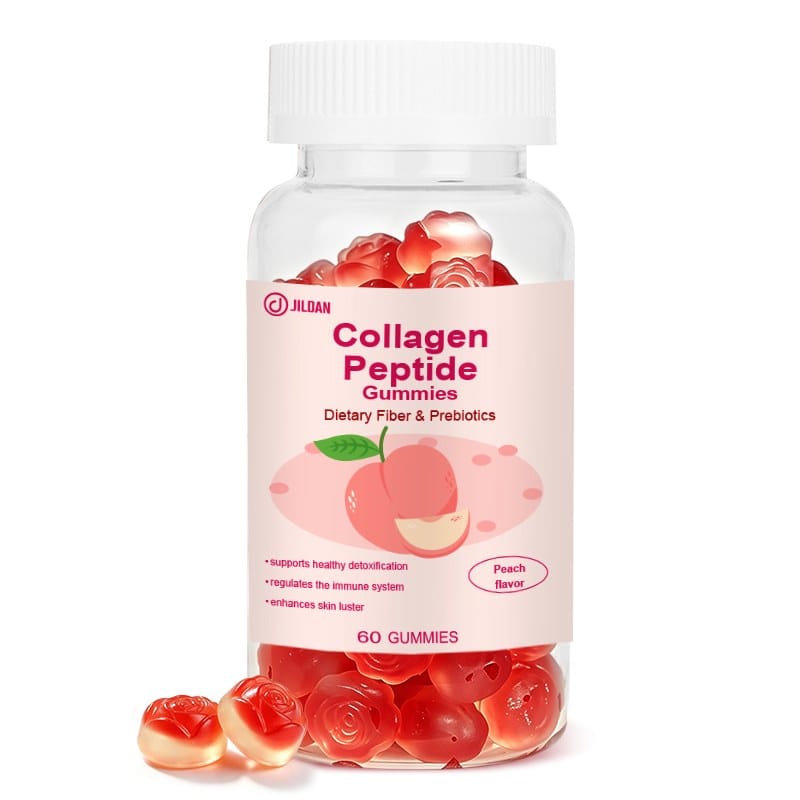
Starting With Flavor Instead of Collagen Dose
The collagen target should be established first.
Copying Powder Research Onto a Low-Dose Gummy
The research preparation and commercial serving need to be compared carefully.
Assuming Marine Collagen Is Automatically Better
Source alone does not prove superior outcomes.
Calling a Pectin Collagen Gummy Vegan
Animal-derived collagen means the finished product is not vegan simply because the gummy base uses pectin.
Ignoring Fish-Allergen Requirements
Marine collagen requires appropriate source and label review.
Adding Too Many Beauty Ingredients
A longer Supplement Facts panel is not automatically a stronger product.
Approving a Blank Gummy Sample
The actual collagen can materially change taste and texture.
Choosing Packaging After Stability Work
The commercial package affects the product environment.
Making Stronger Claims Than the Evidence Supports
Consumer popularity is not the same as scientific substantiation.
FAQ
What Are Private Label Collagen Gummies?
Private label collagen gummies are chewable collagen-containing dietary supplements manufactured by a third party and sold under another company’s brand.
They can use an existing formula or be customized around collagen source, serving amount, gummy base, flavor, additional ingredients, and packaging.
How Much Collagen Can Be Put Into a Gummy?
There is no universal amount.
The practical loading depends on collagen ingredient characteristics, gummy size, serving count, gummy base, flavor requirements, and manufacturing process.
The manufacturer should test the intended loading in the actual commercial matrix.
Are Private Label Collagen Gummies as Effective as Powder?
The dosage form alone does not determine effectiveness.
The more useful comparison is how much of the relevant collagen preparation each format provides and how closely that amount matches applicable evidence.
Powders generally make gram-level servings easier to deliver.
Is Marine Collagen Better Than Bovine Collagen?
Current evidence does not establish a simple rule that one source is universally superior.
Source should be selected according to evidence, target consumer, allergen requirements, sensory performance, and supply-chain documentation.
Can Private Label Collagen Gummies Be Vegan?
Not when they contain animal-derived collagen.
A pectin gummy can be gelatin-free, but bovine or marine collagen remains animal derived.
Can Private Label Collagen Gummies Be Sugar-Free?
Yes, but sugar-free development requires a dedicated sweetener and bulking system because changing sugars affects texture, flavor, processing, and stability.
Should Collagen Gummies Contain Vitamin C?
Vitamin C can be a logical supporting ingredient, but the amount, form, stability, and product positioning should be deliberately defined.
What Should Brands Ask a Collagen Gummy Manufacturer First?
Ask how much of the specified collagen material can realistically be delivered per serving while maintaining acceptable gummy texture, flavor, stability, and finished-product quality.
Conclusion
Successful private label collagen gummies begin with a realistic relationship between evidence, dose, and dosage form.
Collagen has strong consumer recognition, and human research has explored its potential effects across skin and musculoskeletal outcomes. But recent reviews also show why supplement brands need to communicate the evidence carefully rather than treating every positive trial as proof of universal results.
For manufacturers and brand owners, the biggest technical challenge is active loading.
Gram-level collagen studies cannot automatically be translated into tiny gummy servings.
A commercially strong private label collagen gummies project therefore needs to align:
- collagen source;
- ingredient specification;
- evidence-relevant serving;
- gummy size;
- gummies per serving;
- pectin or gelatin system;
- sugar strategy;
- flavor;
- finished-product testing;
- stability;
- packaging;
- accurate claims.
Brands should also treat source transparency seriously.
Marine collagen may trigger fish-allergen labeling considerations in the U.S., while animal-derived collagen should not be marketed as vegan simply because the gummy base contains pectin.
Most importantly, the manufacturer should be willing to tell the brand when a requested formula is technically unrealistic.
Reducing an active silently to make a gummy easier to manufacture is not good formulation.
Redesigning the serving, gummy size, dosage form, or product positioning transparently is.
Brands researching the category can review JD Nutra’s Collagen Peptides vs Tripeptides vs Gelatin Guide, Private Label Collagen Peptides Powder Buyer Guide, and Collagen Peptides Beauty & Wellness Market Guide.
To compare collagen gummies with other product formats, explore JD Nutra’s gummy supplement manufacturing range and powder supplement manufacturing range.
When the collagen source, target amount, gummy base, flavor, testing requirements, packaging, and destination market are defined, contact JD Nutra to discuss the technical feasibility of your private label collagen gummies project.


