
Private label electrolyte gummies give supplement brands a portable way to enter the hydration and sports-nutrition market without asking consumers to mix a powder or carry a ready-to-drink beverage.
The format is convenient. The formulation is not.
Electrolytes are minerals, and mineral ingredients can quickly become difficult inside a gummy. Sodium can taste intensely salty. Potassium salts may introduce bitterness. Magnesium compounds can create chalkiness and require substantial raw-material weight to deliver a useful amount of elemental magnesium. Increasing mineral loading can also affect gummy texture, pH, water activity, flavor, and serving size.
That means successful private label electrolyte gummies cannot be developed by selecting three familiar mineral names and asking a factory to fit them into two small gummies.
The project should instead define:
- target consumer;
- use scenario;
- elemental sodium;
- elemental potassium;
- elemental magnesium;
- mineral forms;
- gummies per serving;
- gummy base;
- sugar strategy;
- flavor system;
- finished-product testing;
- packaging;
- claims.
Hydration needs differ substantially between people and exercise conditions. A position statement indexed by PubMed on fluid replacement and hydration emphasizes individualized hydration strategies and notes that both inadequate fluid replacement and excessive fluid intake can create problems for physically active people.
For supplement brands, the first question should therefore not be:
“How many electrolytes can we put into a gummy?”
It should be:
“What electrolyte profile makes sense for our intended consumer, and can a manufacturer deliver that elemental mineral specification consistently in a stable, good-tasting gummy?”
Start Private Label Electrolyte Gummies With the Use Case
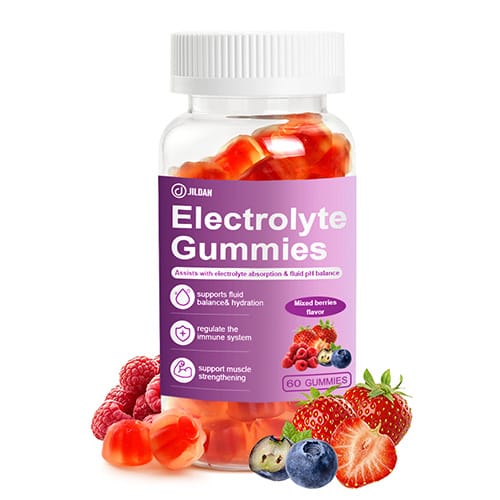
The formulation should begin with the consumer scenario.
Private label electrolyte gummies can target very different markets, including:
- endurance sports;
- gym and fitness users;
- outdoor recreation;
- hot-weather activity;
- travel;
- general wellness;
- daily mineral supplementation.
These products do not necessarily need the same mineral profile.
A recreational consumer taking a short indoor fitness class is different from an endurance athlete training for hours in warm conditions.
Published sports-hydration guidance emphasizes that longer or more intense exercise, particularly under challenging environmental conditions, can create different fluid and electrolyte needs. The same PubMed hydration position statement also highlights the importance of avoiding both substantial dehydration and excessive drinking.
This means a manufacturer should ask what private label electrolyte gummies are intended to do before recommending sodium, potassium, or magnesium levels.
A useful product brief might say:
Portable electrolyte gummies for adults participating in prolonged outdoor recreation.
That gives the development team much more useful direction than:
Make us a hydration gummy.
The use case influences everything that follows.
Sodium Is Often the Core Mineral in Sports-Oriented Electrolyte Gummies
Sodium is a major extracellular electrolyte and is lost in sweat.
For sports-oriented private label electrolyte gummies, it is often the first mineral that needs to be defined.
But there is no single sodium number that is optimal for everyone.
A published modeling study on sodium replacement during exercise found that sodium requirements depend strongly on factors such as fluid replacement and individual sweat sodium concentration. The study illustrates why sodium strategy needs to be matched to the type and duration of exercise rather than treated as a universal number.
This makes high-sodium positioning something that should be linked to a defined consumer and use case rather than treated as universally superior.
For a manufacturer, sodium also creates significant sensory pressure.
Depending on the sodium source and amount, increasing sodium can make private label electrolyte gummies:
- salty;
- sharp;
- mineral tasting;
- difficult to flavor.
A technical feasibility review should therefore examine both nutrition and taste.
Specify Elemental Sodium, Not Just the Sodium Ingredient
The brand should define how much sodium the finished serving is intended to provide.
The raw-material quantity is a separate issue.
For example, sodium citrate and sodium chloride contain different proportions of sodium by weight.
The manufacturer therefore needs a calculation connecting:
mineral compound → assay → elemental sodium → amount per gummy → amount per serving
The FDA currently lists the Daily Value for sodium as 2,300 mg for adults and children age four and older. That Daily Value is a labeling reference, not a target for a gummy serving.
A professional supplier of private label electrolyte gummies should be comfortable explaining the difference between:
- mineral compound weight;
- elemental nutrient amount;
- percentage Daily Value.
Brands should not approve labels until those calculations are clear.
Potassium Needs the Same Elemental-Mineral Discipline
Potassium is another common component of private label electrolyte gummies.
NIH describes potassium as the major intracellular cation and notes its role in maintaining cellular fluid volume and electrochemical gradients.
For manufacturers, potassium introduces the same central issue as sodium:
the weight of a potassium compound is not the same as the elemental potassium supplied.
A formula using potassium citrate, for example, needs to account for the actual potassium contribution of the raw material.
FDA’s current Daily Value for potassium is 4,700 mg, which illustrates another important point: a gummy is not designed to deliver an entire day’s potassium requirement.
Most potassium intake normally comes from the broader diet.
In private label electrolyte gummies, potassium should therefore be included because it fits the product’s electrolyte strategy—not because a brand wants a large percentage number on the front of the package.
Potassium Safety Makes Target-Consumer Definition Important
Potassium is physiologically important, but higher supplemental intake is not appropriate for everyone.
NIH notes that people with impaired potassium excretion, including some people with kidney disease and people using certain medications, can be at greater risk of hyperkalemia.
This does not mean ordinary private label electrolyte gummies are inherently unsafe.
It means formula and warning decisions should reflect:
- intended consumer;
- elemental amount;
- suggested use;
- market requirements.
A manufacturer should provide accurate technical information so the brand’s regulatory team can evaluate the finished product.
Magnesium Can Create the Biggest Active-Loading Problem
Magnesium is commercially attractive because it has strong consumer recognition across hydration, muscle, wellness, and sports categories.
It can also be one of the hardest minerals to fit into private label electrolyte gummies.
NIH describes magnesium as participating in more than 300 enzyme systems and playing roles in muscle function, nerve function, energy metabolism, and transport of calcium and potassium ions across cell membranes.
But magnesium compounds can require considerable raw-material weight.
The manufacturer has to distinguish:
- magnesium glycinate weight;
- magnesium citrate weight;
- magnesium oxide weight;
- elemental magnesium.
This is the same principle discussed in JD Nutra’s magnesium formulation content. Brands evaluating mineral formats can review JD Nutra’s magnesium glycinate formulation guide before approving a magnesium target.
For private label electrolyte gummies, the elemental amount should be specified first.
Magnesium Form Affects Both Loading and Consumer Experience
Different magnesium compounds behave differently.
Important variables include:
- elemental magnesium percentage;
- solubility;
- bitterness;
- chalkiness;
- raw-material bulk;
- interaction with the gummy system.
NIH notes that magnesium forms differ in solubility and bioavailability, with several more soluble forms showing greater absorption than magnesium oxide in research.
That does not mean the form with the highest absorption automatically produces the best gummy.
A private label electrolyte gummies manufacturer also has to ask:
- Will it fit?
- Will it taste acceptable?
- Will it destabilize texture?
- Can it be tested accurately?
Product design requires all four questions.
Gummies Have a Hard Physical Limit on Mineral Loading
This is one of the biggest differences between private label electrolyte gummies and electrolyte powder.
A powder serving can consist primarily of minerals, flavors, acids, and supporting ingredients.
A gummy must reserve substantial mass for the gummy itself.
Depending on the formula, that can include:
- pectin or gelatin;
- sweeteners;
- water;
- acids;
- flavors;
- colors;
- processing aids.
As sodium, potassium, and magnesium increase, the manufacturer can eventually reach a point where the gummy becomes:
- too large;
- too salty;
- too bitter;
- too chalky;
- too fragile;
- too firm.
A credible manufacturer should be willing to say when a requested formula is technically unrealistic.
That is more valuable than promising any mineral amount and solving the problem later by reducing the actives.
Serving Count Should Follow the Mineral Target
Brands frequently request one or two gummies per serving because that looks simple on packaging.
But the correct number of gummies should come from formulation feasibility.
A manufacturer may determine that four smaller gummies provide a better consumer experience than two oversized gummies.
This is particularly relevant for high-load private label electrolyte gummies.
The development team should balance:
elemental minerals + piece weight + flavor + texture + consumer convenience
The best commercial serving is not necessarily the smallest serving.
Prototype evaluation should include realistic consumption of the entire serving rather than tasting one gummy in isolation.
Private Label Electrolyte Gummies vs Electrolyte Powder
The two formats solve different problems.
| Development Factor | Private Label Electrolyte Gummies | Electrolyte Powder |
|---|---|---|
| Mixing required | No | Yes |
| Mineral capacity | More limited | Higher |
| Provides meaningful fluid volume | No | When mixed with water |
| Portability | High | High |
| Flavor challenge | Concentrated in gummy | Diluted in beverage |
| Serving flexibility | Fixed gummy count | Sachet or scoop |
| Consumer experience | Chewable | Drink |
| High-dose electrolyte formulas | More difficult | Generally easier |
This distinction is important.
Private label electrolyte gummies can provide convenient mineral delivery, but they do not contain enough water to replace drinking fluids.
Brands should avoid marketing language that implies a few gummies alone “rehydrate” someone regardless of fluid intake.
JD Nutra currently lists electrolyte powder among its functional nutrition portfolio and has also publicly showcased electrolyte gummies as part of its sports-nutrition gummy range.
This makes powder and gummy formats useful complementary concepts rather than direct substitutes.
Do Not Position Gummies as a Replacement for Water
Hydration requires water.
An electrolyte gummy supplies minerals but little fluid.
The NATA fluid-replacement position statement emphasizes individualized fluid intake and warns about risks associated with both insufficient and excessive hydration.
Therefore, private label electrolyte gummies should usually be positioned as part of a hydration strategy.
Appropriate consumer education can explain that the product:
- supplies selected electrolytes;
- is portable;
- can be used alongside appropriate fluid intake.
That is more accurate than suggesting consumers can eat gummies instead of drinking during prolonged activity.
Flavor Development Is a Major Supplier-Selection Test
A mineral gummy may pass every spreadsheet calculation and still fail in the market because it tastes unpleasant.
This makes flavor capability a major criterion when choosing a supplier for private label electrolyte gummies.
Sodium can introduce saltiness.
Potassium can be bitter.
Magnesium can contribute mineral and chalky notes.
When these are combined, flavor development becomes substantially harder than it is for a simple vitamin C gummy.
The manufacturer should develop flavor around the actual commercial mineral load.
Do not approve a blank fruit gummy and assume the same flavor system will work once the complete electrolyte blend is added.
Useful sample evaluation criteria include:
- initial sweetness;
- acidity;
- saltiness;
- bitterness;
- mineral aftertaste;
- chew;
- mouthfeel;
- flavor persistence.
The entire serving should be tasted.
Citrus Flavors Can Fit Electrolyte Positioning—but Need Actual Testing
Lemon, lime, orange, and mixed citrus are common directions for electrolyte products because acidity can work naturally with salty and mineral profiles.
But flavor selection should never be based only on category convention.
The selected sodium, potassium, and magnesium forms can completely change sensory performance.
For custom private label electrolyte gummies, a manufacturer may need to adjust:
- acid balance;
- sweetness;
- aroma level;
- flavor profile.
A formula with modest sodium may tolerate a berry flavor easily.
A much higher sodium formula may need a more aggressive flavor architecture.
This is why flavor and mineral design need to happen together.
Pectin vs Gelatin Should Be Tested With the Final Electrolyte Blend
The gummy base also matters.
Pectin
Pectin supports gelatin-free and potentially vegan positioning when all ingredients meet the relevant criteria.
However, pectin is sensitive to:
- pH;
- solids;
- ionic conditions;
- temperature.
High mineral loading can influence the gel system.
Gelatin
Gelatin creates a different elastic texture and processing profile.
It may behave differently under high active loads but does not support vegan positioning.
For private label electrolyte gummies, neither system should be selected from marketing preference alone.
The actual electrolyte blend needs to be tested in the chosen base.
Brands can review JD Nutra’s broader gummy manufacturing capabilities through JD Nutra’s custom supplement manufacturing services.
Sugar-Free Electrolyte Gummies Need Their Own Formula
Many brands want sugar-free private label electrolyte gummies, particularly for fitness and wellness audiences.
That is possible, but it requires dedicated development.
Sugar contributes to:
- sweetness;
- texture;
- solids;
- processing behavior;
- water activity.
Changing to an alternative sweetener system can alter the entire gummy.
It can also expose more of the underlying mineral taste.
This means a sugar-free mineral formula may require more intensive:
- sweetness balancing;
- acidity adjustment;
- flavor masking;
- texture optimization.
A sugar-free claim should therefore be specified at the beginning of the RFQ.
It should not be added after the conventional formula has already been approved.
Carbonhydrate Strategy Should Match the Product Position
Not every hydration product needs to be sugar free.
For some endurance concepts, carbohydrate may be intentionally relevant.
For a general wellness electrolyte gummy, consumers may prefer lower or zero added sugar.
The important point is consistency.
A brand should decide whether private label electrolyte gummies are primarily:
- sports fuel;
- electrolyte supplementation;
- wellness supplementation.
Trying to satisfy all three consumer needs in one formula can make product positioning unclear.
Finished-Product Testing Should Verify Elemental Minerals
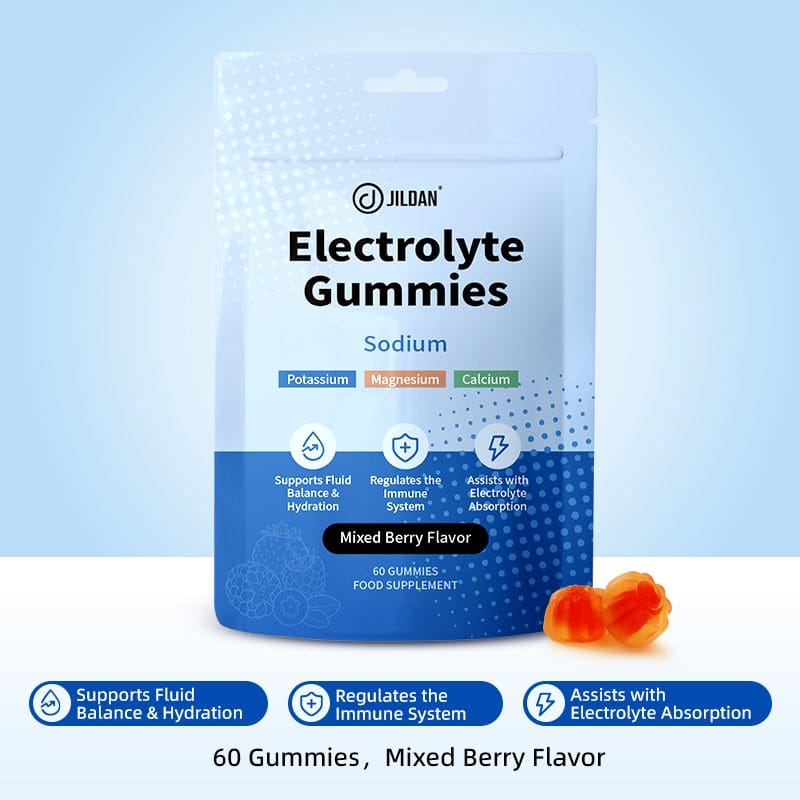
A raw-material COA does not prove the finished gummy contains the intended mineral amounts.
Manufacturing involves:
- weighing;
- batching;
- cooking;
- ingredient addition;
- depositing;
- conditioning;
- packaging.
A finished specification for private label electrolyte gummies may include:
- appearance;
- gummy weight;
- sodium;
- potassium;
- magnesium;
- selected supporting nutrients;
- microbiological criteria;
- moisture-related specifications.
FDA identifies 21 CFR Part 111 as the dietary-supplement-specific CGMP framework and requires manufacturers to establish and determine whether required component, in-process, finished-product, packaging, and labeling specifications are met.
A buyer should ask exactly which minerals are analytically tested on the finished product.
Calculated Values and Tested Values Are Not the Same
Some nutrient values may be calculated from raw-material addition.
Others may be verified analytically.
Brands sourcing private label electrolyte gummies should know which approach applies to each specification.
Ask:
- Is sodium tested?
- Is potassium tested?
- Is magnesium tested?
- Which method is used?
- What is the acceptance range?
- Is the result shown on the finished-product COA?
A formula sheet tells you what should be present.
An analytical result tells you what a laboratory measured.
Those are related but different forms of evidence.
How to Read an Electrolyte Gummies COA
A useful finished-product Certificate of Analysis should be traceable to the actual production lot.
It may include:
- product identity;
- batch number;
- test item;
- specification;
- method;
- result;
- approval status.
When reviewing private label electrolyte gummies, pay particular attention to reporting units.
For magnesium and potassium, confirm whether the number represents the elemental mineral or the total compound.
For example:
200 mg potassium citrate
is not the same statement as:
200 mg potassium.
The same principle applies to magnesium citrate or magnesium glycinate.
The COA and Supplement Facts panel should not blur that distinction.
Incoming Mineral Raw Materials Need Defined Specifications
A manufacturer should establish specifications before electrolyte ingredients enter production.
Depending on the material, these may include:
- identity;
- mineral assay;
- purity;
- moisture;
- relevant contaminants;
- microbiological criteria;
- physical properties.
If the assay of a raw material changes between suppliers, the formula may need adjustment.
That makes change control important for private label electrolyte gummies.
A substitute potassium or magnesium source should not automatically be treated as a one-for-one replacement simply because the ingredient name looks similar.
Packaging Is Part of Gummy Stability
Electrolyte minerals may be chemically stable, but the gummy matrix can still change during storage.
Potential problems include:
- sticking;
- hardening;
- softening;
- moisture gain;
- moisture loss;
- flavor change;
- crystallization.
Packaging therefore needs to protect the finished private label electrolyte gummies, not just look good on a retail shelf.
The manufacturer should evaluate:
- bottle or pouch barrier;
- closure;
- repeated opening;
- storage conditions;
- shipping conditions.
If a desiccant or another packaging component is part of the validated system, changing it later should be reviewed.
Stability Programs Should Use the Commercial Package
A shelf-life statement is more meaningful when stability work reflects the product consumers will actually receive.
The stability program for private label electrolyte gummies can evaluate:
- appearance;
- texture;
- moisture;
- flavor;
- microbiological quality;
- selected nutrient specifications;
- package integrity.
A gummy stored in a laboratory container is not necessarily exposed to the same environment as a retail bottle opened repeatedly by a consumer.
Packaging should therefore be incorporated into shelf-life planning early.
Claims Should Be Defined Before Artwork Is Printed
Electrolyte products often attract claims involving:
- hydration;
- endurance;
- muscle function;
- recovery;
- cramp prevention;
- energy.
Brands need to separate legitimate nutrient-function communication from claims that go beyond the evidence.
The FTC states that health-related advertising should be truthful, not misleading, and supported by competent and reliable scientific evidence appropriate to the claim.
For private label electrolyte gummies, this means a product should not automatically claim to:
- prevent dehydration;
- prevent heat illness;
- prevent muscle cramps;
- increase athletic performance;
- improve endurance
simply because sodium, potassium, and magnesium appear in the formula.
Claims should be evaluated against the actual finished product and supporting evidence.
Avoid Universal “Hydrates Faster” Claims
“Faster hydration” is an attractive marketing statement.
It is also a scientific claim.
A gummy format does not automatically hydrate faster than water, powder, or a sports drink.
Because private label electrolyte gummies contain little water, the consumer’s separate fluid intake remains important.
If a brand wants to make a comparative hydration claim, it needs appropriate substantiation for the specific product and comparison.
Format preference should not be presented as physiological superiority without evidence.
MOQ Should Be Evaluated After Formula Feasibility
MOQ matters commercially, but it should not control the formula.
Minimum production requirements can vary according to:
- stock or custom formula;
- mineral ingredients;
- flavor;
- gummy base;
- sugar strategy;
- shape;
- packaging.
Brands sourcing private label electrolyte gummies should first determine whether the proposed formula is technically viable.
Then ask:
- What quantity applies to production?
- Is packaging subject to another minimum?
- Does a custom mineral blend change the requirement?
- Does a custom shape create another minimum?
- What changes for repeat orders?
A low MOQ is valuable only if the product itself meets the intended specification.
Stock Formula vs Custom Private Label Electrolyte Gummies
Both models can make sense.
Stock Formula
A stock formula can provide a simpler development route.
It may already have:
- established mineral sources;
- existing flavor;
- defined serving;
- known gummy processing.
Brands should still confirm elemental quantities and finished specifications.
Custom Formula
Custom private label electrolyte gummies provide more control over:
- sodium;
- potassium;
- magnesium;
- flavor;
- sugar strategy;
- serving count;
- supporting ingredients.
But every change can influence:
- texture;
- taste;
- stability;
- testing.
Customization should therefore solve a real market-positioning problem rather than create complexity for its own sake.
Samples Should Contain the Intended Mineral Load
This is one of the most important purchasing rules.
A pleasant sample with reduced mineral loading does not prove the final commercial product will taste the same.
Before approving private label electrolyte gummies, confirm:
- sodium source;
- potassium source;
- magnesium source;
- elemental target;
- total active load;
- gummies per serving.
If the prototype uses a lower active level for early flavor evaluation, that should be disclosed.
The final approval sample should represent commercial production as closely as practical.
How to Audit a Private Label Electrolyte Gummies Manufacturer
A structured supplier audit can focus on six areas.
Formula
Ask:
- What elemental amounts are proposed?
- How are they calculated?
- What limits active loading?
Raw Materials
Ask:
- Which mineral forms are used?
- How are suppliers qualified?
- Which assays appear on incoming COAs?
Gummy Engineering
Ask:
- Pectin or gelatin?
- How do mineral salts affect the gel?
- How is texture controlled?
Flavor
Ask:
- Was flavor developed using the final mineral load?
- How is saltiness and bitterness managed?
Quality
Ask:
- Which minerals are tested on the finished product?
- What does the COA show?
- How are out-of-specification results handled?
Stability
Ask:
- Is the commercial package included?
- Which physical characteristics are monitored?
- How is shelf life established?
These questions reveal much more than asking whether a manufacturer “makes electrolyte gummies.”
What to Include in Your RFQ
A strong RFQ for private label electrolyte gummies should include enough information for meaningful technical review.
Target Consumer
Define the intended user and use scenario.
Elemental Mineral Targets
Specify desired amounts of:
- sodium;
- potassium;
- magnesium;
- other minerals if required.
Preferred Mineral Forms
State any preference for:
- sodium chloride;
- sodium citrate;
- potassium citrate;
- magnesium citrate;
- magnesium glycinate;
- another defined source.
Serving
Define:
- gummies per serving;
- preferred gummy size;
- servings per package.
Gummy Base
Choose or shortlist:
- pectin;
- gelatin.
Sweetener Strategy
Specify:
- conventional;
- reduced sugar;
- sugar free.
Flavor
Provide preferred direction without locking an unrealistic flavor before development.
Testing
Request:
- raw-material specifications;
- finished-product mineral verification;
- microbiological requirements;
- finished-product COA;
- stability information.
Packaging
Define:
- bottle or pouch;
- count;
- closure;
- label;
- carton.
JD Nutra currently supports formulation, manufacturing, testing, and packaging through its integrated CDMO service model. Review JD Nutra’s supplement CDMO services
Common Mistakes Brands Make With Private Label Electrolyte Gummies
Using Mineral Compound Weight as the Front-Label Nutrient Amount
Always distinguish compound mass from elemental mineral.
Selecting Gummy Size Before Mineral Targets
The serving architecture should follow formulation feasibility.
Copying an Endurance Formula for Everyday Wellness
Different users may need different electrolyte strategies.
Assuming More Sodium Is Always Better
Sodium needs vary substantially with exercise, environment, sweat loss, and fluid replacement.
Treating Gummies as a Replacement for Water
They provide minerals, not substantial fluid.
Approving Flavor Before the Final Actives
Minerals can completely change sensory performance.
Requesting Sugar-Free Only After Sampling
Changing sweeteners can require substantial reformulation.
Relying Only on Raw-Material COAs
The finished gummy needs its own quality controls.
Making Performance Claims From Mineral Presence Alone
The final claim should match the actual evidence for the finished product.
FAQ
What Are Private Label Electrolyte Gummies?
Private label electrolyte gummies are chewable supplements manufactured by a third-party producer and sold under another company’s brand.
They typically contain selected mineral electrolytes such as sodium, potassium, and magnesium.
Which Minerals Should Private Label Electrolyte Gummies Contain?
There is no universal formula.
Sodium, potassium, and magnesium are common, but appropriate amounts depend on the target consumer, intended use, gummy capacity, and product positioning.
How Much Sodium Should Electrolyte Gummies Have?
There is no universal amount appropriate for every consumer.
Research and sports-hydration guidance emphasize substantial individual variation in sweat losses and fluid-replacement needs.
Are Electrolyte Gummies Better Than Powder?
Not universally.
Private label electrolyte gummies offer convenience and portability, while powder usually provides greater active-loading flexibility and is consumed with fluid.
Can Electrolyte Gummies Be Sugar-Free?
Yes.
Sugar-free formulas require dedicated development because alternative sweetener systems can change taste, texture, water activity, and mineral flavor masking.
Can Electrolyte Gummies Be Vegan?
Yes, when they use a pectin system and all other ingredients meet the intended vegan requirements.
What Should an Electrolyte Gummy COA Include?
A useful COA can identify the product and batch and provide relevant specifications and actual results.
For mineral values, brands should confirm whether results represent elemental nutrients.
Should Finished Electrolyte Gummies Be Tested?
An appropriate finished-product verification program should be established according to the formula, specifications, and applicable manufacturing requirements.
FDA dietary supplement CGMP requirements address component, in-process, finished-product, packaging, and labeling specifications.
What Should I Ask a Manufacturer First?
Ask whether the proposed elemental sodium, potassium, and magnesium targets can realistically fit into the intended serving while maintaining acceptable flavor, texture, stability, and finished-product specifications.
Conclusion
Successful private label electrolyte gummies begin with elemental mineral targets—not flavor, gummy shape, or the largest possible front-label number.
A brand first needs to define:
- target consumer;
- use scenario;
- sodium target;
- potassium target;
- magnesium target.
The manufacturer then needs to translate those elemental requirements into appropriate mineral sources and calculate how much raw material must actually enter the gummy.
From there, the formulation has to balance:
- active loading;
- gummy size;
- serving count;
- pectin or gelatin;
- sugar strategy;
- flavor;
- stability;
- packaging;
- testing.
The strongest suppliers will also explain what the gummy format cannot realistically do.
Because gummies contain limited physical space and little fluid, they are best viewed as a convenient mineral-delivery format rather than a universal replacement for electrolyte powder or drinking water.
Quality control should remain equally precise.
FDA’s dietary supplement CGMP framework requires appropriate specifications and controls for ingredients, manufacturing, finished products, packaging, and labeling.
Brands should therefore expect a private label electrolyte gummies manufacturer to connect:
raw-material specification → elemental mineral calculation → commercial formula → finished-product testing → COA → Supplement Facts
Claims also need discipline. FTC guidance makes clear that health-related claims should be truthful, not misleading, and supported by appropriate scientific evidence.
For brands building a sports-nutrition gummy range, JD Nutra publicly showcased electrolyte gummies alongside creatine and other functional gummy concepts in 2026.
Brands can also review JD Nutra’s full dietary supplement manufacturing capabilities and custom formulation and CDMO services.
When the elemental mineral targets, gummy base, sweetener system, serving count, testing requirements, packaging, and destination market are defined, contact JD Nutra to discuss a private label electrolyte gummies project.


