
Shilajit gummies have become a highly visible format in the botanical supplement market because they offer something traditional shilajit products often struggle to provide: an approachable taste and a familiar daily routine.
For supplement brands, however, choosing between shilajit gummies and capsules should not be treated as a simple question of consumer preference.
Shilajit is a complex natural material rather than a single purified molecule. Its chemical and mineral composition can vary according to geographical source, processing, purification, and finished-product manufacturing. Recent analytical research continues to show substantial variability among shilajit samples, making raw-material qualification and contaminant testing especially important.
A 2023 scientific review noted that shilajit’s complete chemical composition remains difficult to characterize and that materials from different regions can differ substantially. The review describes humic substances, including fulvic-acid-related material, together with minerals and other compounds as important components of shilajit. Read the review on PubMed.
This means the best question for a supplement brand is not:
“Are shilajit gummies better than capsules?”
It is:
“Which format can deliver our approved purified shilajit specification consistently, safely, conveniently, and in a form our target consumer will actually use?”
Shilajit Gummies and Capsules Begin With the Same Critical Question: What Is the Raw Material?
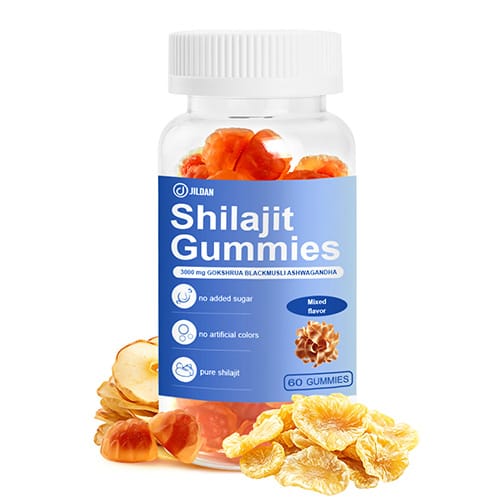
The delivery format comes later.
First, the brand needs to define exactly what kind of shilajit is going into the product.
A technically useful raw-material specification may address:
- geographical or supplier source;
- purification or processing method;
- physical form;
- moisture;
- fulvic-acid-related specification where applicable;
- humic-substance profile where relevant;
- heavy metals;
- microbiological limits;
- other contaminants;
- identity or chemical-characterization methods.
This is particularly important for shilajit gummies, because the finished gummy can make a low-quality raw material look highly polished.
Flavor, color, packaging, and branding can improve consumer experience, but they cannot compensate for inadequate raw-material qualification.
A 2024 review focused specifically on shilajit and heavy metals noted that shilajit naturally contains numerous mineral elements and that studies have reported both acceptable and excessive concentrations of potentially toxic metals in different samples. The authors emphasized the importance of understanding metal content before consumption. Review the paper on PubMed.
For brands, this creates a basic rule:
Approve the shilajit specification before approving the gummy flavor.
Why Shilajit Gummies Appeal to Consumers
The main advantage of shilajit gummies is not that a gummy has been proven to make shilajit more effective.
The advantage is consumer experience.
Traditional shilajit materials can have a strong:
- earthy character;
- mineral taste;
- bitter note;
- distinctive aroma.
These sensory characteristics can become a barrier for consumers.
A gummy format allows a product developer to combine the shilajit ingredient with:
- sweetness;
- fruit flavor;
- acidity;
- a controlled chewable texture.
This can make shilajit gummies easier to incorporate into a daily wellness routine.
The format may be particularly attractive for:
- first-time shilajit users;
- consumers who dislike capsules;
- lifestyle-oriented wellness brands;
- gummy-focused product portfolios.
But convenience should not be confused with superior bioavailability or stronger efficacy.
The published human evidence for shilajit has generally evaluated defined purified or standardized preparations rather than establishing that gummies outperform capsules.
That means brands should market shilajit gummies around verified product characteristics—such as format, taste, ingredient specification, and testing—rather than unsupported claims that the gummy delivery system inherently works better.
Why Capsules Remain Technically Attractive
Capsules solve a different set of problems.
A capsule allows a manufacturer to place a dry shilajit extract or powder into a dosage form without needing to mask the ingredient’s taste.
This can simplify formulation because the product generally does not require:
- flavor systems;
- sweeteners;
- acids;
- gelling agents;
- gummy moisture controls.
Capsules may therefore be attractive when the product strategy prioritizes:
- simpler ingredient lists;
- higher active loading;
- straightforward serving design;
- neutral sensory experience.
The JD Nutra portfolio publicly includes shilajit within its capsule manufacturing capabilities. Brands considering this route can review the broader capsule supplement category.
This does not mean capsules are automatically better than shilajit gummies.
It means capsules often provide a simpler technical platform when the formulation goal is to deliver a relatively large amount of dry extract with minimal supporting ingredients.
Shilajit Gummies vs Capsules: The Main Product-Development Differences
From a supplement-brand perspective, the two formats can be compared across several practical dimensions.
| Development Factor | Shilajit Gummies | Shilajit Capsules |
|---|---|---|
| Consumer taste experience | Flavored and chewable | Little direct taste exposure |
| Formula complexity | Higher | Usually lower |
| Supporting ingredients | Sweeteners, flavors, acids, gelling system | Shell plus limited excipients |
| Active-loading flexibility | More limited | Generally greater |
| Moisture exposure | Higher | Usually lower |
| Heat during production | Important consideration | Generally less relevant |
| Packaging focus | Texture and moisture control | Moisture and capsule integrity |
| Lifestyle positioning | Strong | Traditional supplement positioning |
| Sugar-free development | Requires dedicated formulation | Typically straightforward |
| Taste masking | Critical | Usually unnecessary |
The table illustrates why shilajit gummies should be developed as a distinct product rather than simply converting a capsule formula into gummy form.
The finished dosage form changes the manufacturing environment.
Active Loading Can Become the Biggest Constraint in Shilajit Gummies
Gummies have limited physical space.
A commercial gummy contains much more than the hero ingredient. The gummy matrix may require:
- pectin or gelatin;
- sweeteners;
- water;
- acids;
- flavors;
- color systems;
- processing aids.
As the amount of shilajit increases, it can become more difficult to preserve an acceptable taste and texture.
This means shilajit gummies need to balance three competing variables:
- active loading;
- gummy size and serving count;
- consumer experience.
A brand may want a large amount of shilajit in one gummy, but technical feasibility could require:
- two gummies per serving;
- a larger gummy;
- a more concentrated ingredient;
- a revised target amount.
Capsules generally provide more flexibility because the manufacturer does not need to build a confectionery-style matrix around the active.
The correct serving should therefore be defined only after the actual shilajit ingredient has been selected.
Human Shilajit Research Does Not Prove That Gummies and Capsules Are Equivalent
This is one of the most important evidence points for brands.
Human studies have investigated specific purified or standardized shilajit preparations at defined doses.
For example, a randomized, double-blind, placebo-controlled study evaluated purified shilajit at 250 mg twice daily for 90 days in healthy men aged 45–55 and measured hormonal outcomes. Read the study on PubMed.
Another randomized study involving 63 recreationally active men examined shilajit supplementation at 250 mg or 500 mg per day for eight weeks in relation to fatigue-related strength outcomes. Read the study on PubMed.
These trials provide information about the preparations actually studied.
They do not prove that every shilajit material, every capsule, or every serving of shilajit gummies produces the same effect.
When a brand cites research, it should compare:
- ingredient preparation;
- dose;
- duration;
- study population;
- finished product.
The phrase “clinically studied shilajit” should not be transferred automatically to a materially different formula.
Shilajit Gummies Should Not Claim Better Absorption Without Evidence
Format comparisons frequently drift into claims about “faster absorption” or “better bioavailability.”
Brands should be cautious.
A gummy may dissolve differently from a capsule, but that does not automatically establish a meaningful clinical difference in shilajit absorption.
The available human literature does not provide a robust head-to-head clinical comparison demonstrating that shilajit gummies have superior bioavailability to capsules.
Without product-specific pharmacokinetic evidence, such claims are speculative.
A safer product strategy is to compare formats on characteristics that can actually be verified:
- ingredient amount;
- raw-material specification;
- serving count;
- taste;
- other ingredients;
- quality testing;
- storage;
- convenience.
This type of comparison provides genuine value without inventing a biological advantage.
Heavy-Metal Testing Is One of the Most Important Quality Requirements
Shilajit is geologically and botanically complex, making elemental analysis particularly relevant.
Research has identified a wide range of elements in shilajit samples.
A 2021 study using multiple analytical techniques found numerous mineral elements in the shilajit samples tested and reported elevated levels of several potentially toxic elements in those specific samples. Read the study on PubMed.
More recent research reinforces the need for careful characterization.
A 2026 study analyzed 12 shilajit samples from diverse geographical origins and found significant variability in major, essential, toxic, and rare-earth elements. In that particular study, toxic metals were reported below established toxicity thresholds, while elemental patterns still differed by source. Read the 2026 study on PubMed.
The important conclusion is not that shilajit is always contaminated or always safe.
It is that source-specific testing matters.
Brands developing shilajit gummies should define appropriate specifications rather than assuming purification eliminates every elemental risk.
Thallium Research Highlights Why Broad Metal Screening Can Matter
Quality teams should also avoid assuming that only the most familiar four heavy metals deserve attention in every natural-material category.
A 2025 study examined thallium in natural shilajit and shilajit-based supplements. The researchers detected measurable thallium in the samples examined and emphasized the importance of standardized monitoring. Read the study on PubMed.
This study does not mean every shilajit gummies product needs exactly the same analytical panel.
It does demonstrate why raw-material risk assessment should be based on actual scientific and sourcing information rather than a generic testing checklist.
A strong manufacturer should be able to answer:
- Which elements are tested?
- Why were those elements selected?
- Which methods are used?
- What limits apply?
- Are results available for the actual production lot?
Testing strategy should follow product risk.
Purified Shilajit Is More Relevant Than the Word “Natural”
“Natural” is not a complete quality specification.
Raw or minimally processed natural material can contain undesirable components alongside the compounds a brand wants to preserve.
For shilajit gummies, purification and standardization deserve more attention than romantic descriptions of mountain origin.
Questions for suppliers include:
- How is the raw material processed?
- How are insoluble materials removed?
- How are contaminants controlled?
- Which chemical markers are monitored?
- What defines an acceptable purified batch?
A review of shilajit safety and efficacy noted that the human evidence base is relatively limited and emphasized the importance of standardized preparations in future research. Read the review on PubMed.
For product developers, “purified and specified” is generally more informative than “natural and authentic.”
Fulvic Acid Should Be Defined Carefully
Fulvic acid is one of the terms most frequently associated with shilajit.
However, shilajit is chemically complex, and a single fulvic-acid percentage does not fully characterize the material.
The 2023 chemical-composition review describes shilajit as containing humic substances together with minerals and a variety of organic compounds, while also emphasizing significant compositional variability between sources. Read the review.
When a shilajit gummies project uses a fulvic-acid specification, brands should ask:
- Which method measures it?
- What acceptance range applies?
- Is the result lot-specific?
- Does the raw material contain carriers or other processing components?
The phrase “high fulvic acid” should not replace a complete raw-material specification.
Gummies Introduce Heat That Capsules Generally Avoid
Processing is another important difference.
Depending on manufacturing technology, gummies can involve elevated temperatures during preparation of the gummy mass.
This matters because the selected shilajit ingredient is entering a different process environment from dry capsule filling.
For shilajit gummies, brands should ask:
- At what stage is shilajit added?
- What temperature does it experience?
- How long is the exposure?
- Has the selected extract been evaluated after processing?
- Are relevant chemical specifications checked on the finished product?
Capsule production generally avoids this exact thermal environment.
That does not prove capsules preserve shilajit better in every case.
It means the shilajit gummies process should be validated using the actual raw material rather than assuming pre-production specifications remain unchanged.
Gummies Also Introduce More Moisture
Moisture is another important difference between the formats.
Capsules usually provide a comparatively dry environment.
Shilajit gummies contain a moisture-containing matrix and may also be exposed repeatedly to environmental humidity after the bottle is opened.
This can affect:
- gummy texture;
- stickiness;
- microbial stability;
- other ingredients in the formula.
The manufacturer should therefore control relevant physical specifications such as:
- moisture;
- water activity where appropriate;
- finished gummy texture.
The final packaging should also be included in stability planning.
A gummy that performs well in a sealed pilot package may behave differently after consumers open the bottle every day.
Pectin vs Gelatin Changes the Shilajit Gummies Product
The gummy base affects both manufacturing and marketing.
Pectin-Based Shilajit Gummies
Pectin can support a plant-based or vegan product concept when the entire formulation meets that requirement.
Pectin systems require control over:
- acidity;
- soluble solids;
- temperature;
- moisture;
- setting.
The shilajit ingredient must fit within those constraints.
Gelatin-Based Shilajit Gummies
Gelatin creates a different texture and manufacturing profile.
It may allow a softer, more elastic chew but does not fit vegan positioning.
Neither system is inherently superior.
The correct choice for shilajit gummies depends on:
- active loading;
- flavor;
- target texture;
- consumer positioning;
- manufacturing platform.
Brands can explore JD Nutra’s broader gummy supplement manufacturing range when evaluating the available formulation route.
Sugar-Free Shilajit Gummies Need a Different Formula
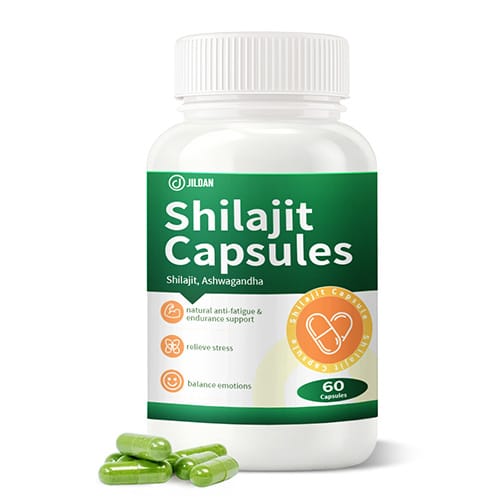
Because shilajit can be strongly flavored, sweetness plays an important role in consumer acceptance.
Brands may nevertheless want a reduced-sugar or sugar-free product.
That is possible, but it should be treated as a separate shilajit gummies formulation rather than a simple substitution.
Sugar and syrup systems can influence:
- sweetness;
- solids;
- texture;
- water activity;
- processing;
- stability.
Alternative systems can also introduce:
- cooling sensations;
- aftertaste;
- digestive-tolerance considerations.
For a strongly flavored botanical, removing conventional sugar can also make bitterness masking more difficult.
Sugar strategy should therefore be selected before the final flavor is approved.
Capsules Usually Allow a Simpler Ingredient List
Another commercial difference is the supporting ingredient system.
A capsule may consist primarily of:
- shilajit extract;
- capsule shell;
- one or more flow or filling excipients.
By contrast, shilajit gummies require a more extensive matrix that can include:
- gelling agents;
- sweeteners;
- flavors;
- acids;
- colors;
- coating ingredients.
This does not make gummies “less pure” by definition.
Those ingredients serve functional purposes.
But the format creates a different label and product story.
For brands targeting minimal-ingredient consumers, capsules may be easier to position.
For brands targeting lifestyle and taste-oriented consumers, shilajit gummies may offer greater commercial appeal.
Packaging Requirements Also Differ
Capsules and gummies respond differently to their storage environment.
Shilajit Gummies
Packaging needs to help manage:
- moisture;
- heat exposure;
- sticking;
- texture change;
- repeated opening.
Capsules
Packaging may focus on:
- moisture protection;
- capsule-shell integrity;
- powder stability.
The best package should be selected after the finished formula has been developed.
For shilajit gummies, a bottle or pouch should not be approved only because it fits the desired brand aesthetic.
The manufacturer should consider:
- package barrier properties;
- closure;
- headspace;
- intended shelf life;
- shipping environment.
Clinical Research Should Be Discussed Without Overclaiming
Shilajit has been studied in human trials, but the evidence base remains relatively small compared with many established vitamins or sports nutrition ingredients.
For example, an eight-week randomized study in recreationally trained men evaluated 250 mg and 500 mg daily shilajit supplementation in relation to fatigue-induced strength changes. Read the study.
A separate randomized trial examined 500 mg and 1,000 mg daily doses and reported changes in a blood biomarker associated with type I collagen synthesis after eight weeks. Read the study on PubMed.
These studies are useful for understanding the emerging evidence base.
They do not prove that every shilajit material or every serving of shilajit gummies provides the same outcomes.
Product claims should remain connected to:
- actual ingredient;
- actual dosage;
- study design;
- population.
Do Not Turn Shilajit Gummies Into a Testosterone Treatment Claim
Testosterone is one of the highest-interest topics around shilajit.
A randomized, double-blind, placebo-controlled study involving healthy men ages 45–55 reported changes in testosterone-related markers after purified shilajit supplementation at 250 mg twice daily for 90 days. Read the trial on PubMed.
This does not mean shilajit gummies should be marketed as treating low testosterone.
The study involved:
- a defined population;
- a specific purified preparation;
- a defined dose;
- a controlled study design.
A commercial gummy may differ in all of these respects.
Brands should distinguish scientific education from disease-treatment or hormone-therapy claims.
Safety Depends on the Material and Its Quality Controls
Safety discussions around shilajit should include both the intrinsic ingredient and contamination risk.
The available literature includes human studies of purified or standardized preparations, but unpurified or poorly characterized materials may present a different risk profile.
This is why quality control matters so much for shilajit gummies.
Relevant safety-oriented controls may include:
- raw-material qualification;
- heavy-metal testing;
- microbiological testing;
- composition testing;
- finished-product specifications.
A brand should not rely solely on traditional-use history as evidence that every modern commercial material is equivalent.
Gummies May Be Better for Adherence—but That Is a Consumer Advantage, Not an Efficacy Claim
One legitimate reason for choosing shilajit gummies is that some consumers may simply prefer them.
A supplement cannot provide any practical value if the consumer refuses to take it because of taste or dosage form.
Gummies can therefore offer:
- easier routine formation;
- no capsule swallowing;
- familiar sensory experience.
This may improve consumer willingness to use the product consistently.
However, “easier to take” is different from “clinically more effective.”
Brands should maintain that distinction.
Capsules May Be Better When Active Loading Is the Main Priority
If the product brief requires a relatively large quantity of dry shilajit extract with minimal supporting ingredients, capsules may be the more straightforward route.
A manufacturer can often accommodate a higher concentration of active material per gram of finished dosage form because the capsule does not require a gummy matrix.
That can reduce:
- flavor-masking requirements;
- sweetener load;
- gummy size.
But capsule size and number per serving can eventually become constraints as well.
The best format depends on the actual shilajit specification and target amount.
How to Evaluate a Shilajit Gummies Manufacturer
A manufacturer should be evaluated on more than its ability to produce an attractive gummy.
Raw Material
Ask:
- How is shilajit sourced?
- How is it purified?
- What specification defines the material?
- Which chemical markers are monitored?
Metals and Contaminants
Ask:
- Which metals are tested?
- Which methods are used?
- What limits apply?
- Are results available for each lot?
Gummy Process
Ask:
- When is shilajit added?
- What temperature does it experience?
- How is moisture controlled?
- How is bitterness masked?
Finished Product
Ask:
- Is active content or marker composition verified where appropriate?
- What microbiological specifications apply?
- What appears on the COA?
Stability
Ask:
- Is the final bottle or pouch evaluated?
- Are texture and moisture monitored?
- Is the ingredient specification monitored after processing?
A professional shilajit gummies manufacturer should be able to answer these technical questions rather than discussing only flavor, shape, and MOQ.
How to Evaluate a Shilajit Capsule Manufacturer
For capsules, shift the audit toward dry-material performance.
Ask:
- Is the same purified shilajit specification used?
- How does the powder flow?
- What is the bulk density?
- How much fits into the selected capsule size?
- Which excipients are required?
- Is finished fill weight controlled?
- Is the commercial product tested?
Capsules may involve fewer sensory challenges, but raw-material quality remains just as important.
Brands considering this route can explore JD Nutra’s capsule manufacturing category.
What Should Be Included in a Shilajit Product RFQ?
Whether you are sourcing capsules or shilajit gummies, provide a detailed technical brief.
Raw Material
Specify:
- purified shilajit requirement;
- source requirements where relevant;
- fulvic-acid or other marker requirements where used;
- heavy-metal specifications;
- documentation requirements.
Dosage Form
Choose:
- gummy;
- capsule;
- another supported format.
Serving
Define:
- shilajit amount per serving;
- units per serving;
- servings per package.
Gummy Requirements
For shilajit gummies, define:
- pectin or gelatin;
- flavor;
- sugar strategy;
- vegan requirements;
- gummy size.
Quality
Request:
- raw-material COA;
- finished-product specifications;
- contaminant testing;
- finished-product COA;
- stability information.
Packaging
Define:
- bottle;
- pouch;
- count;
- label;
- carton where applicable.
Target Market
Identify destination countries so that formulation and labeling can be reviewed accordingly.
JD Nutra’s supplement CDMO services can be used to discuss formulation, manufacturing, testing, and packaging as one development project.
Common Mistakes Brands Make With Shilajit Gummies
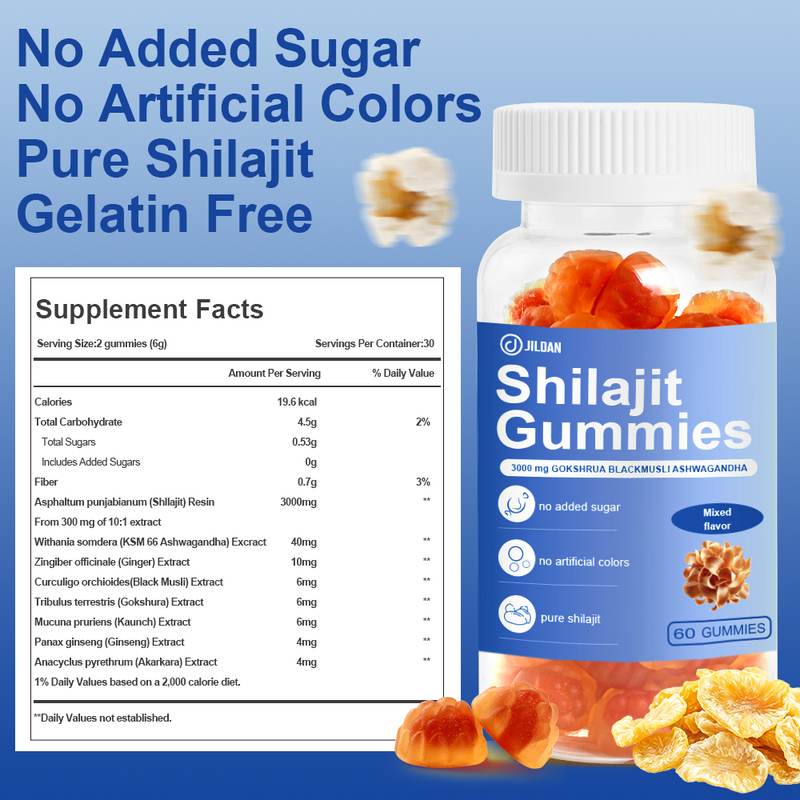
Choosing the Gummy Before Approving the Shilajit
Raw-material quality should come first.
Marketing Fulvic Acid Without Defining the Test Method
A percentage needs an analytical basis.
Assuming Every Shilajit Source Is Equivalent
Recent research demonstrates meaningful compositional variation by source.
Ignoring Heavy-Metal Testing
Natural-mineral origin makes elemental characterization particularly relevant.
Assuming Gummies Have Better Bioavailability
A head-to-head clinical advantage has not been established.
Copying a Capsule Study to Support Any Gummy Formula
Research should match the commercial preparation as closely as possible.
Focusing Only on Taste
Great-tasting shilajit gummies still require controlled raw materials and finished-product testing.
Treating Sugar-Free as a Minor Change
Changing sweeteners can change the complete gummy system.
Choosing a Manufacturer Only by MOQ
Supplier qualification and product quality matter over multiple production batches.
FAQ
What Are Shilajit Gummies?
Shilajit gummies are chewable dietary supplements that incorporate processed or purified shilajit into a gummy matrix containing ingredients such as pectin or gelatin, sweeteners, flavors, and acids.
Are Shilajit Gummies Better Than Capsules?
Not universally.
Shilajit gummies may provide a more convenient and pleasant consumer experience, while capsules can offer simpler formulations and greater active-loading flexibility.
The better format depends on the approved raw material, serving target, consumer, and product strategy.
Are Shilajit Gummies Better Absorbed?
There is not strong human evidence establishing that shilajit gummies are inherently better absorbed than capsules.
Brands should avoid making format-specific bioavailability claims without supporting product-level evidence.
What Should Be Tested in Shilajit Gummies?
An appropriate test plan can include raw-material characterization, heavy metals, microbiological specifications, relevant chemical markers, physical gummy characteristics, and finished-product specifications.
The exact test panel should be based on the product and target market.
Why Is Heavy-Metal Testing Important for Shilajit?
Research shows that shilajit can contain numerous naturally occurring elements and that concentrations differ among samples and geographical sources. Some studies have also reported elevated potentially toxic metals in specific samples.
This makes source qualification and lot-specific testing important.
Can Shilajit Gummies Be Sugar-Free?
Yes, but sugar-free shilajit gummies require a dedicated formulation because alternative sweeteners and bulking ingredients change texture, water activity, flavor, and processing.
Are Shilajit Gummies Vegan?
They can be formulated with pectin rather than gelatin, provided all other ingredients also comply with the intended vegan specification.
What Should a Brand Ask a Shilajit Gummies Manufacturer First?
Ask for the complete shilajit raw-material specification and representative contaminant testing before focusing on flavor, packaging, or commercial quantities.
Conclusion
The decision between capsules and shilajit gummies should begin with raw-material quality rather than delivery-format trends.
Shilajit is a complex natural material whose composition can vary according to geographical origin and processing. Recent research has continued to demonstrate variability in mineral and elemental profiles among different samples, while other studies have highlighted the importance of monitoring potentially toxic metals.
That makes purification, specification, and testing central to product development.
Once the raw material has been approved, dosage form becomes a commercial and technical decision.
Shilajit gummies can provide:
- better taste;
- a chewable experience;
- lifestyle-oriented positioning;
- accessibility for consumers who dislike capsules.
Capsules can provide:
- simpler formulations;
- greater active-loading flexibility;
- less need for flavor masking;
- a comparatively dry manufacturing environment.
Neither format is inherently more effective simply because of its delivery system.
The strongest product is the one that delivers a well-characterized, appropriately tested shilajit ingredient in a format that fits the target consumer and can be manufactured consistently.
Brands should therefore evaluate:
- raw-material source;
- purification;
- heavy-metal specifications;
- chemical characterization;
- active loading;
- dosage-form feasibility;
- finished-product testing;
- packaging;
- stability;
- evidence-aligned claims.
JD Nutra currently supports both gummy and capsule supplement manufacturing. Brands considering shilajit gummies can explore the gummy supplement manufacturing range, while capsule-focused projects can review capsule manufacturing capabilities.
For projects requiring custom formulation, raw-material qualification, commercial manufacturing, testing, and packaging, review JD Nutra’s supplement CDMO services.
When your shilajit specification, dosage form, serving target, contaminant limits, packaging, and destination market are defined, contact JD Nutra to discuss whether shilajit gummies or capsules provide the better technical fit for your supplement brand.


