Launching private label collagen peptides powder can look straightforward from the outside. Choose a collagen ingredient, decide how much goes into each serving, select a tub or pouch, apply your branding, and move into production.
In practice, the ingredient name “collagen peptides” leaves many important questions unanswered.
The raw material may come from different animal sources. The hydrolysis process can create different peptide-size distributions. Protein content, taste, odor, color, solubility, bulk density, microbiological specifications, contaminant limits, and documentation can differ between suppliers. A product intended to dissolve invisibly into coffee also requires a different formulation strategy from a flavored beauty powder or multi-ingredient wellness blend.
That is why sourcing private label collagen peptides powder should begin with a technical product specification rather than a packaging concept.
A scientific review of hydrolyzed collagen describes it as collagen broken into smaller peptide chains through hydrolysis and notes that the source and processing method can influence molecular weight, solubility, and other functional characteristics. Some hydrolyzed collagen preparations are reported in the low-kilodalton range, but individual commercial ingredients should always be assessed according to their own specification. You can review the research through PubMed.
For supplement brands, the practical implication is important: two powders with “collagen peptides” on the specification sheet are not necessarily equivalent ingredients.
This guide explains how to evaluate private label collagen peptides powder from raw-material sourcing through formulation, testing, packaging, batch release, and repeat production.
Define Your Private Label Collagen Peptides Powder Before Requesting Quotes
The quality of supplier quotations depends heavily on the quality of the product brief.
If a brand simply asks for “collagen powder,” different manufacturers may quote completely different products.
One supplier may assume an unflavored bovine collagen formula. Another may propose marine collagen. Another may quote a multi-collagen blend with vitamins and flavoring.
None of these quotations can be compared fairly.
Before requesting private label collagen peptides powder, define at least the following:
- intended customer;
- collagen source;
- target amount per serving;
- servings per container;
- unflavored or flavored format;
- supporting ingredients;
- sweetener preferences;
- target market;
- packaging format;
- testing expectations;
- dietary or allergen requirements.
The brand should also decide whether collagen is the complete product or the foundation of a broader formula.
A single-ingredient powder has different manufacturing and marketing requirements from a beauty blend containing collagen plus vitamin C, hyaluronic acid, biotin, or other ingredients.
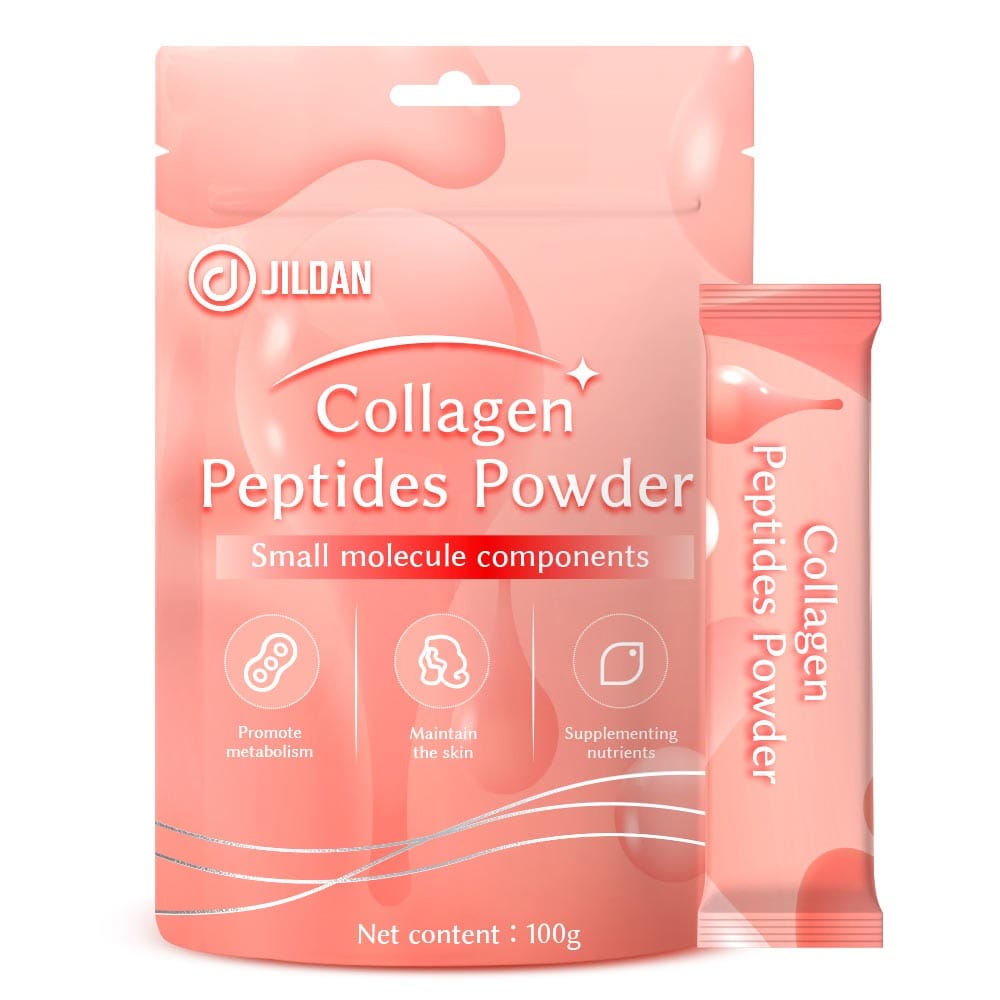
JD Nutra currently lists Collagen Peptides Powder within its powder portfolio, giving brands a direct product reference when preparing a development brief.
The clearer the intended product, the easier it becomes to determine whether a manufacturer can genuinely support it.
Bovine vs Marine Collagen: Source Should Be Chosen Deliberately
One of the first decisions for private label collagen peptides powder is raw-material source.
Bovine and marine collagen are among the best-known options, but the correct choice depends on formulation requirements and positioning rather than a universal ranking.
Bovine Collagen Peptides
Bovine collagen is widely used in powder supplements and can work well in:
- everyday wellness products;
- beauty nutrition;
- healthy-aging concepts;
- active-lifestyle formulas;
- unflavored collagen powders.
When evaluating a bovine source, request documentation covering:
- animal source;
- country of origin where relevant;
- tissue source;
- traceability;
- processing;
- protein specification;
- microbiological limits;
- contaminant limits.
Certification requirements may also matter depending on destination market and consumer audience.
Marine Collagen Peptides
Marine collagen can support a different product story and is commonly associated with beauty-oriented supplement concepts.
However, private label collagen peptides powder made from marine sources introduces additional considerations such as:
- fish allergen declaration;
- species or source traceability;
- odor;
- taste;
- heavy-metal specifications;
- supply consistency.
Marine raw material that performs well in one application may also need more sensory development in another.
The choice between bovine and marine collagen should therefore be made before flavor approval, label design, and marketing claims are finalized.
For a deeper technical comparison, brands can review JD Nutra’s existing guide to collagen peptides, collagen tripeptides, and gelatin.
Do Not Choose Collagen Peptides by Protein Percentage Alone
Protein content is important, but it is only one part of a useful purchasing specification.
A professional private label collagen peptides powder project may also need to consider:
- collagen source;
- hydrolysis profile;
- molecular-weight distribution;
- moisture;
- ash;
- appearance;
- flavor;
- odor;
- solubility;
- microbiological limits;
- heavy metals;
- other relevant contaminants.
The right specification depends partly on the finished product.
For an unflavored powder intended to disappear into a beverage, sensory and solubility specifications may be especially important.
For a flavored product, compatibility with acids, sweeteners, colors, and other active ingredients becomes more relevant.
A 2024 scientific review notes that source and hydrolysis conditions influence the characteristics of hydrolyzed collagen, including properties associated with its molecular structure and functional use. Read the review on PubMed.
The lesson for buyers is simple: “collagen peptides” is a category name, not a complete specification.
Molecular Weight Can Matter, but Smaller Is Not Automatically Better
Molecular weight is frequently used in collagen marketing.
Hydrolysis breaks the original collagen structure into smaller peptide chains. Reviews of hydrolyzed collagen describe many commercial hydrolysates as relatively low-molecular-weight peptide mixtures compared with intact collagen. PubMed provides a detailed review of collagen hydrolysate preparation and molecular-weight analysis.
However, supplement brands should avoid turning one technical number into a universal quality claim.
When evaluating private label collagen peptides powder, ask:
- What is the molecular-weight distribution?
- Is the result an average or a range?
- Which analytical method is used?
- Is every production lot expected to meet the same specification?
- Does molecular weight relate to the intended application?
- Is there research on the actual ingredient?
A smaller peptide size may influence technical characteristics, but a lower number on a specification sheet does not automatically prove better clinical performance.
Ingredient quality needs to be evaluated as a whole.
Solubility and Dispersibility Can Determine Product Success
One of the biggest consumer-experience differences between collagen powders is what happens after the scoop reaches the beverage.
A high-quality private label collagen peptides powder intended for everyday use should be evaluated under realistic preparation conditions.
For example:
- cold water;
- room-temperature water;
- coffee;
- smoothies;
- juice;
- other beverages relevant to the target audience.
Product developers should observe:
- dispersion speed;
- clumping;
- sediment;
- foam;
- mouthfeel;
- odor;
- aftertaste.
“Soluble” on a raw-material specification does not necessarily mean consumers will consider the finished product easy to mix.
A powder may technically dissolve but require excessive stirring. Another may disperse quickly but create foam. A marine collagen may have acceptable analytical characteristics but introduce an odor that becomes more noticeable in hot beverages.
For private label collagen peptides powder, mixability can be an important point of differentiation because it affects every serving the customer consumes.
Brands should therefore evaluate actual samples before approving a raw-material source.
Unflavored vs Flavored Collagen Powder Requires Different Product Development
Unflavored collagen is attractive because the formula can remain simple.
A typical concept may contain collagen as the primary ingredient with limited supporting components.
The consumer can then mix the powder into an existing beverage.
However, “unflavored” should not mean that flavor quality does not matter.
The ideal ingredient should still have acceptable:
- odor;
- aftertaste;
- color;
- mouthfeel.
Flavored private label collagen peptides powder requires a much broader formulation process.
The development team may need to balance:
- collagen taste;
- sweetener system;
- acidity;
- flavor intensity;
- serving weight;
- color;
- other active ingredients.
A flavor system that performs well in water may not behave identically in another beverage.
For products positioned as drink mixes, brands should define the intended preparation method during development.
The manufacturer can then optimize the formula around actual consumer use rather than a laboratory tasting cup.
Single-Ingredient or Multi-Ingredient Collagen Powder?
Another major strategic decision is whether private label collagen peptides powder should remain simple or become a functional blend.
Single-Ingredient Product
A simple collagen product can offer:
- clear consumer understanding;
- straightforward ingredient communication;
- easier mixing;
- fewer ingredient interactions;
- simpler quality specifications.
Differentiation can come from source, peptide specification, sensory quality, packaging, traceability, or audience positioning.
Multi-Ingredient Product
A custom formulation can combine collagen with carefully selected supporting ingredients.
Depending on the product concept, brands may consider vitamins, minerals, or other nutritional ingredients.
However, every addition changes the product.
Additional ingredients can affect:
- flavor;
- solubility;
- powder flow;
- serving size;
- stability;
- label complexity;
- testing requirements.
The strongest private label collagen peptides powder does not necessarily have the longest ingredient list.
Every ingredient should serve a clear purpose.
If removing an ingredient would not materially change the consumer proposition, its inclusion deserves reconsideration.
Claims Should Be Based on Relevant Evidence, Not Market Hype
Collagen marketing frequently refers to skin, joints, bones, muscle, hair, nails, and healthy aging.
Brands should distinguish consumer interest from scientific substantiation.
A 2026 systematic review of randomized controlled trials evaluating hydrolyzed collagen and skin outcomes reported that the evidence base includes positive findings but also inconsistency across studies. The review emphasizes the need to consider differences in study design and collagen preparations. The study can be reviewed on PubMed.
That matters when developing private label collagen peptides powder.
Evidence involving one preparation should not automatically be applied to every collagen ingredient.
Before writing a product claim, consider:
- exact collagen preparation;
- source;
- serving amount;
- study population;
- study duration;
- measured outcome.
The product page should accurately describe the actual formula instead of making the collagen category responsible for every possible health benefit.
For U.S. products, brands should also review the FDA Dietary Supplement Labeling Guide before finalizing label language.
Raw Material Qualification Should Be Part of Supplier Selection
A strong private label collagen peptides powder project starts before blending.
The manufacturer should have a system for qualifying ingredient suppliers and approving raw materials.
For products marketed as dietary supplements in the United States, FDA Current Good Manufacturing Practice requirements under 21 CFR Part 111 establish controls for components and dietary supplement manufacturing. The agency’s official guidance explains requirements related to specifications, component identity, production controls, quality review, and records. Read the FDA CGMP guidance.
When sourcing private label collagen peptides powder, ask:
- Who supplies the collagen?
- How is that supplier qualified?
- Is the raw material traceable?
- Which specifications are verified?
- How are supplier changes managed?
- Does every lot receive an appropriate review before use?
A manufacturer should not need to disclose confidential supplier relationships indiscriminately, but it should be able to demonstrate that a controlled qualification system exists.
What Should Be Tested in Collagen Peptides Powder?
There is no one-size-fits-all laboratory panel for every collagen product.
Testing should reflect the raw material, finished formula, target market, and agreed specification.
For private label collagen peptides powder, relevant quality parameters may include:
- identity;
- protein or compositional specifications;
- moisture;
- microbiological limits;
- heavy metals;
- other contaminants where appropriate;
- finished-product sensory characteristics.
Flavored and multi-ingredient formulas may require additional testing.
For example, a formula containing added vitamins may need potency verification related to those vitamins.
The key procurement question is not:
“Is the product lab tested?”
It is:
“Which specifications are tested, by what method, at which stage, and against what acceptance criteria?”
This question usually produces much more useful information.
Finished-Product Testing Should Not Stop at the Raw Material COA
A raw-material Certificate of Analysis is important, but the commercial product is not the same thing as a bag of collagen raw material.
After receiving the ingredient, the manufacturer may:
- weigh it;
- blend it;
- add flavors;
- add other active ingredients;
- transfer the blend;
- fill containers;
- package the product.
The finished private label collagen peptides powder should therefore have its own defined specifications.
FDA’s dietary supplement CGMP framework requires manufacturers to establish specifications and determine whether finished batches meet applicable requirements before release. FDA’s compliance guide explains these quality-control obligations.
Brands should ask:
- What appears on the finished-product COA?
- Which tests are performed per batch?
- Are actual numerical results reported where appropriate?
- Which laboratory performs the testing?
- Who reviews the results?
- Who releases the product?
A clear answer provides more confidence than the phrase “third-party tested” without further explanation.
How to Review a COA Before Approving a Manufacturer
A representative COA can reveal a great deal about how a supplier thinks about quality.
For private label collagen peptides powder, look for information such as:
- product identification;
- lot or batch number;
- specifications;
- test methods;
- acceptance limits;
- results;
- approval information.
The COA should make it clear what material or product was tested.
Do not assume a raw-material COA represents the finished packaged powder.
Ask whether the document applies to:
- raw collagen;
- blended bulk powder;
- finished product.
This distinction becomes particularly important in custom formulas.
A useful COA should also connect with batch traceability. If a complaint arises later, the manufacturer should be able to identify which ingredient lots were used in the relevant production batch.
Powder Flow and Bulk Density Matter During Commercial Production
Product developers often focus heavily on nutrition and flavor while overlooking powder physics.
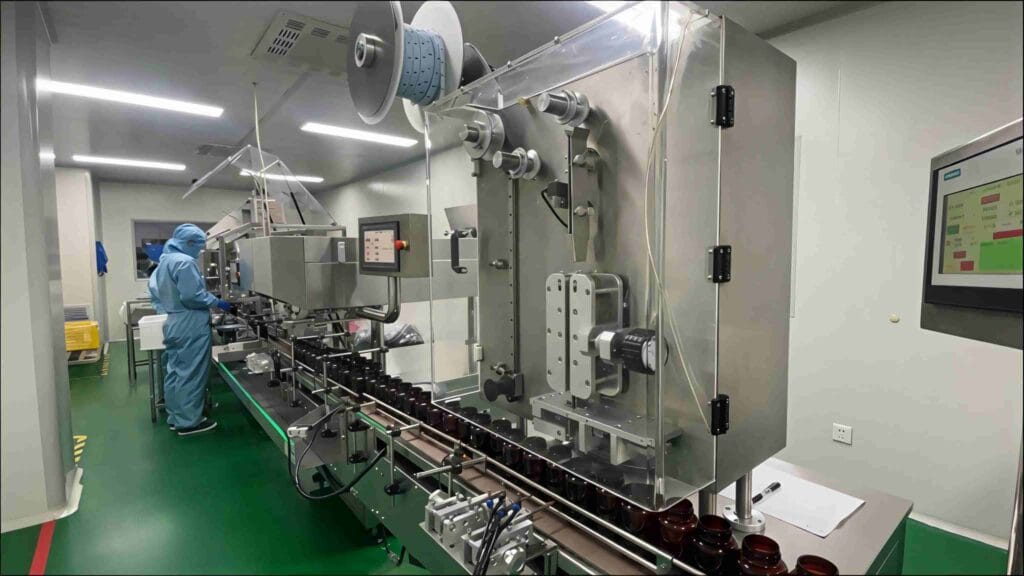
For private label collagen peptides powder, bulk density and flow can influence:
- filling accuracy;
- container selection;
- scoop size;
- headspace;
- production efficiency;
- consumer perception.
A powder with lower bulk density occupies more volume for the same weight.
This means two formulas with identical net weight may require different package sizes.
Powder flow also matters when filling containers or stick packs.
Additional ingredients can change these properties significantly.
A flavored collagen blend with vitamins and sweeteners may behave differently from pure collagen.
Manufacturers should evaluate the complete commercial blend rather than assuming the physical behavior of the base collagen ingredient will remain unchanged.
Packaging Should Be Chosen After the Powder Is Understood
Packaging for private label collagen peptides powder should protect the product and fit how consumers will use it.
Common options can include:
- tubs;
- jars;
- stand-up pouches;
- single-serving stick packs.
Each format has advantages and trade-offs.
Tubs and Jars
Rigid containers offer:
- familiar supplement presentation;
- convenient scooping;
- substantial label area.
Important variables include:
- container capacity;
- bulk density;
- closure;
- induction seal;
- scoop size;
- headspace.
Pouches
Pouches can provide:
- lower package weight;
- compact storage;
- different branding opportunities.
Brands need to evaluate barrier performance, resealing, filling, and handling.
Stick Packs
Stick packs can be attractive for:
- travel;
- sampling;
- portion control;
- subscription products.
However, they require compatible powder-flow characteristics and appropriate packaging equipment.
JD Nutra’s broader powder supplement manufacturing category can help brands evaluate how collagen fits alongside other powder-format products.
The package should follow the formula—not the other way around.
Moisture and Storage Conditions Should Not Be Ignored
Powder products generally require protection against environmental moisture.
For private label collagen peptides powder, moisture exposure can affect:
- flow;
- clumping;
- sensory characteristics;
- other ingredients in a custom blend.
The risk becomes greater when hygroscopic ingredients are added.
A pure collagen formula may behave differently from a blend containing minerals, fibers, fruit powders, or other components.
Brands should ask:
- What storage conditions are recommended?
- Does the package provide an appropriate moisture barrier?
- Is a desiccant needed?
- How is product quality evaluated over the intended shelf life?
The finished package and finished formula should be considered together.
MOQ Should Be Evaluated Alongside Formula Complexity
Minimum order quantity is important, but it should not be the only factor used to select a supplier for private label collagen peptides powder.
MOQ can be influenced by:
- stock versus custom formula;
- collagen source;
- flavor;
- supporting ingredients;
- packaging;
- printed materials;
- production equipment.
A lower initial MOQ does not automatically create the better supply arrangement.
Brands should also ask:
- Can the supplier support repeat orders?
- Does the formula remain unchanged when volume increases?
- Are critical raw materials consistently available?
- Can packaging scale with the product?
- How far in advance should reorders be planned?
The most valuable manufacturing relationship is one that works after the product becomes successful.
Samples Should Be Technically Representative
A sample should not be approved based only on taste.
For private label collagen peptides powder, assess:
- flavor;
- aroma;
- color;
- mouthfeel;
- solubility;
- dispersion;
- sediment;
- serving size;
- packaging fit.
Most importantly, ask whether the prototype uses the intended commercial collagen raw material.
A sample prepared using one source of collagen can behave differently after that ingredient is replaced.
For flavored or customized formulas, the same principle applies to:
- sweeteners;
- colors;
- supporting active ingredients.
If substitutes are used during early feasibility work, they should be identified before the sample is treated as a final commercial reference.
Stock Formula or Fully Custom Private Label Collagen Peptides Powder?
Both routes can work.
Stock Formula
An established private label collagen peptides powder formula may be appropriate when a brand wants:
- simpler development;
- fewer formulation decisions;
- an existing technical platform;
- faster project progression.
Customization may focus primarily on branding and packaging.
Custom Formula
A custom product may be appropriate when differentiation depends on:
- collagen source;
- peptide specification;
- flavor;
- serving level;
- supporting ingredients;
- audience positioning.
Custom development requires more technical coordination, but it can produce a more defensible product concept.
The choice should depend on business strategy rather than the assumption that custom is always superior.
How to Audit a Private Label Collagen Peptides Powder Manufacturer
Supplier qualification should cover both technical capability and operational reliability.
Ask About Raw Materials
- Which collagen sources can be supported?
- How are suppliers qualified?
- What specifications are established?
- How are changes controlled?
Ask About Powder Manufacturing
- How is blending managed?
- How is uniformity addressed?
- What powder properties are evaluated?
- Which filling and packaging formats are available?
Ask About Quality
- What incoming testing is performed?
- What finished-product testing is performed?
- What does the COA contain?
- How are out-of-specification results managed?
Ask About Traceability
- Can finished lots be traced to raw-material lots?
- Are batch records retained?
- Who releases each production batch?
Ask About Scale
- Can repeat production increase without changing the approved product?
- How is capacity planned?
- How are raw-material continuity and packaging supply managed?
A good private label collagen peptides powder manufacturer should be able to answer these questions without relying solely on sales claims.
What to Include in Your RFQ
A detailed RFQ allows manufacturers to quote comparable products.
For private label collagen peptides powder, include the following.
Collagen Specification
- bovine, marine, or another defined source;
- peptide specification;
- protein requirements;
- sensory requirements;
- documentation expectations.
Formula
- single ingredient or blend;
- amount per serving;
- supporting ingredients;
- flavor;
- sweeteners;
- ingredient exclusions.
Finished Format
- serving size;
- servings per package;
- scoop or individual serving.
Quality Requirements
- raw-material specifications;
- finished-product specifications;
- testing;
- COA;
- stability expectations.
Packaging
- tub;
- jar;
- pouch;
- stick pack;
- label or printed package;
- secondary packaging.
Market
Identify the destination countries and sales channels so that relevant formulation and labeling requirements can be assessed early.
Commercial Planning
Provide your expected initial production needs, repeat-order expectations, and target launch timing without waiting until the final stage of development.
If your product specification is ready, you can contact JD Nutra to discuss collagen source, formula development, powder manufacturing, testing, and packaging options.
Common Mistakes Brands Make When Sourcing Collagen Powder
Comparing Only the Cost per Kilogram
Raw-material cost does not reveal sensory quality, solubility, documentation, testing, or repeat-batch consistency.
Treating Every Collagen Peptide Ingredient as Equivalent
Source, processing, molecular profile, and specifications can differ.
Selecting Packaging Before Measuring Bulk Density
The actual powder determines the container volume required.
Making Claims Before Selecting the Ingredient
The scientific evidence should match the ingredient and product as closely as possible.
Ignoring Taste in an “Unflavored” Product
Consumers can still detect unpleasant odor or aftertaste.
Approving a Sample Made With Substitute Raw Materials
The commercial batch should remain aligned with the sample consumers and brand teams approved.
Using the Raw-Material COA as the Only Quality Document
The finished product should have its own specification and release process.
Choosing a Manufacturer Only Because of Low MOQ
Long-term consistency and scalability usually matter more once the product begins generating repeat demand.
FAQ
What is private label collagen peptides powder?
Private label collagen peptides powder is a collagen peptide supplement manufactured by a third-party producer and sold under the customer’s own brand.
The product may use an existing formula or be customized according to source, serving size, flavor, additional ingredients, and packaging.
Is collagen peptides powder the same as hydrolyzed collagen?
The terms are commonly used for the same general category of collagen that has been hydrolyzed into smaller peptide chains.
However, individual commercial materials can differ substantially in source, molecular-weight profile, sensory properties, and specifications. A scientific review of hydrolyzed collagen terminology and production is available on PubMed.
Is bovine or marine collagen better for private label products?
Neither is universally better.
The best source for private label collagen peptides powder depends on target consumers, formulation, allergen considerations, sensory requirements, traceability, certifications, and product positioning.
Should collagen powder be flavored?
Both flavored and unflavored products can work.
The choice depends on how consumers are expected to use the product and whether the collagen raw material provides acceptable taste and odor.
What should appear on the COA?
A useful COA should identify the product and batch and clearly show relevant specifications, methods, acceptance criteria, and results where appropriate.
How should I choose a private label collagen peptides powder manufacturer?
Evaluate raw-material qualification, collagen source, powder manufacturing capability, testing, finished-product specifications, COAs, packaging, traceability, communication, and ability to support repeat production.
Conclusion
Launching private label collagen peptides powder successfully requires more than selecting a familiar collagen ingredient and putting it into an attractive container.
A strong product starts with a defined raw-material specification.
The brand needs to understand:
- where the collagen comes from;
- how it has been processed;
- how it tastes and dissolves;
- which quality parameters are controlled;
- how the finished blend will be tested;
- how packaging will protect it;
- whether the manufacturer can reproduce the same product at scale.
Bovine and marine collagen can both support compelling product concepts. Conventional collagen peptides and more specialized peptide preparations can also serve different positioning strategies. The correct choice depends on the finished product rather than whichever ingredient carries the strongest marketing terminology.
For brands, the most valuable manufacturer is therefore not simply the supplier capable of filling collagen powder into a container.
It is the partner that can translate a product brief into a defined specification, qualify raw materials, manufacture consistently, verify finished-product quality, document each batch, and support future reorders without quietly changing the product.
Brands developing private label collagen peptides powder can review JD Nutra’s Collagen Peptides Powder, explore its broader powder supplement manufacturing capabilities, and read the existing comparison of collagen peptides, tripeptides, and gelatin.
For projects requiring custom formulation, testing, packaging, or broader manufacturing support, review JD Nutra’s supplement CDMO services or contact JD Nutra with your collagen source, serving target, formula, packaging, and destination-market requirements.