
Choosing a creatine monohydrate manufacturer requires more technical due diligence than simply asking whether a factory can blend creatine powder and fill containers.
Creatine monohydrate is one of the most established ingredients in sports nutrition. The NIH Office of Dietary Supplements describes creatine as one of the most extensively studied dietary supplements for exercise and athletic performance and identifies creatine monohydrate as the most widely used and studied supplemental form.
That strong research base creates an important quality expectation.
Consumers may recognize the ingredient name immediately, but a supplement brand still needs to verify what is actually being manufactured. Raw-material purity, identity, manufacturing by-products, moisture, particle characteristics, finished-product testing, batch traceability, packaging, and storage can all influence the quality of a commercial creatine product.
A professional creatine monohydrate manufacturer should therefore be able to answer a much deeper question than:
“Can you manufacture creatine powder?”
The better question is:
“Can you demonstrate that each commercial batch matches an approved creatine monohydrate specification and remains consistent from raw material through finished-product release?”
This guide explains what supplement brands should investigate before approving a manufacturing partner.
Table of Contents
Why Creatine Monohydrate Quality Still Matters for a Simple Formula
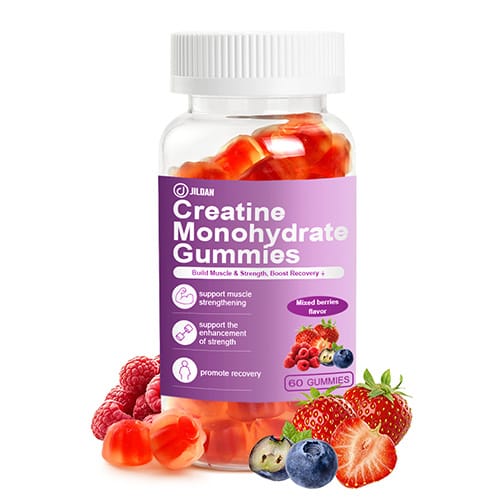
A single-ingredient product can appear easier to manufacture than a complex multivitamin or botanical blend.
In some ways, it is.
But simplicity also removes places for quality problems to hide.
If a product consists mainly of creatine monohydrate, then raw-material quality, purity, particle characteristics, testing, and packaging become central to the entire consumer experience.
A creatine monohydrate manufacturer needs to control questions such as:
- Is the material actually creatine monohydrate?
- Does it meet the agreed assay specification?
- Which manufacturing impurities are monitored?
- Is the raw material consistent between lots?
- Does particle size meet the intended product requirement?
- Does the finished powder flow and disperse appropriately?
- Are microbiological and contaminant specifications established?
- Can the finished batch be traced to its raw-material lot?
Creatine monohydrate also has a strong evidence advantage over many alternative creatine forms.
NIH states that creatine monohydrate is the most widely used and studied form and notes that other forms have not been demonstrated to be superior for increasing muscle creatine levels, product stability, digestibility, or safety. Review the NIH evidence summary.
For brands, that makes ingredient authenticity particularly important.
A product marketed as creatine monohydrate should be supported by specifications demonstrating that this is what the consumer receives.
Start by Defining the Creatine Monohydrate Specification
Before requesting quotations from a creatine monohydrate manufacturer, define the raw-material and finished-product specification.
A specification turns the phrase “high-quality creatine” into measurable requirements.
Depending on the product and destination market, the specification may address:
- identity;
- assay or purity;
- appearance;
- moisture;
- particle size;
- relevant synthesis by-products;
- heavy metals;
- microbiological limits;
- other contaminants;
- bulk density;
- storage requirements.
Not every product needs the same specification.
For example, an unflavored creatine powder designed for scoopable tubs may emphasize purity, particle size, flow, and dispersibility.
A formula intended for stick packs may require tighter attention to powder flow and filling behavior.
A flavored sports nutrition blend may require additional specifications related to:
- flavor system;
- sweeteners;
- other active ingredients;
- blend uniformity.
The important point is that the creatine monohydrate manufacturer and brand should agree on measurable requirements before commercial production begins.
Without that agreement, statements such as “pharmaceutical grade,” “premium,” or “ultra-pure” have limited procurement value.
Purity Should Be Demonstrated, Not Assumed
Creatine monohydrate is manufactured through chemical processes, which means raw-material quality involves more than confirming the word “creatine” on a supplier document.
A scientific review of creatine chemistry and industrial synthesis discusses the importance of controlling the main substance as well as synthesis-related side products and potentially harmful impurities. The paper emphasizes the need for validated analytical methods when evaluating industrial creatine quality. Read the review on PubMed.
For buyers, this means a creatine monohydrate manufacturer should be able to explain:
- which creatine specification is used;
- which impurities are monitored;
- which analytical methods are used;
- whether actual results appear on the COA;
- how out-of-specification material is handled.
Purity should not be reduced to a front-label percentage without understanding how that percentage was measured.
A statement such as “99%+ purity” raises several follow-up questions:
- Which test method produced that result?
- Is the result lot specific?
- What makes up the remaining fraction?
- What acceptance criteria apply to relevant impurities?
The stronger the commercial purity claim, the stronger the supporting analytical documentation should be.
Recent Research Shows Why Creatine Authentication Matters
Ingredient authenticity is not merely a theoretical concern.
A 2025 study indexed in PubMed evaluated 149 commercial creatine samples using high-performance liquid chromatography and spectroscopic techniques. The researchers classified 117 samples as pure and 32 as adulterated in the study dataset. Read the study on PubMed.
Those findings should not be interpreted as describing every creatine product on the global market.
They do demonstrate why a brand should not assume that a material is authentic or pure simply because the packaging says creatine.
A qualified creatine monohydrate manufacturer should operate with documented specifications, approved suppliers, incoming quality controls, and appropriate analytical verification.
For procurement teams, this creates a useful principle:
Test results should confirm the ingredient; the ingredient name should not substitute for test results.
Ask How the Raw-Material Supplier Is Qualified
A supplement manufacturer may not synthesize creatine monohydrate itself.
In many cases, the creatine monohydrate manufacturer producing the finished supplement purchases creatine raw material from an approved upstream ingredient supplier.
That makes supplier qualification important.
Ask:
- Who approves the creatine raw-material source?
- What documentation is reviewed?
- Is incoming material tested?
- How is supplier performance monitored?
- What happens if the raw-material source changes?
- Will the brand be notified of material changes?
For products marketed in the United States, FDA’s dietary supplement Current Good Manufacturing Practice framework under 21 CFR Part 111 establishes requirements relating to component specifications, manufacturing controls, quality control, packaging, labeling, and records. FDA CGMP information for dietary supplements identifies Part 111 as the dietary supplement CGMP framework.
A strong creatine monohydrate manufacturer should therefore be able to explain how incoming creatine is approved before it enters production.
The answer should go beyond:
“Our supplier gives us a COA.”
A supplier COA is useful evidence, but it belongs within a broader supplier-qualification system.
Review the Creatine COA Before Approving Commercial Production
A Certificate of Analysis is one of the most useful documents for evaluating creatine raw material and finished products.
A representative COA from a creatine monohydrate manufacturer may include:
- product identity;
- lot or batch number;
- appearance;
- assay;
- moisture;
- relevant impurity specifications;
- microbiological specifications;
- heavy-metal specifications where applicable;
- test methods;
- acceptance limits;
- actual results;
- quality approval.
Brands should pay particular attention to the distinction between a specification limit and an actual test result.
For example:
Specification: ≥ a defined assay level
Result: the measured value for that specific lot
The result tells the buyer how the batch actually performed.
A generic “Pass” statement can be appropriate for certain qualitative examinations, but quantitative properties are often more useful when actual results are visible.
Ask your creatine monohydrate manufacturer whether the COA being shown represents:
- raw creatine material;
- blended powder;
- finished creatine product.
These documents do not necessarily demonstrate the same thing.
Particle Size Can Affect the Consumer Experience
Particle size is often discussed using the term “micronized creatine.”
For a supplement brand, the useful question is not whether the word “micronized” appears on marketing material.
The useful question is whether the particle specification supports the intended product experience.
Particle characteristics can influence:
- dispersibility;
- mouthfeel;
- settling;
- dusting;
- powder flow;
- filling behavior.
A creatine monohydrate manufacturer developing a powder product should therefore understand how the selected material performs in the intended application.
If the product is marketed around easy mixing, brands should evaluate actual mixing behavior.
Test the powder in realistic consumer conditions, such as:
- room-temperature water;
- cold water;
- common sports beverages.
Observe:
- how quickly the powder disperses;
- whether particles settle;
- whether clumps form;
- whether mouthfeel changes.
A technical particle-size specification is useful, but consumer-use testing makes that specification commercially meaningful.
Micronized Does Not Automatically Mean More Effective
Smaller particles may improve certain physical properties, but a brand should not automatically convert particle-size differences into health or performance claims.
NIH identifies creatine monohydrate itself as the extensively researched form associated with performance benefits in repeated high-intensity exercise. NIH’s exercise performance fact sheet explains the evidence base.
That is different from saying a particular particle size produces superior physiological effects.
A creatine monohydrate manufacturer should distinguish between:
- manufacturing characteristics;
- consumer mixing experience;
- scientifically substantiated performance outcomes.
“Micronized” can be a useful technical product feature when it is supported by a defined specification.
It should not become an unsupported claim that the product is inherently more effective than another creatine monohydrate preparation.
Creatine Stability Changes With the Formulation Environment
Dry creatine monohydrate can behave differently from creatine dissolved in liquid.
This becomes important when brands move beyond traditional powder formats.
A 2025 study examined creatine under thermal stress, UV exposure, different pH conditions, and common beverage matrices, highlighting that environmental conditions can influence creatine degradation behavior. Read the creatine degradation study on PubMed.
For a creatine monohydrate manufacturer, this creates very different development requirements for different formats.
Dry Powder
Dry powder generally provides a comparatively straightforward environment, provided moisture and storage conditions are appropriately controlled.
Gummies
Creatine gummies introduce:
- water;
- acidity;
- heat;
- sweeteners;
- processing conditions.
This means stability needs to be assessed for the actual formula.
Ready-to-Drink Products
Liquids deserve even greater attention because creatine remains in an aqueous environment throughout storage.
Brands should therefore avoid assuming that evidence from dry creatine powder automatically proves stability in every finished dosage form.
Powder Flow and Bulk Density Matter During Filling
Commercial manufacturing involves moving powder through equipment.
That makes powder physics relevant.
A creatine monohydrate manufacturer may need to evaluate:
- bulk density;
- flowability;
- dusting;
- segregation;
- filling accuracy.
These variables can affect production efficiency and packaging decisions.
For example, the same net weight may occupy different volumes depending on the powder’s bulk density.
A flavored formula may behave differently again because additional ingredients change the blend.
This is why container selection should happen after the actual commercial formula is defined.
Brands developing a powder-first product can review JD Nutra’s powder supplement manufacturing capabilities when evaluating container, serving, and filling options.
Blend Uniformity Matters When Creatine Is Not the Only Ingredient
A pure creatine monohydrate powder requires relatively simple ingredient distribution compared with a complex sports nutrition blend.
But many brands want to add:
- electrolytes;
- vitamins;
- flavor systems;
- sweeteners;
- other sports nutrition ingredients.
Once this happens, the creatine monohydrate manufacturer needs to manage blend uniformity across materials with potentially different:
- particle sizes;
- densities;
- flow properties.
Segregation can occur when ingredients behave differently during mixing, transfer, or filling.
The manufacturer should therefore establish:
- mixing sequence;
- blending time;
- sampling plan;
- in-process controls;
- finished-product specifications.
A formula that looks good on paper still needs to remain uniform during commercial production.
Finished-Product Testing Should Not Rely Only on the Raw Material
A pure, approved creatine ingredient can still become part of a poorly controlled finished product.
Commercial production introduces:
- weighing;
- blending;
- transfer;
- filling;
- packaging.
For this reason, a creatine monohydrate manufacturer should have a finished-product release process.
Depending on the product, finished specifications may include:
- appearance;
- net quantity or fill weight;
- creatine content;
- microbiological quality;
- relevant contaminants;
- packaging integrity.
FDA’s dietary supplement CGMP framework requires quality controls and specifications appropriate to dietary supplement production. FDA’s CGMP overview identifies 21 CFR Part 111 as the applicable dietary supplement manufacturing framework.
Ask:
- What is tested on the finished product?
- What appears on the final COA?
- Which laboratory performs testing?
- Who reviews the data?
- Who approves release?
These questions reveal much more than a general statement that the product is “lab tested.”
Heavy Metals and Other Contaminants Need Risk-Based Specifications
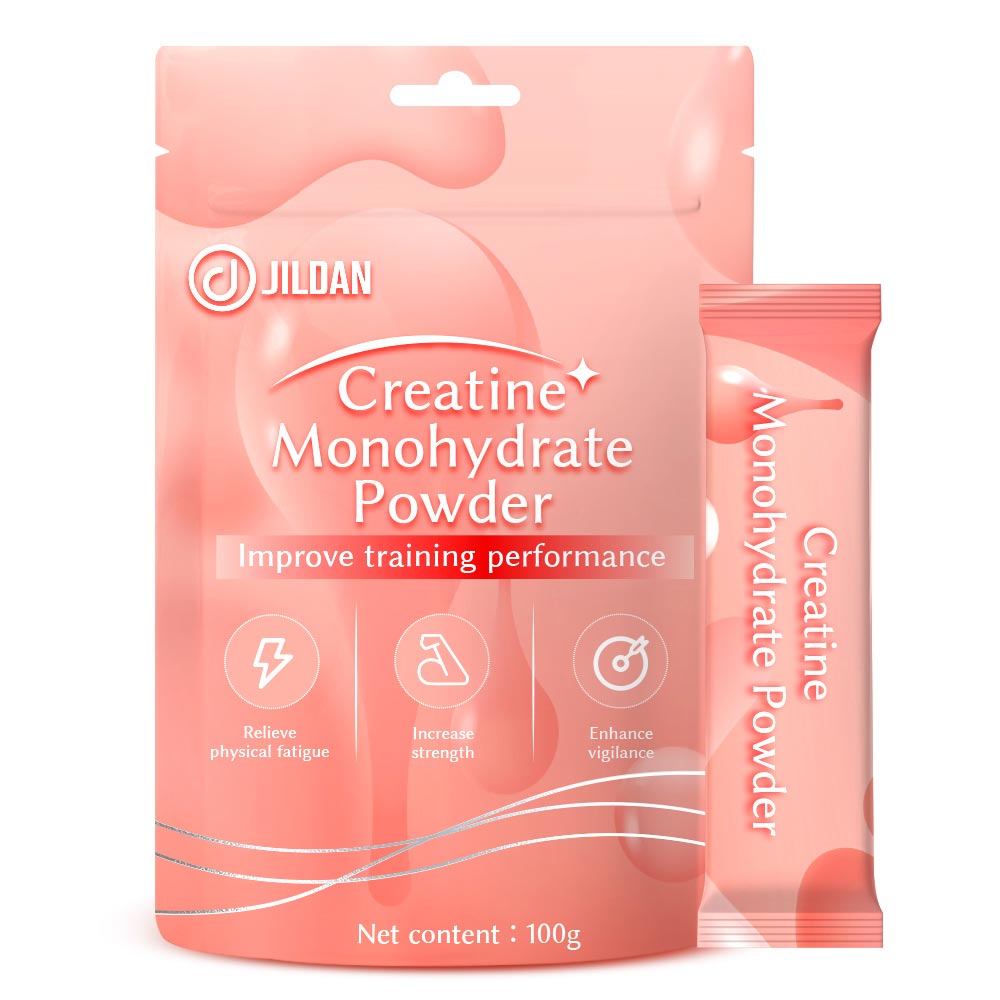
Sports nutrition products can be exposed to different contaminant risks depending on ingredients, sourcing, and manufacturing systems.
A 2026 scientific review examined methods used to detect illegal adulterants and heavy metals in sports nutrition supplements, discussing elements including lead, cadmium, arsenic, and mercury as well as other contamination concerns. Read the review on PubMed.
This does not mean creatine monohydrate is inherently contaminated.
It reinforces the need for risk-based quality specifications.
A creatine monohydrate manufacturer should be able to explain which contaminant requirements apply to:
- the raw material;
- the finished product;
- the destination market.
The appropriate limits should come from the product specification and applicable regulatory requirements rather than generic marketing claims such as “heavy-metal free.”
Analytical methods have detection limits. “Not detected” and “zero” are not automatically the same statement.
Precise quality language is better than absolute marketing claims.
Microbiological Controls Still Matter for Powder Products
Creatine is not a botanical powder or protein concentrate, but microbiological specifications still belong within a complete product-quality discussion.
A creatine monohydrate manufacturer should define appropriate limits according to the raw material, finished product, processing environment, and destination market.
For a multi-ingredient formula, microbiological risk can change as additional materials are introduced.
Examples might include:
- fruit powders;
- natural flavors;
- botanical ingredients;
- other nutritional components.
A pure creatine formula and a flavored sports nutrition blend should therefore not automatically use identical risk assumptions.
Quality plans should reflect the finished product.
Packaging Should Protect Against Moisture and Consumer Handling
Packaging is not only a branding decision.
For dry creatine powder, the package also helps preserve the physical characteristics of the product during storage and consumer use.
A creatine monohydrate manufacturer should evaluate packaging options such as:
- tubs;
- jars;
- pouches;
- single-serving stick packs.
Key considerations include:
- moisture barrier;
- closure integrity;
- repeated opening;
- scoop fit;
- fill volume;
- shipping durability.
A consumer may open a creatine tub every day for several weeks.
The packaging therefore needs to perform throughout normal use, not only while sealed in the warehouse.
For pouches, reseal quality matters.
For stick packs, powder-flow properties and seal integrity become especially important.
The product and package should be developed as one commercial system.
Packaging Size Should Be Based on Bulk Density, Not Only Net Weight
Two powders containing the same number of grams do not necessarily occupy the same volume.
This matters when choosing containers.
A creatine monohydrate manufacturer should verify the bulk density of the actual finished formula before finalizing packaging.
Otherwise, brands can end up with:
- excessive headspace;
- containers that are too small;
- inconvenient scoop access;
- poor visual presentation.
A flavored creatine powder may also have a different density from pure creatine monohydrate because sweeteners, acids, flavors, and supporting ingredients alter the blend.
Container testing should therefore use the commercial formulation rather than an approximate powder.
Label Claims Should Follow the Research
Creatine has a strong evidence base, but that does not mean every marketing claim is equally supported.
NIH reports that creatine supplementation can improve strength, power, and performance during repeated short-duration, high-intensity exercise. It also notes that creatine appears to have relatively little value for endurance activities that do not depend heavily on the ATP-creatine phosphate system. Review the NIH creatine evidence.
For a creatine monohydrate manufacturer and its brand customers, this provides an important communication boundary.
Strong product education can discuss:
- creatine’s role in rapid energy systems;
- research on high-intensity exercise;
- established use in sports nutrition.
Brands should be more careful when moving into emerging areas where the evidence may be less established or more population specific.
The existence of a creatine study does not automatically justify every consumer-facing claim.
Avoid Treating Consumer Dosage as a Manufacturing Specification
NIH notes that research protocols commonly use loading approaches of approximately 20 g per day for 5–7 days followed by 3–5 g per day, while other protocols use smaller daily amounts without a loading phase. NIH Exercise and Athletic Performance Fact Sheet provides the research context.
These are research and use patterns—not instructions that every commercial creatine product must copy.
A creatine monohydrate manufacturer should define serving size according to:
- product positioning;
- target population;
- supporting evidence;
- label strategy;
- dosage form.
For example, a powder can accommodate gram-level servings easily.
Capsules and tablets may require multiple units.
Gummies create another set of active-loading constraints.
Manufacturing feasibility needs to be evaluated alongside nutritional strategy.
Creatine Powder, Gummies, Capsules, or Tablets?
The same ingredient can behave very differently across dosage forms.
Powder
Powder remains one of the most practical formats because gram-level servings are straightforward.
It also allows:
- unflavored formulas;
- flavored drink mixes;
- multi-ingredient sports nutrition blends.
Gummies
Gummies offer convenience but require more careful evaluation of:
- active loading;
- heat;
- moisture;
- acidity;
- stability.
JD Nutra’s public portfolio includes creatine gummies, illustrating how the ingredient can be adapted to a different consumer format. Brands considering this route can review JD Nutra’s gummy supplement manufacturing range.
Capsules and Tablets
Capsules and tablets provide premeasured servings but can become impractical if the formula requires several grams of active ingredient per day.
A capable creatine monohydrate manufacturer should recommend a format that works technically rather than forcing the ingredient into a format because it is currently fashionable.
Batch Traceability Is Essential for Repeat Production
A commercial brand needs more than one good batch.
The product should be reproducible.
A creatine monohydrate manufacturer should be able to trace a finished product back to:
- creatine raw-material lot;
- supporting ingredient lots;
- manufacturing date;
- equipment;
- packaging lot;
- testing records;
- quality release.
This becomes important when:
- a complaint occurs;
- a raw material changes;
- a laboratory result needs investigation;
- a repeat order behaves differently.
Good traceability turns these questions into documented investigations rather than guesswork.
Brands should ask directly:
“If I provide a finished batch number, can you identify the creatine raw-material lot used in that batch?”
The answer should be yes.
Change Control Protects the Formula After Launch
Once a creatine product succeeds, the temptation may be to treat future production as routine.
That is exactly when uncontrolled changes can become dangerous to product consistency.
A creatine monohydrate manufacturer should have procedures for evaluating important changes involving:
- raw-material supplier;
- raw-material specification;
- particle size;
- flavor system;
- sweetener;
- packaging;
- analytical method;
- manufacturing process.
A supplier should not quietly substitute a creatine source simply because both materials have the same ingredient name.
The new material may differ in:
- particle behavior;
- purity profile;
- bulk density;
- dispersibility;
- documentation.
Brands should establish which changes require prior notification or approval.
How to Audit a Creatine Monohydrate Manufacturer
A structured audit can make supplier comparison much easier.
Raw Material
Ask:
- Who supplies the creatine?
- How is the supplier qualified?
- What specifications apply?
- How is identity confirmed?
- How are impurities controlled?
Analytical Testing
Ask:
- What assay method is used?
- Which synthesis-related impurities are monitored?
- Are heavy metals included where appropriate?
- What appears on the COA?
Manufacturing
Ask:
- How is powder weighed?
- How is blend uniformity controlled for flavored products?
- How is dust managed?
- How is equipment cleaned?
Finished Product
Ask:
- Which specifications are verified?
- Is creatine content tested?
- Who releases the batch?
Packaging
Ask:
- Which formats are available?
- How is moisture controlled?
- Is bulk density checked before container selection?
Traceability
Ask:
- Can every finished lot be connected to its raw-material lot?
Change Control
Ask:
- Will changes to the creatine source require approval?
- How are specification changes documented?
A professional creatine monohydrate manufacturer should be comfortable answering these technical questions.
Red Flags When Comparing Creatine Manufacturers
Several warning signs deserve additional investigation.
No Defined Creatine Specification
“Premium creatine” is not a measurable requirement.
Purity Is Quoted Without a Test Method
Ask how the result was obtained.
No Impurity Information Is Available
Industrial synthesis can create side products, making impurity control relevant. PubMed review.
“Micronized” Has No Particle Specification
A marketing term should have a measurable technical basis.
Raw Material Can Change Without Approval
This can affect purity, flow, dispersibility, and documentation.
Finished Product Is Never Tested
Incoming raw-material results do not automatically represent the finished commercial product.
The COA Shows No Lot-Specific Results
Ask whether the document is representative or actually belongs to the commercial batch.
Packaging Is Chosen Before the Formula Is Evaluated
Bulk density and flow can affect packaging requirements.
The Manufacturer Makes Unsupported Performance Claims
Manufacturing capability and scientific claim substantiation are separate issues.
What to Include in a Creatine Manufacturing RFQ
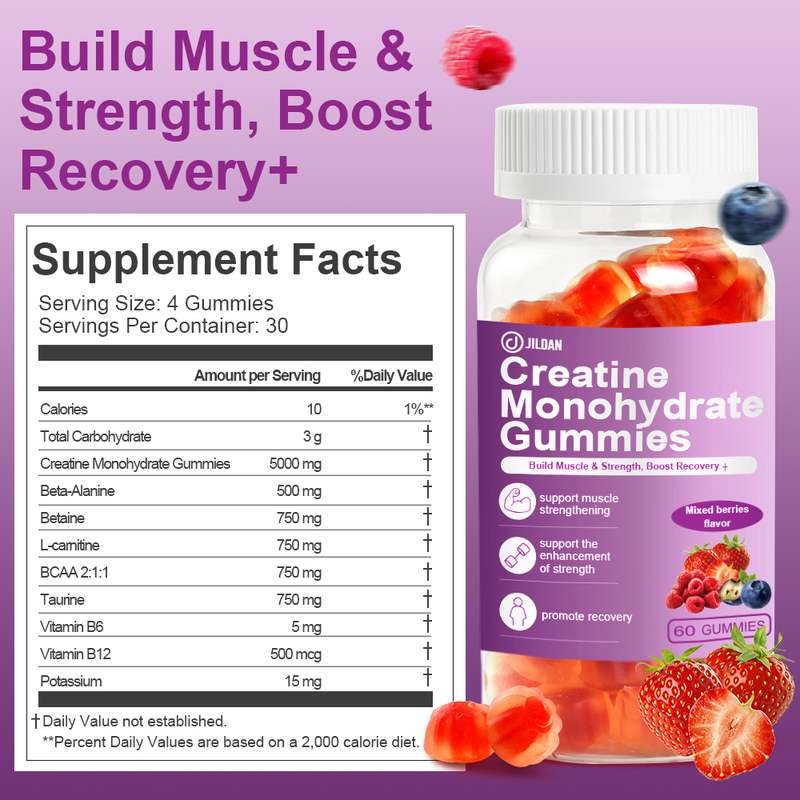
A detailed RFQ allows a creatine monohydrate manufacturer to quote the actual product rather than a generic creatine SKU.
Creatine Specification
Include:
- creatine monohydrate requirement;
- purity or assay expectation;
- particle-size preference where applicable;
- impurity requirements;
- documentation expectations.
Formula
Define:
- pure or blended;
- serving size;
- flavor;
- sweetener system;
- additional active ingredients.
Finished Format
Specify:
- powder;
- gummy;
- capsule;
- tablet.
Quality
Include:
- identity;
- assay;
- contaminant limits;
- microbiological specifications;
- finished-product testing;
- COA requirements.
Packaging
Define:
- tub;
- pouch;
- stick pack;
- serving count;
- scoop;
- label;
- carton.
Market
State:
- destination countries;
- intended sales channels.
Commercial Planning
Provide:
- initial production needs;
- repeat-order forecast;
- sample requirements;
- target launch period.
Brands already developing a creatine product can review JD Nutra’s Private Label Creatine Monohydrate Powder Buyer Guide and its existing Creatine Monohydrate Benefits Guide before finalizing the manufacturing brief.
For broader production capabilities, review JD Nutra’s supplement manufacturing and CDMO services.
FAQ
What should I ask a creatine monohydrate manufacturer first?
Ask for the raw-material and finished-product specifications.
A reliable creatine monohydrate manufacturer should be able to explain identity, assay, impurities, testing, particle characteristics, packaging, and finished-product release requirements.
Why does creatine purity matter?
Creatine is produced through industrial chemical processes, and scientific literature describes synthesis-related side products that need appropriate analytical control. PubMed review of creatine chemistry and synthesis.
What is micronized creatine monohydrate?
Micronized creatine generally refers to creatine processed to achieve smaller particle sizes.
Particle size can influence dispersibility and powder handling, but brands should request a measurable specification rather than relying only on the term “micronized.”
Is creatine monohydrate the best-studied creatine form?
Yes. NIH describes creatine monohydrate as the most widely used and studied form and notes that alternative forms have not been demonstrated to be superior for several commonly claimed advantages. NIH creatine overview.
Should finished creatine powder be tested?
The creatine monohydrate manufacturer should establish an appropriate finished-product verification and release program based on the product specification and applicable regulatory requirements.
Can creatine monohydrate be used in gummies?
Yes, but gummy formulation introduces additional heat, moisture, active-loading, and stability considerations that are different from dry powder.
Does creatine degrade in liquid?
Creatine stability can be affected by environmental conditions, including pH and temperature. Research has investigated degradation behavior under different stress conditions and beverage environments. Read the 2025 degradation study.
What should appear on a creatine COA?
A useful COA can include lot identification, identity, assay, relevant impurity specifications, other quality tests, analytical methods, acceptance criteria, and actual batch results where appropriate.
How should I choose a creatine monohydrate manufacturer?
Evaluate raw-material qualification, purity specifications, analytical testing, impurity controls, particle characteristics, finished-product testing, traceability, packaging, change control, and ability to support repeat production.
Conclusion
Selecting a creatine monohydrate manufacturer should involve much more than comparing production quantities, packaging options, or a headline purity percentage.
Creatine monohydrate has one of the strongest research foundations in sports nutrition. That makes ingredient identity and manufacturing quality especially important because brands have little reason to compromise the value of a well-established ingredient through weak sourcing or poor quality control.
A strong creatine monohydrate manufacturer should be able to demonstrate:
- defined raw-material specifications;
- supplier qualification;
- appropriate identity and assay testing;
- relevant impurity control;
- lot-specific COAs;
- controlled powder processing;
- finished-product specifications;
- batch traceability;
- suitable packaging;
- documented change control.
Brands should also evaluate physical properties such as particle size, bulk density, flow, and dispersibility because these characteristics affect both manufacturing and consumer experience.
Recent analytical research showing adulteration among a subset of tested commercial creatine samples provides another reason to treat verification seriously rather than assuming every material carrying the creatine name is equivalent. Review the study on PubMed.
For supplement brands, quality differentiation does not have to mean creating a complicated formula.
A carefully specified, consistently manufactured creatine monohydrate product can create a strong commercial proposition precisely because consumers already understand the ingredient.
Brands preparing a powder project can review JD Nutra’s powder supplement manufacturing capabilities, read the existing Private Label Creatine Monohydrate Powder Buyer Guide, and review current consumer education in the Creatine Monohydrate Benefits Guide.
When the raw-material specification, finished format, testing requirements, packaging, and destination market are defined, contact JD Nutra to discuss technical feasibility and commercial production with a creatine monohydrate manufacturer.


