
Tabla de contenidos
A prototype can taste right and still arrive as a single sticky mass. For protein gummies, packaging development should begin while the formula is being finalized, because the container changes how the product exchanges moisture and experiences pressure during storage and distribution. Choosing a bottle from a catalogue after approving the gummy leaves a major part of product performance unresolved.
This guide helps brand owners build a packaging trial for protein gummies. It focuses on measurable purchasing decisions: which pack to test, which samples to retain, what observations to record and what evidence should accompany approval. It does not assume a standard shelf life, serving size or minimum order. Those values belong in the specification for the individual project.
1. Define Protein Gummies and Packaging as One System
Start with the intended eating experience. Protein gummies sold as a daily supplement in a multidose bottle face different handling from an individually wrapped gummy bar. Record the actual piece weight, shape, coating, protein source, target texture and proposed number of pieces per serving. State whether pieces may touch one another and whether a small amount of surface tack is acceptable. A phrase such as 'premium quality' cannot replace these decisions.
For protein gummies, prepare a pack brief that includes the fill count, available headspace, opening method, expected time between first opening and final consumption, and intended distribution route. Ask the manufacturer to flag incompatibilities before artwork starts. A formula that passes a sealed-pack trial may behave differently when a customer repeatedly opens the bottle in a humid room. That use pattern should be an explicit test condition rather than an assumption.
2. Compare realistic pack options
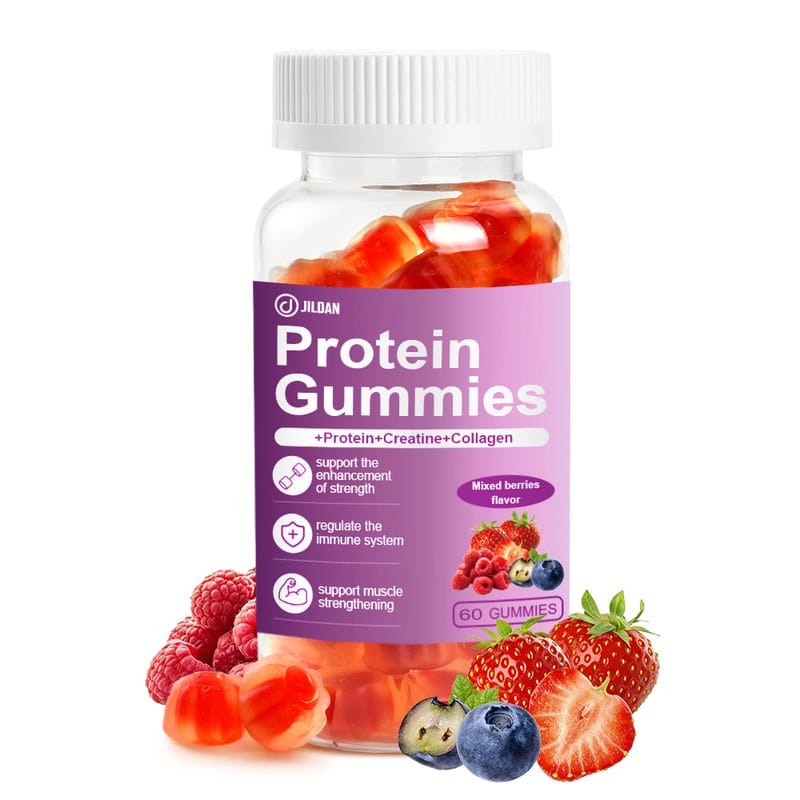
A bottle, resealable pouch and unit-dose wrapper each solve a different operational problem. Bottles can protect protein gummies from compression but leave repeated opening as a variable. Pouches may reduce empty shipping volume while exposing the product to greater stacking pressure. Individual wrappers limit repeated exposure of the remaining pieces, but add seals, packing operations and material that must be evaluated. None is automatically the best option for every formula.
Compare samples made with the proposed commercial material rather than a convenient laboratory container. Protein gummies approved in a thick glass jar have not been qualified for a thin flexible pouch. Identify the material construction, closure, liner, reseal feature and any proposed moisture-control component. Ask the packaging supplier which properties are specified and how they are measured. Keep the comparison tied to the final product instead of selecting a material solely from a generic barrier claim.
3. Separate moisture movement from texture change
Texture drift has several possible causes. Protein gummies may become firmer, stickier or less uniform during a trial; a change in one observation does not establish its cause. Record piece mass, visible surface condition, separation between pieces and a repeatable texture assessment at the same time points. If the development team measures moisture or water activity, preserve the method and sample handling so that results can be compared meaningfully.
Do not respond to every sticky sample by adding a desiccant. For protein gummies, moisture removal can change the eating experience, and any moisture-control component must be assessed as part of the actual pack system. Compare a controlled alternative against the original design, changing one major variable at a time where practical. Record the tradeoff: improved piece separation may be commercially unhelpful if the product becomes too hard for the intended consumer experience.
4. Test seals, closures and repeated opening
Seal appearance and seal performance are different observations. For protein gummies in pouches, inspect the seal area for trapped product, coating material, folds and incomplete sealing. Request an agreed seal-verification approach appropriate to the material and equipment. For bottles, examine closure application, liner condition and evidence of leakage or loosening after handling. A visually attractive finished pack should still have an identifiable lot and a documented inspection result.
Build a separate opening-use trial for protein gummies. Open the pack on a defined schedule, remove a consistent number of pieces and close it using the instructions a real user will receive. Record whether the reseal is easy to identify, whether product contaminates the closing area and whether the remaining pieces retain acceptable handling. Use a sealed control alongside this trial so that repeated opening is not confused with the effects of storage time alone.
| Pack option | Useful question | Evidence to request |
|---|---|---|
| Multidose bottle | Do pieces separate after repeated opening? | Opening-use observations and closure checks |
| Resealable pouch | Can the pack protect against stacking and reseal reliably? | Transit trial and reseal evaluation |
| Individual wrapper | Are all seals reproducible on the proposed line? | Seal verification and packing-line trial |
5. Evaluate count, portioning and shipping pressure
A pack can protect the contents yet still fail the buyer's operational requirements. Protein gummies should be checked for filling accuracy, broken or deformed pieces, product caught in the closure, and the ability to remove a serving without damaging the rest. Where pieces vary in size, discuss whether count-based or mass-based filling creates a more reliable commercial pack. Resolve the declared quantity and inspection method before accepting a packing quotation.
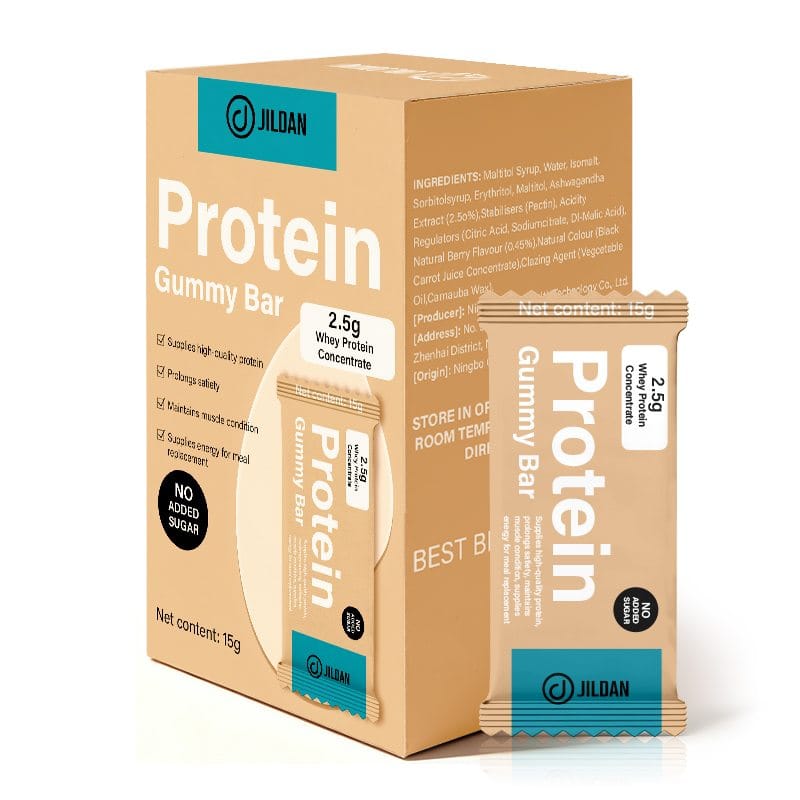
Transport trials for protein gummies should include the filled retail pack inside the intended shipping carton. Use the actual carton count, divider arrangement and stacking orientation where possible. Inspect units from different carton positions after handling. Photograph clumping, flattened pieces, oil transfer, scuffing and seal damage before opening samples for other tests. A single intact pack taken from the top of a carton is weak evidence for the performance of the complete shipment.
6. Build a Protein Gummies Trial Matrix That Leads to a Decision
Keep the first trial small enough to interpret. For protein gummies, compare two or three credible pack systems under a shared observation schedule instead of combining several formulas, coatings, containers and closures in an unstructured exercise. Use a sample map showing the product batch, pack variant, storage condition, pull time and number of units assigned to each check. Reserve unopened samples for later investigation rather than repeatedly disturbing every unit.
Set acceptance language before viewing the results. A protein gummies trial might require pieces to separate without tearing, a closure to remain usable after the planned opening sequence, and the finished pack to remain identifiable after transport. The project team must define the actual limits and methods. Record failures as observations linked to a sample ID. 'Looks fine' is difficult to audit and gives the next production team very little information about what was approved.
7. Connect Protein Gummies Packaging Approval to Shelf-Life Evidence
A short packaging comparison is a screening exercise, not a complete shelf-life claim. Protein gummies need a stability programme that evaluates the relevant product attributes in the final intended pack. Confirm which attributes require laboratory testing and which require physical or sensory examination. Do not infer nutrient retention from a photograph of intact gummies or infer seal performance from an acceptable assay. Each conclusion needs evidence matched to the question.
Before launch, agree how remaining studies will be followed and how unexpected results will be escalated. If protein gummies change formula, piece size, coating, pack material or closure after the study begins, assess whether the original evidence still supports the new configuration. Keep the rationale in the project file. A small-looking artwork revision may be harmless to stability, while a less visible change in a liner or film construction may alter the pack's protective performance.
8. Approve a reproducible commercial specification
The final approval file for protein gummies should identify the formula version, product batch, piece specification, packaging material codes, fill quantity, closure instructions, inspection methods and retained reference samples. Include photographs that show the actual approved pack. Record which deviations were accepted, why they were accepted and whether the acceptance applies to one pilot only or to future production. Avoid allowing an informal sample approval to become an unlimited manufacturing authorization.
Ask Jildan to review the proposed protein gummies concept together with its pack and route to market. The useful starting point is a written brief with the desired protein source, format, serving experience and distribution conditions. The company lists formulation, manufacturing and packaging support on its service page; the exact pack, process capability, commercial quantities and study programme should be confirmed for your project. Request a scoped trial and quotation rather than treating a catalogue image as proof of pack qualification.
Review the relevant Protein Gummies product or service page, sau discuss formulation, manufacturing and packaging support with Jildan.
Manufacturing reference: FDA dietary supplement CGMP compliance guide. This reference is not a certification of a supplier or product.
Preguntas frecuentes
What is the best packaging for protein gummies?
The best option depends on the formula, piece geometry, opening pattern and distribution route. Compare the actual commercial bottle, pouch or wrapper with agreed acceptance criteria before selecting a pack.
Should protein gummies always include a desiccant?
No universal answer applies. Assess any moisture-control component with the final formula and container, because a change that reduces sticking can also alter texture.
Can protein gummies use the same pack as ordinary gummies?
A similar appearance does not establish equivalent pack performance. Confirm that the specific protein formula passes the relevant storage, opening-use and transport checks.
Does a transport trial establish shelf life for protein gummies?
No. A transport trial evaluates defined distribution stresses. Shelf-life support requires an appropriate stability programme for the attributes of the product in its final pack.
What should a brand send before requesting a protein gummies packaging quote?
Provide the formula concept, piece weight and shape, fill quantity, proposed pack, target markets, shipping route and expected user opening pattern. Identify which items are fixed and which remain open for development.

