Las gomitas Ashwagandha se han convertido en uno de los formatos botánicos más visibles en la categoría de estrés, sueño y bienestar cotidiano. Sin embargo, para las marcas de suplementos, la oportunidad no es simplemente poner el extracto de ashwagandha en una gomita aromatizada y seguir la tendencia de la categoría.
El ingrediente es un extracto botánico con diferencias significativas en la identidad de la materia prima, la parte de la planta, el proceso de extracción, la concentración, la estandarización, la evidencia de respaldo, la estabilidad y las características sensoriales. Al mismo tiempo, una gomita es una matriz alimentaria compleja en la que es necesario controlar el calor, la humedad, la acidez, los edulcorantes, los agentes gelificantes, la carga activa y los cambios en la vida útil.
Eso hace que las gomitas ashwagandha sean un proyecto de formulación en lugar de un sencillo ejercicio de adición de ingredientes.
El interés de búsqueda es sustancial porque los consumidores están cada vez más familiarizados con la ashwagandha, pero un mercado abarrotado también significa que los nuevos productos necesitan un posicionamiento más claro y una mejor ejecución técnica. Para las marcas que desarrollan gomitas ashwagandha, las preguntas clave no son sólo cómo saben las gomitas o cuántos miligramos aparecen en la etiqueta. También incluyen qué extracto se utiliza, de qué parte de Withania somnifera proviene, cómo está estandarizado, si la porción prevista puede encajar en la gomita, cómo se verificará la estabilidad y qué afirmaciones pueden respaldarse de manera responsable.
El Centro Nacional de Salud Complementaria e Integrativa de EE. UU. así lo señala algunas preparaciones de ashwagandha han demostrado potencial de estrés e insomnio, mientras que la evidencia de muchos otros usos propuestos sigue siendo insuficiente o incierta. También destaca importantes consideraciones de seguridad, incluidas posibles interacciones y grupos para quienes el uso puede no ser apropiado.
Para los desarrolladores de productos, ese es un recordatorio importante: una formulación exitosa debe conectar el extracto, la dosis, el formato, la evidencia y la etiqueta reales en lugar de depender únicamente de la reputación del nombre del ingrediente.
Por qué las gomitas Ashwagandha son diferentes de las gomitas de hierbas comunes
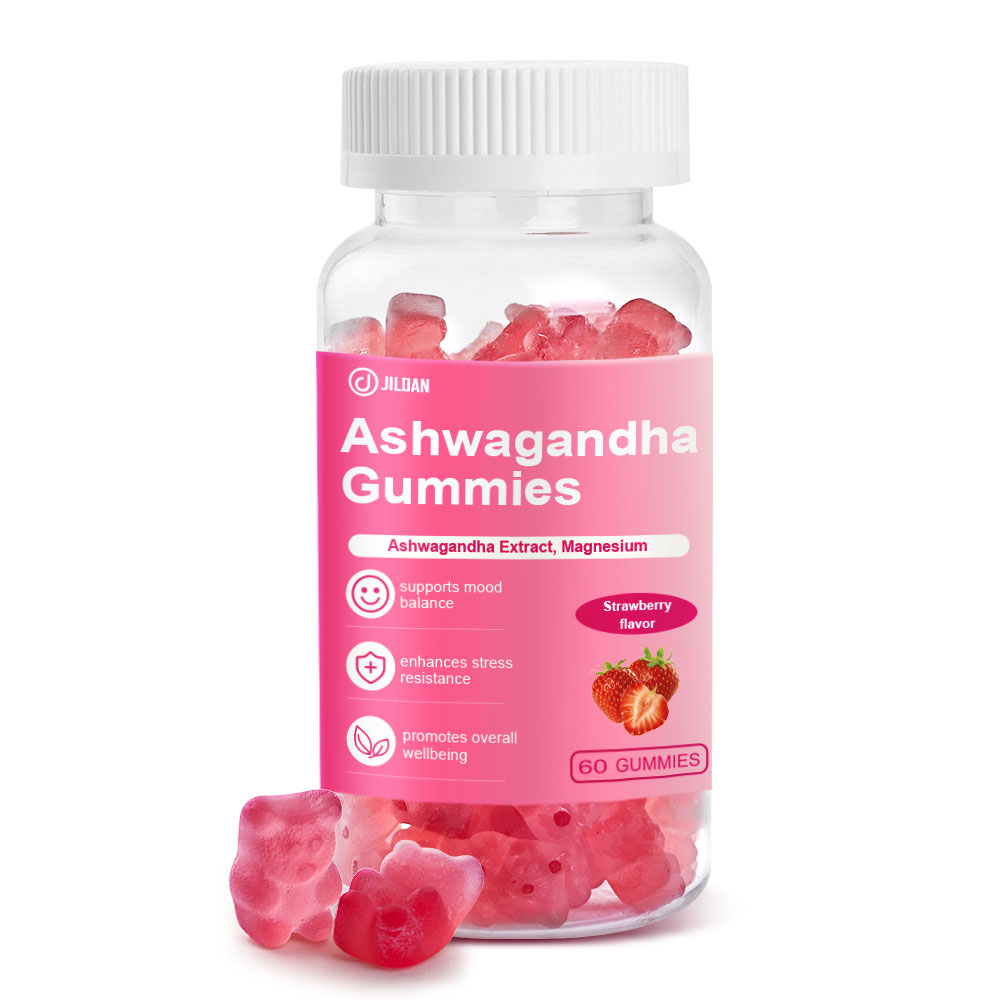
El atractivo de las gomitas ashwagandha es fácil de entender.
En comparación con las cápsulas tradicionales, las gomitas pueden ofrecer:
- una rutina diaria más accesible
- uso más fácil para los consumidores a quienes no les gusta tragar cápsulas
- diferenciación de productos basada en el sabor
- oportunidades para el posicionamiento vegano o a base de pectina
- compatibilidad con conceptos más amplios de estrés o relajación
fuerte atractivo visual en el comercio electrónico y el comercio minorista.
Pero esas ventajas conllevan desafíos de formulación.
Los extractos de Ashwagandha pueden tener un fuerte sabor terroso, amargo o astringente. También pueden introducir color y olor que afectan la gomita terminada. Si se requiere una cantidad relativamente alta de extracto por porción, la carga técnica aumenta porque el formulador debe adaptarse a lo botánico manteniendo al mismo tiempo una textura, sabor, uniformidad activa y tamaño de goma aceptables.
Es por eso que las gomitas ashwagandha no deben diseñarse tomando una gomita de fruta convencional y agregando la mayor cantidad de extracto posible.
Una mejor secuencia de desarrollo es:
- definir el consumidor objetivo
- elija la especificación botánica
- establezca un objetivo de servicio realista
- determine el número y peso de gomitas por porción
- desarrolla la base gomosa alrededor de esa carga activa
- optimizar sabor y textura
- verificar la consistencia de fabricación
- evaluar la estabilidad de la vida útil
revisar reclamaciones y etiquetado.
Esta secuencia reduce el riesgo de crear un prototipo atractivo que resulta difícil de fabricar comercialmente.
Elija el extracto de Ashwagandha antes de diseñar la gomita
No todos los ingredientes vendidos como ashwagandha son iguales.
Ashwagandha se identifica botánicamente como Withania somnifera. Una especificación responsable debe dejar clara la identidad botánica, la parte de la planta, el método de extracción, los materiales portadores cuando corresponda y cualquier criterio de estandarización.
Para las gomitas ashwagandha, esto es importante porque el extracto determina tanto la historia científica como gran parte del comportamiento técnico de la fórmula.
Al evaluar un ingrediente, las marcas de suplementos deben preguntar:
- ¿el material es Withania somnifera?
- ¿Se deriva de la raíz, la hoja o una combinación definida?
- ¿Es una hierba en polvo o un extracto?
- ¿Qué proceso de extracción se utiliza?
- ¿Está estandarizado el ingrediente?
- ¿qué constituyentes se miden?
- ¿Cuál es la especificación establecida?
- ¿qué materiales portadores están presentes?
- ¿Cuál es la condición de almacenamiento recomendada?
- ¿Está disponible la documentación de respaldo sobre seguridad y estabilidad?
Estas preguntas son mucho más útiles que simplemente pedir “polvo de ashwagandha”
Es posible que una gomita desarrollada con un extracto no funcione de la misma manera cuando la materia prima se sustituye más adelante. El sabor, el color, la densidad, la interacción de la humedad y la concentración activa pueden cambiar.
Por esa razón, la especificación de materia prima para las gomitas ashwagandha debe aprobarse antes de completar el trabajo final de sabor y textura.
La estandarización de raíces, hojas y extractos necesita especificaciones claras
Es posible que los consumidores vean sólo la palabra “ashwagandha”, pero los equipos de formulación necesitan muchos más detalles.
Diferentes partes de la planta pueden tener diferentes perfiles fitoquímicos. Diferentes métodos de extracción también pueden producir materiales con diferentes concentraciones y características sensoriales.
Esto crea una conexión directa entre la selección de ingredientes y la comunicación del producto.
Si una marca hace referencia a un estudio clínico que involucra una preparación de ashwagandha específica, no debe asumir automáticamente que los hallazgos se aplican por igual a todos los extractos del mercado. El NCCIH señala que los estudios de investigación han utilizado una variedad de preparaciones de ashwagandha, lo cual es una de las razones por las que la evidencia debe interpretarse cuidadosamente.
Para las gomitas ashwagandha, una especificación de ingrediente útil puede incluir:
- nombre botánico
- parte vegetal
- relación de extracto cuando sea relevante
- especificación de marcador o constituyente
- solvente de extracción
- porcentaje de portadores
- apariencia
- humedad
- especificación microbiológica
- metales pesados
- requisitos de plaguicidas cuando corresponda
límites de disolvente residual cuando corresponda.
“Extracto estandarizado” también debería llevar a otra pregunta:
¿estandarizado según qué especificación mensurable?
El número en una hoja de ventas no es suficiente. El fabricante debería poder explicar cómo se prueban las especificaciones y cómo se ve la variación aceptable de un lote a otro.
¿cuánto Ashwagandha puede caber de manera realista en una gomita?
Ésta es una de las cuestiones más importantes del desarrollo de productos.
Las marcas a menudo comienzan con una cantidad deseada de miligramos y luego intentan forzar esa cantidad a un tamaño de goma predefinido.
Eso puede crear problemas.
Una gomita no es una cápsula vacía. Ya contiene un sistema estructural que consta de edulcorantes, gelificantes, agua, ácidos, sabores, colorantes y coadyuvantes de procesamiento. Cada miligramo adicional de ingrediente activo cambia el equilibrio de la fórmula.
Cuando aumenta la carga activa en las gomitas ashwagandha, los formuladores pueden encontrar:
- amargura más fuerte
- aumento del olor botánico
- color más oscuro
- claridad de sabor reducida
- estructura del gel alterada
- tamaño de porción más grande
- mayor riesgo de sedimentación
- inconsistencia de textura
dificultades de fabricación.
Un mejor enfoque es decidir qué variable puede moverse.
Por ejemplo, las marcas pueden considerar:
- una gomita más grande
- dos gomitas más pequeñas por porción
- un extracto botánico más concentrado
- un objetivo activo inferior cuando sea científica y comercialmente apropiado
una fórmula combinada en la que ashwagandha es un componente y no el concepto completo.
La decisión correcta depende del extracto real y del consumidor objetivo.
Al desarrollar gomitas ashwagandha, los equipos de productos deben solicitar al fabricante una evaluación de viabilidad antes de finalizar las instrucciones de arte o servicio.
Gomitas Ashwagandha vs Cápsulas: ¿Qué formato se adapta al producto?
Ninguno de los formatos es universalmente mejor.
La elección correcta depende de la audiencia, la dosis, el posicionamiento, los requisitos sensoriales, la estrategia de empaquetado y la experiencia deseada del consumidor.
Gomitas Ashwagandha
Las gomitas Ashwagandha pueden funcionar bien cuando:
- el producto está dirigido a los principales consumidores de bienestar
- el gusto y la rutina son fundamentales para la propuesta de valor
- la dosis deseada puede caber en una práctica porción de goma
- el sabor botánico se puede controlar eficazmente
la marca quiere un formato masticable y orientado al estilo de vida.
Pueden ser particularmente útiles en portafolios basados en el estrés, la relajación, las rutinas de sueño o el bienestar cotidiano.
Las marcas que exploran esta ruta pueden revisar Gama de suplementos gomosos de JD Nutra al considerar cómo encaja el formato en una línea de productos más amplia.
Cápsulas de Ashwagandha
Las cápsulas pueden ser preferibles cuando:
- la carga activa es relativamente alta
- el sabor botánico es difícil de enmascarar
- se desea una lista de ingredientes sencilla
- el consumidor objetivo se siente cómodo con las cápsulas
el desarrollo de productos debe priorizar la eficiencia de la dosis.
JD Nutra también incluye la fabricación de suplementos en cápsulas entre sus capacidades de forma farmacéutica disponibles.
Por lo tanto, la decisión debe tomarse en la etapa de estrategia del producto y no después de que se complete la fórmula.
Pectina o Gelatina: La Base Gomosa Cambia el Producto
El sistema gelificante es otra decisión importante a la hora de desarrollar gomitas ashwagandha.
Gomitas a base de pectina
La pectina se elige comúnmente para conceptos de gomitas de origen vegetal. Puede soportar un posicionamiento vegano y una picadura relativamente limpia, pero los sistemas de pectina son sensibles a las condiciones de formulación.
La acidez, los sólidos solubles, la temperatura y la secuencia de procesamiento deben controlarse cuidadosamente.
Cuando se introducen extractos botánicos, pueden afectar el equilibrio del sistema.
Gomitas a base de gelatina
La gelatina crea un perfil de textura y un comportamiento de procesamiento diferentes. Puede resultar útil cuando se desea un masticable más suave y elástico.
Sin embargo, no se ajusta a la posición vegana o vegetariana.
Para las marcas de suplementos, la elección no debe hacerse únicamente desde una perspectiva de tendencia.
Las influencias de la base gomosa:
- textura
- liberación de sabor
- condiciones de fabricación
- comportamiento de humedad
- compatibilidad activa
- posicionamiento dietético
características de vida útil.
Por lo tanto, un fabricante que desarrolle gomitas ashwagandha debe confirmar la base de las gomitas antes de finalizar el programa sensorial y de estabilidad.
Las fórmulas sin azúcar y bajas en azúcar requieren un desarrollo separado
La reducción del azúcar se ha convertido en una consideración importante en todos los suplementos gomosos, pero reemplazar el azúcar no es tan simple como eliminar la sacarosa.
El azúcar aporta más que dulzura. Puede influir:
- sólidos
- textura
- actividad acuática
- estructura
- liberación de sabor
- estabilidad
procesamiento.
Los alcoholes de azúcar, edulcorantes alternativos, fibras u otros sistemas pueden cambiar significativamente el producto terminado.
Para las gomitas ashwagandha, eso importa porque la fórmula ya necesita lograr un sabor botánico distintivo.
Es posible que un sistema edulcorante que funcione bien en una gomita multivitamínica no enmascare ashwagandha de manera efectiva.
El desarrollo sin azúcar también puede afectar la tolerancia digestiva según el sistema edulcorante y la cantidad de porción.
Por lo tanto, las marcas deberían solicitar un prototipo dedicado en lugar de asumir que una fórmula gomosa convencional se puede convertir directamente en una versión sin azúcar.
Si la reducción de azúcar es fundamental para el posicionamiento, inclúyala en el resumen inicial del producto.
El enmascaramiento de sabores es un requisito técnico, no sólo una prueba de sabor
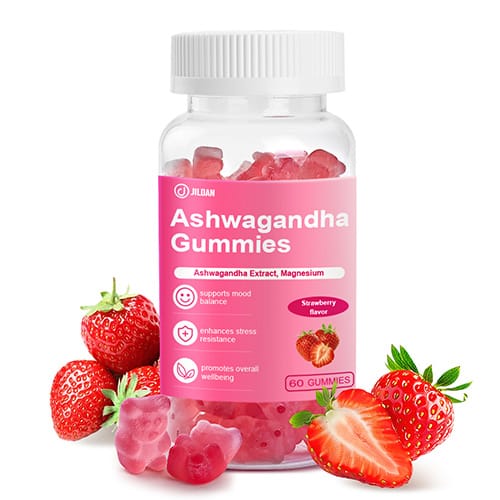
Uno de los desafíos más obvios de las gomitas ashwagandha es el sabor.
Los extractos botánicos pueden introducir amargor, terrosidad, sequedad y regusto persistente.
El sabor fuerte por sí solo no siempre es la solución.
Simplemente aumentar la intensidad del sabor puede crear una gomita que tenga un sabor artificial sin eliminar el acabado botánico.
Una estrategia de enmascaramiento del sabor más eficaz puede considerar:
- familia sabor
- perfil de dulzura
- acidez
- modulación del amargor
- concentración botánica
- liberación de sabor
- textura gomosa
regusto.
Los perfiles de frutas con suficiente intensidad aromática pueden funcionar mejor que los sabores sutiles para algunos extractos, pero la decisión final debería basarse en prototipos reales.
El mejor sabor también debe evaluarse después del almacenamiento.
Una gomita recién producida puede tener un sabor muy diferente varios meses después porque el aroma, la acidez, la humedad y las notas botánicas pueden cambiar con el tiempo.
Para las gomitas ashwagandha, la estabilidad sensorial merece incluirse junto con la estabilidad química.
Las condiciones de calor y procesamiento deben proteger la fórmula
Los extractos botánicos pueden exponerse al calor durante la producción de gomitas.
El riesgo real depende del ingrediente, el tiempo de exposición, la temperatura del proceso, el orden de adición y la tecnología de fabricación.
Un fabricante responsable debe comprender cómo se comporta el ingrediente ashwagandha seleccionado en el proceso previsto.
Las preguntas a hacer incluyen:
- ¿en qué etapa se agrega el botánico?
- ¿Qué temperatura experimenta?
- ¿Cuánto tiempo está expuesto?
- ¿Se espera pérdida activa?
- ¿Se ha probado el proceso con el extracto seleccionado?
- ¿es necesario un exceso?
- ¿cómo se mantiene la uniformidad?
JD Nutra describe públicamente la investigación y el desarrollo de formulaciones, las pruebas de estabilidad, la optimización de procesos, la fabricación, el control de calidad final y la emisión de COA por lotes como parte de su proceso de desarrollo de productos.
Para las gomitas ashwagandha, estas etapas deben conectarse en lugar de tratarse como pasos independientes.
Una muestra de laboratorio exitosa no es suficiente. La fórmula tiene que sobrevivir a la ampliación comercial.
Las pruebas de estabilidad deberían cubrir más que el contenido activo
A menudo se discute la estabilidad como si sólo significara comprobar si el botánico permanece dentro de las especificaciones.
Para las gomitas, el panorama es más amplio.
Durante la vida útil de las gomitas ashwagandha, es posible que los equipos de productos deban evaluar los cambios en:
- constituyentes activos
- humedad
- textura
- dureza
- pegajosidad
- color
- sabor
- aroma
- calidad microbiológica
integridad del paquete.
Un producto puede técnicamente conservar su ingrediente activo y aun así volverse comercialmente inaceptable si las gomitas se endurecen, se pegan, pierden sabor o absorben humedad.
Por lo tanto, es necesario incluir los envases en el programa de estabilidad.
Si el producto final se venderá en una botella con repetidas aperturas por parte del consumidor, los planes de prueba deben considerar condiciones de almacenamiento realistas en lugar de solo un entorno de laboratorio sellado ideal.
Las marcas también deben tener cuidado al cambiar el embalaje una vez que hayan comenzado los trabajos de estabilidad. Una nueva botella, cierre, revestimiento, material de bolsa o configuración desecante puede alterar la exposición a la humedad.
Con las gomitas ashwagandha, lo ideal es que la fórmula y el paquete se traten como un sistema de producto terminado.
Prueba de Materia Prima y Gomitas Terminadas
El control de calidad debe comenzar con el material botánico entrante y continuar hasta el lanzamiento del producto terminado.
Pruebas de materias primas
Dependiendo de la especificación del ingrediente y del mercado, las pruebas pueden incluir:
- identidad botánica
- ensayo constituyente o marcador
- humedad
- límites microbiológicos
- metales pesados
- pesticidas cuando corresponda
disolventes residuales cuando corresponda.
El objetivo es confirmar que el material entrante coincide con la especificación aprobada.
Controles en proceso
Durante la producción de gomitas ashwagandha, los fabricantes pueden monitorear:
- precisión del pesaje
- mezcla por lotes
- temperatura
- pH
- sólidos solubles
- peso gomoso
- apariencia
consistencia del proceso.
Estos controles ayudan a reducir la variación antes de probar el lote terminado.
Pruebas de producto terminado
La especificación adecuada del producto terminado depende de la fórmula y el mercado, pero puede abarcar:
- apariencia
- peso medio de las gomitas
- composición activa
- límites microbiológicos
- metales pesados u otros contaminantes
- integridad del embalaje
otros criterios específicos de fórmula.
El COA final debe corresponder a un lote de producción identificable.
Las marcas deberían preguntarse qué se prueba realmente en lugar de basarse en declaraciones amplias como “prueba en laboratorio”
Gomitas Ashwagandha con magnesio o L-teanina: ¿tiene sentido una mezcla?
Las fórmulas combinadas son cada vez más comunes en la categoría de estrés y sueño.
Ingredientes como magnesio, L-teanina, GABA, manzanilla o vitaminas seleccionadas pueden aparecer junto con ashwagandha.
La cartera pública actual de JD Nutra, por ejemplo, muestra un concepto compuesto de gomitas de magnesio que combina ashwagandha con glicinato de magnesio, extracto de manzanilla, L-teanina, selenio y vitamina B6.
Para las marcas, sin embargo, la adición de ingredientes debe basarse en una estrategia de producto coherente.
Antes de desarrollar gomitas ashwagandha multiingredientes, pregunte:
- ¿cada ingrediente satisface las mismas necesidades del consumidor?
- ¿Se puede incluir cada ingrediente a un nivel significativo?
- ¿La carga activa total encajará en la gomita?
- ¿Existen conflictos de sabor o textura?
- ¿existen interacciones que afecten la estabilidad?
- ¿La combinación crea advertencias o afirmaciones más complejas?
- ¿Entenderán los consumidores la fórmula?
Un panel largo de datos complementarios no es automáticamente una ventaja competitiva.
A veces, un producto enfocado de un solo ingrediente crea una propuesta más limpia.
En otros casos, una combinación cuidadosamente diseñada puede ayudar a la marca a distinguirse de los productos genéricos.
La clave es la lógica de formulación.
Seguridad y atención al consumidor antes de que comience la comercialización
Ashwagandha se asocia frecuentemente con el estrés y la posición del sueño, pero las marcas no deben presentarlo como apropiado para todos los consumidores.
El NCCIH señala que ashwagandha puede causar efectos gastrointestinales o somnolencia en algunas personas. También afirma que se debe evitar su uso durante el embarazo y la lactancia e identifica posibles preocupaciones para las personas con ciertas afecciones tiroideas o autoinmunes, quienes se preparan para la cirugía y los usuarios de algunos medicamentos. También se han informado casos raros de lesión hepática.
Esta información debería influir tanto en la formulación como en la estrategia de contenido de las gomitas ashwagandha.
Un proceso responsable de desarrollo de productos debe determinar:
- población adulta prevista
- poblaciones que requieren precaución
- advertencias en la etiqueta
- direcciones de servicio
- reclamar lenguaje
orientación de atención al cliente.
La información de seguridad no debe ocultarse simplemente porque el lenguaje de beneficios positivos sea más fácil de comercializar.
Una calificación clara puede hacer que la página de un producto sea más creíble.
Las reclamaciones por gomitas Ashwagandha necesitan pruebas y límites
Los resultados de la búsqueda de gomitas ashwagandha a menudo enfatizan el estrés, el sueño, la calma, el estado de ánimo y otros resultados de bienestar.
Las marcas deben distinguir entre:
- una frase de búsqueda del consumidor
- evidencia científica
un reclamo comercial permitido.
No siempre son lo mismo.
La FDA afirma que las afirmaciones sobre estructura/función de los suplementos dietéticos deben ser veraces y no engañosas, deben tener fundamento y están sujetas a requisitos específicos de notificación y exención de responsabilidad. Dichas afirmaciones no pueden indicar que un suplemento diagnostique, trate, cure o prevenga enfermedades.
Eso significa que una página de producto de gomitas ashwagandha no debe simplemente copiar la redacción más sólida que se encuentra en los resultados de búsqueda.
En cambio, las reclamaciones deben revisarse en:
- el ingrediente real
- la cantidad real
- la investigación relevante
- reglas del mercado objetivo
interpretación del consumidor.
Actualmente, el NCCIH describe la evidencia de estrés e insomnio como más prometedora que la evidencia de muchos otros usos propuestos, al tiempo que señala limitaciones en el tamaño del estudio y la variación entre las preparaciones.
Esto hace que la redacción precisa sea particularmente importante.
Los envases deben respaldar tanto la estabilidad como la experiencia del consumidor

El embalaje de gomitas ashwagandha tiene varios trabajos.
Debe proteger el producto y al mismo tiempo respaldar la marca, la comodidad de apertura, el comportamiento de servicio y el envío.
Las consideraciones comunes incluyen:
- tamaño de botella
- recuento de gomitas
- cierre
- sello
- protección contra la humedad
- desecante cuando corresponda
- área de etiquetas
- transparencia versus protección contra la luz
durabilidad del envío.
Una botella que resulta atractiva en la página de un producto aún puede ser una mala opción si permite una exposición excesiva a la humedad o crea demasiado espacio para la cabeza.
Los desarrolladores de productos deben proporcionar al fabricante lo esperado:
- recuento de servicio
- peso gomoso
- dimensiones
- vida útil objetivo
- mercados marítimos
instrucciones de almacenamiento.
Estos factores ayudan a determinar la configuración adecuada del paquete.
Cómo evaluar a un fabricante de gomitas Ashwagandha
Las discusiones más útiles con los proveedores van más allá de solicitar un catálogo.
Al evaluar un fabricante de gomitas ashwagandha, las marcas deben hacer preguntas en cuatro áreas.
Control de ingredientes
Pregunta:
- ¿cómo se verifica Withania somnifera?
- ¿Qué piezas de planta están disponibles?
- ¿Qué extractos se pueden suministrar?
- ¿Qué opciones de estandarización están disponibles?
- ¿qué pruebas de materias primas se realizan?
Desarrollo de gomitas
Pregunta:
- ¿qué carga activa puede soportar la gomita de manera realista?
- ¿están disponibles los sistemas de pectina y gelatina?
- ¿se pueden desarrollar conceptos sin azúcar o con reducción de azúcar?
- ¿cómo se gestiona el amargor?
- ¿cómo se manejan los botánicos sensibles al calor?
- ¿Se pueden producir muestras piloto antes de la ampliación?
Calidad y Estabilidad
Pregunta:
- ¿Qué pruebas de productos terminados son estándar?
- ¿se puede suministrar un COA por lotes?
- ¿Cómo se evalúa la estabilidad?
- ¿qué configuraciones de embalaje son compatibles?
- ¿Cómo se controlan los cambios de especificaciones?
Desarrollo Comercial
Pregunta:
- ¿Hay una fórmula de acciones disponible?
- ¿Se puede personalizar el nivel de extracción y activo?
- ¿Se puede personalizar el embalaje?
- ¿qué información se necesita para una solicitud de cotización?
- ¿en qué se diferencia la producción repetida del lanzamiento inicial?
Las marcas pueden revisar Servicios de fabricación de suplementos de JD Nutra al organizar el resumen del producto en torno al desarrollo de fórmulas, fabricación, control de calidad y embalaje.
Qué incluir en una solicitud de cotización de Ashwagandha Gummies
Una solicitud de cotización detallada puede acortar los ciclos de desarrollo y reducir los malentendidos.
Al solicitar gomitas ashwagandha, proporcione:
Posicionamiento del producto
- consumidor objetivo
- necesidad central de bienestar
- mercado de ventas
canal primario de ventas.
Especificación Ashwagandha
- parte de planta preferida
- tipo extracto
- requisito de estandarización
- cantidad objetivo por porción
requisitos de documentación.
Especificación gomosa
- pectina o gelatina
- peso gomoso
- gomitas por porción
- sabor
- preferencias de color
- requerimiento sin azúcar o con reducción de azúcar
posición vegana u otra dietética.
Ingredientes adicionales
Lista:
- magnesio
- L-teanina
- vitaminas
- botánicos
- minerales
otros ingredientes bajo consideración.
Requisitos de calidad
Definiți:
- pruebas de materias primas
- pruebas de producto terminado
- Expectativas del COA
- requisitos contaminantes
expectativas de estabilidad.
Embalaje
Incluir:
- botella o bolsa
- recuento unitario
- cierre
- etiqueta
- cartón
mercado de destino.
Una solicitud de cotización clara brinda al fabricante suficiente información para identificar problemas técnicos antes de que comiencen las repetidas rondas de muestra.
Las marcas con un concepto definido pueden hacerlo póngase en contacto con JD Nutra con la fórmula objetivo, tamaño de porción, sistema de gomitas, mercado y requisitos de empaque.
Errores comunes que cometen las marcas con las gomitas Ashwagandha Elegir un extracto solo por costo o proporción de extracto
La especificación del producto debe considerar la identidad, la parte de la planta, la composición, la documentación, la evidencia y el desempeño sensorial.
Diseñar la etiqueta antes de completar la formulación
El tamaño de la porción y los datos complementarios deben reflejar la fórmula final fabricable, no un concepto de marketing temprano.
Tratando de poner demasiado activo en una gomita
Una carga activa elevada puede afectar negativamente el sabor, la textura, el tamaño y la fabricación.
Copiar afirmaciones de otros productos
Las reclamaciones deben basarse en la fórmula real y la evidencia apropiada.
Ignorar el gusto hasta el desarrollo tardío
El amargor botánico debe abordarse desde el primer prototipo.
Suponiendo que no contenga azúcar es un cambio de fórmula simple
Los sistemas edulcorantes alternativos pueden cambiar la textura, la estabilidad, el procesamiento y el rendimiento sensorial.
Tratamiento del embalaje como decoración
El embalaje es parte de la estrategia de estabilidad de las gomitas ashwagandha.
Saltarse la validación de la ampliación
Un prototipo de laboratorio no garantiza un rendimiento idéntico en la producción comercial.
Preguntas frecuentes sobre las gomitas Ashwagandha ¿Qué son las gomitas Ashwagandha?
Gomitas Ashwagandha son suplementos dietéticos masticables que contienen ashwagandha, identificados botánicamente como Withania somnifera. Las formulaciones comerciales pueden diferir en el tipo de extracto, la parte de la planta, la estandarización, la cantidad activa, la base gomosa y los ingredientes adicionales.
¿son las gomitas Ashwagandha mejores que las cápsulas?
No necesariamente.
Las gomitas Ashwagandha pueden proporcionar una experiencia sensorial más accesible, mientras que las cápsulas pueden adaptarse a una mayor carga activa sin desafíos de enmascaramiento del sabor. El formato correcto depende del consumidor, la formulación y la estrategia del producto.
¿pueden las gomitas Ashwagandha ser veganas?
Sí. Las gomitas ashwagandha a base de pectina se pueden desarrollar sin gelatina cuando el resto del sistema de ingredientes también cumple con las especificaciones veganas previstas.
¿pueden las gomitas Ashwagandha estar libres de azúcar?
Son posibles formulaciones sin azúcar, pero el sistema de gomitas debe desarrollarse específicamente para edulcorantes e ingredientes de volumen alternativos en lugar de simplemente eliminar el azúcar.
¿qué parte de Ashwagandha se debe utilizar?
La parte adecuada de la planta depende de la especificación del ingrediente seleccionado, la evidencia y la posición del producto. Las marcas deben documentar claramente si el extracto se deriva de raíz, hoja u otra fuente botánica definida.
¿debería estandarizarse Ashwagandha?
Un extracto estandarizado puede ayudar a controlar la composición de las gomitas ashwagandha, pero “estandarizado” siempre debe ir acompañado de una especificación mensurable y un método analítico apropiado.
¿qué se debe probar en las gomitas Ashwagandha?
El programa de prueba depende de la fórmula y el mercado, pero puede incluir identidad botánica y especificaciones de la materia prima, contenido activo o marcador, límites microbiológicos, contaminantes, características físicas del producto y estabilidad del producto terminado.
¿pueden las gomitas Ashwagandha incluir magnesio o L-teanina?
Sí, siempre que se puedan gestionar la carga activa combinada, el sabor, la textura, la estabilidad, la seguridad y los requisitos del mercado objetivo. Las fórmulas combinadas deben basarse en una necesidad coherente del consumidor en lugar de simplemente maximizar el número de ingredientes.
Conclusión
La oportunidad en torno a las gomitas ashwagandha es sólida, pero la categoría recompensa una mejor formulación en lugar de una simple imitación.
Un producto comercialmente sólido comienza con Withania somnifera autenticada, una pieza de planta y una especificación de extracto claramente definidas, y un objetivo activo que puede encajar de manera realista en una gomita. A partir de ahí, el fabricante debe gestionar el enmascaramiento del sabor, el sistema gelificante, los edulcorantes, la temperatura de procesamiento, la uniformidad activa, la estabilidad, el envasado, las pruebas y la liberación del producto terminado.
Al mismo tiempo, las afirmaciones de los productos deben permanecer alineadas con la evidencia del ingrediente y la dosis reales. La guía autorizada actual indica evidencia prometedora para algunas aplicaciones de estrés y sueño, al mismo tiempo que identifica incertidumbre, consideraciones de seguridad y poblaciones que pueden requerir precaución.
Para las marcas de suplementos, esto crea un punto útil de diferenciación.
En lugar de competir sólo con otra botella de gomitas ashwagandha, las marcas pueden construir alrededor de especificaciones de extractos transparentes, carga activa sensata, diseño sensorial reflexivo, calidad verificada, afirmaciones responsables y un formato que los consumidores utilizarán de manera realista.
Si está desarrollando gomitas ashwagandha para un proyecto de formulación personalizado o de marca privada, explore la gama de fabricación de suplementos de gomitas de JD Nutra, revise su CDMO y sus servicios de suplementos personalizados, o envíe sus requisitos de formulación para analizar el extracto, el objetivo de la porción, la base de gomitas, el sabor y las pruebas. y embalaje antes de pasar a la producción comercial.