
Tabla de contenidos
A finished capsule cannot repair an uncertain raw-material identity. For shilajit capsules, incoming qualification should establish what material is being purchased, which specification applies and how the quality team will decide whether each received lot can enter production. A supplier's product name and a favourable certificate of analysis are starting documents, not the entire qualification process.
This article gives procurement and technical teams a practical structure for qualifying material used in shilajit capsules. It addresses evidence, sampling and responsibility without prescribing a consumer dose or making a therapeutic claim. The exact tests and limits must be selected for the material, finished formula and intended market with the appropriate qualified specialists.
1. Write an unambiguous material description
Start with the commercial identity of the ingredient. Shilajit capsules may be proposed using different processed materials, physical forms and supplier specifications. Record the supplier's item code, manufacturing description, declared source, processing information, carrier or other added ingredients, and the documentation supporting the description. A purchase order that says only 'shilajit powder' gives the receiving team too little information to distinguish the intended material from a substituted grade.
Separate identity from a marker result. A stated constituent percentage can be useful when supported by an appropriate method, but it does not by itself answer every identity or quality question for shilajit capsules. Ask what the measurement represents, how the method is performed and which units and reporting basis apply. If suppliers use different methods or definitions, put that difference on the comparison sheet instead of treating the percentages as directly interchangeable.
2. Qualify the actual manufacturing and supply chain
The company selling an ingredient may be a producer, processor, distributor or broker. For shilajit capsules, identify which organization controls each important operation and which organization issues the lot documentation. Request a traceable connection between the lot delivered, the processing site and the certificate supplied. If a distributor repacks material, establish how the original lot number is preserved and how repacking records are linked to the delivered containers.
Review the supplier's handling of deviations, complaints and material changes. A useful qualification discussion for shilajit capsules asks what happens when a source, process, site, analytical method or carrier changes. Require timely notification of changes relevant to the approved specification. The purpose is to prevent silent substitution during repeat orders, especially when a purchase team sees the same familiar item name while the material behind that name has changed.
3. Match contaminant controls to the material
Set contaminant specifications through a documented risk assessment. For shilajit capsules, discuss relevant elemental, microbiological and other potential contaminants with the technical team, and select limits appropriate to the ingredient, intended finished product and market. Do not copy a limit from another supplier's sales sheet without checking its units, exposure basis, method and applicability. A raw-material result and a finished-serving assessment answer related but different questions.
Ask the testing laboratory whether the selected method is suitable for this matrix and the required reporting level. Shilajit capsules may contain additional ingredients that affect a finished-product method, so material testing and final formula testing should be planned together. Where a certificate reports only 'passes', request enough information to understand the specification and method behind that judgment. A pass statement with no identifiable standard is difficult to compare or investigate later.
4. Review the COA as a lot-specific record
A certificate should connect clearly to the received batch. For shilajit capsules, check the material name, item code, lot number, manufacture or retest information, test names, methods, units, specifications and reported results. Confirm who authorized the certificate. Compare it against the approved purchasing specification rather than asking only whether the document contains a familiar laboratory logo. Keep the reviewed version with the receiving record.
Investigate inconsistencies before release. If successive shilajit capsules ingredient lots have identical results across many numerical tests, that pattern is a reason to ask how results are generated and reported; it is not proof of misconduct by itself. Missing units, changed methods, unexplained rounding or mismatched lot numbers also need clarification. Record the supplier's response and any independent verification performed, then make the disposition decision through the quality process.
| Record | Question it answers | Gap it does not close alone |
|---|---|---|
| Supplier questionnaire | Who controls sourcing and processing? | Quality of the specific lot received |
| Lot-specific COA | What results were reported for this lot? | Sample representativeness and method suitability |
| Receiving record | What containers and condition were observed? | Chemical identity or contaminant levels |
| Disposition approval | Who authorized this lot for use? | Future lots or unreviewed changes |
5. Design receiving and sampling controls
A laboratory result represents the sample tested. For shilajit capsules materials, map the received containers, examine packaging condition and establish how samples will be taken, identified and protected from contamination. Define who may sample the material and which tools and precautions apply. Preserve the relationship between individual container markings, any composite sample and the laboratory submission. Without that relationship, an acceptable result can be difficult to assign to the lot actually used.
Do not assume the material is homogeneous because it appears uniform. The sampling plan for shilajit capsules should consider the supplier, process, container count, observed variation and the quality question being investigated. If damaged packaging or unusual odour is found, hold and document the affected material instead of averaging the observation away in a composite result. The quality team should decide how a discrepancy changes sampling, testing and lot disposition.

6. Check the material's manufacturing behaviour
Qualification must also consider whether the approved material can be processed reproducibly. For shilajit capsules, assess the relevant physical properties, flow, tendency to agglomerate and interaction with the proposed blend and capsule shell. Keep observations from a development trial linked to the raw-material lot. A material can satisfy a chemical specification yet create filling variability or handling difficulties that need a different process or a revised formulation.
Record the distinction between ingredient mass and the finished capsule contents. Shilajit capsules may include excipients or other active ingredients, so a capsule fill-weight check cannot establish every individual ingredient amount. Ask how blending, filling and finished-product testing will support the approved formula. Any decision to change an excipient or processing aid should be reviewed for its effect on identity, labelling, manufacturability and the original qualification assumptions.
7. Create a documented hold-and-release process
Incoming lots should have an identifiable status while checks are incomplete. For shilajit capsules, agree which records and results are necessary before the ingredient can be used, who reviews them and who authorizes release. Define how partial receipt, damaged containers, missing certificates and discrepant results are handled. A planned production date should not automatically convert a pending quality decision into an approved material status.
Build an exception route that preserves the evidence. When a shilajit capsules material needs investigation, record the issue, affected quantities, evaluation, supplier communication and final disposition. If additional testing is commissioned, state which question it is intended to answer. Repeated testing without a reasoned investigation can create a misleading collection of results. Keep rejected or returned lot information accessible so the purchasing team does not unknowingly reorder the same unresolved material.
8. Requalify through change control and performance review
Qualification is not a one-time folder of documents. Review supplier performance for shilajit capsules using meaningful evidence such as discrepancies, failed receiving checks, documentation completeness and unexplained lot variation. Set review frequency according to risk and experience rather than inventing a universal interval. Keep a controlled record of the approved material version and the evidence supporting continued use.
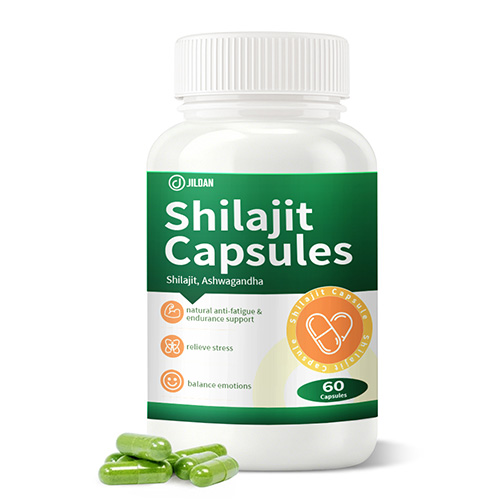
Jildan lists shilajit capsules among its product formats. Before requesting a production quote, send the intended ingredient description, target market, formula concept and expected qualification responsibilities. Ask the team to explain the proposed sourcing and testing plan for your shilajit capsules project and identify work that requires external verification. A useful quotation names the tests, documents and decision owners included in scope; it does not rely on an ingredient photograph to imply qualified supply.
Review the relevant Shilajit Capsules product or service page, sau discuss formulation, manufacturing and packaging support with Jildan.
Manufacturing reference: FDA dietary supplement CGMP compliance guide. This reference is not a certification of a supplier or product.
Preguntas frecuentes
Is a supplier COA enough to qualify shilajit capsules ingredients?
A COA is one part of the evidence. Qualification also needs an approved material description, suitable specifications, supply-chain understanding and an appropriate verification and release process.
Should shilajit capsules buyers compare constituent percentages directly?
Only after confirming that methods, definitions, units and reporting bases are comparable. Similar-looking percentages can describe different measurements.
Who should set contaminant limits for shilajit capsules?
Qualified technical and regulatory specialists should select applicable limits for the ingredient, formula and market. Purchasing teams should request that documented basis rather than invent a universal specification.
Can capsule weight prove the amount of shilajit in shilajit capsules?
Fill weight measures total contents. Where a blend contains other materials, additional formulation and analytical controls are needed to support the individual ingredient amount.
When should a shilajit capsules material be requalified?
Review qualification when relevant source, site, process, method or composition changes, and when performance or quality evidence challenges the original approval.

