Table of Contents
Tongkat Ali has moved from a relatively specialized Southeast Asian botanical into a widely discussed ingredient in the global supplement market. That growth creates opportunities for supplement brands, but it also creates a sourcing problem: two products carrying the same botanical name can differ substantially in plant identity, plant part, extraction method, chemical profile, testing standards, and documentation.
For a buyer, choosing a Tongkat Ali manufacturer should therefore involve much more than comparing extract ratios or asking whether a supplier can fill capsules.
Tongkat Ali is Eurycoma longifolia , a botanical traditionally associated with Southeast Asia. Because botanical ingredients are chemically complex and can vary according to growing conditions, harvesting, processing, extraction, and storage, a responsible sourcing program must establish what the ingredient actually is before evaluating how much of it goes into a finished supplement.
The NIH Office of Dietary Supplements emphasizes that botanicals should be sufficiently characterized for identity, purity, strength, composition, and stability. For supplement brands, that principle is especially relevant when selecting a Tongkat Ali manufacturer because botanical authenticity cannot be established reliably from a marketing name alone.
A strong manufacturing partner should be able to explain the complete path from authenticated raw material to released finished product.
This guide focuses on the questions purchasing, product development, and quality teams should ask before committing to production.
Start With Botanical Identity, Not the Extract Ratio
When buyers first evaluate a Tongkat Ali manufacturer , they often focus on numbers such as 10:1, 50:1, 100:1, or 200:1 extract.
Those numbers may appear easy to compare, but an extract ratio by itself tells you relatively little about the finished ingredient’s authenticity or chemical composition.
For example, a nominal extract ratio does not automatically tell you:
- whether the botanical is actually Eurycoma longifolia ;
- which plant part was used;
- how the raw material was authenticated;
- which extraction solvent was used;
- whether marker compounds were measured;
- whether the material was diluted with carriers;
- whether the finished extract matches a defined chemical specification.
This is why botanical identity should come before concentration claims.
A capable Tongkat Ali manufacturer should be able to specify the scientific name of the botanical and the plant part used in the ingredient. In most commercial discussions, the root is particularly relevant, but brands should verify the exact specification rather than assuming that all materials sold as Tongkat Ali are equivalent.
NIH guidance on natural-product integrity recommends complete taxonomic identification for botanical materials and notes that authentication methods should be capable of distinguishing the intended species from related or unexpected materials.
For procurement teams, an appropriate starting specification might therefore include:
- common name: Tongkat Ali;
- scientific name:Eurycoma longifolia ;
- plant part;
- botanical source;
- extract type;
- carrier, if used;
- chemical marker specification;
- moisture specification;
- microbiological limits;
- heavy-metal limits;
- other relevant contaminants.
If a potential Tongkat Ali manufacturer cannot clearly define these basics, discussing capsule count, packaging, or lead time is premature.
Why Authentication Deserves More Attention in Tongkat Ali Sourcing
Botanical adulteration is not merely theoretical.
A published study assessing commercial Eurycoma longifolia products using DNA barcoding and HPLC found substantial problems with authenticity among the products examined. The researchers concluded that combining botanical authentication with chemical analysis can provide a more complete picture than relying on only one testing approach.
This does not mean every commercial ingredient is problematic. It does mean brands should not treat identity verification as optional.
When interviewing a Tongkat Ali manufacturer , ask exactly how raw materials are authenticated.
Depending on the nature of the incoming material, appropriate methods could involve a combination of:
- macroscopic or microscopic examination;
- botanical reference materials;
- DNA-based methods where technically appropriate;
- chromatographic fingerprinting;
- HPLC or similar chemical analysis;
- marker-compound testing;
- supplier qualification and traceability.
No single analytical technique is ideal for every botanical form.
Highly processed extracts, for example, may be difficult to evaluate using the same methods used for intact botanical material. DNA may degrade during extraction, while chemical fingerprinting alone may not always distinguish every substitution.
That is why a good Tongkat Ali manufacturer should use testing appropriate to the actual material rather than rely on one generic “identity test” statement.
FDA dietary supplement CGMP guidance requires manufacturers to establish specifications and perform appropriate identity testing or examination for dietary ingredients. FDA lists scientifically valid approaches that can include organoleptic, macroscopic, microscopic, chemical, or other appropriate methods.
For a botanical with meaningful commercial value, combining supplier controls with analytical authentication is generally a stronger strategy than trusting paperwork alone.
Extract Ratio vs Standardization: They Are Not the Same Thing
One of the most important conversations to have with a Tongkat Ali manufacturer concerns the difference between an extract ratio and a standardized specification.
An extract ratio generally describes the relationship between starting botanical material and resulting extract under a defined manufacturing process.
Standardization, by contrast, usually refers to controlling one or more measurable constituents or chemical characteristics within a specified range.
They are not interchangeable.
A high-looking extract ratio does not automatically mean:
- greater authenticity;
- better quality;
- more active compounds;
- better batch consistency;
- stronger supporting evidence.
The NIH notes that the word “standardized” does not by itself prove that a botanical supplement is high quality, and the term does not have a single regulatory definition for dietary supplements in the United States.
Therefore, if a Tongkat Ali manufacturer describes an ingredient as standardized, ask:
Standardized to what?
For Tongkat Ali extracts, chemical specifications may include one or more characteristic compounds, depending on the ingredient and supplier.
The more useful questions are:
- Which compounds are measured?
- What specification range is applied?
- Which analytical method is used?
- Is the method validated for the matrix?
- Is every batch tested?
- Does the COA report an actual result or merely “Pass”?
- How much variation is permitted between batches?
Recent analytical research on Tongkat Ali has also explored metabolomic and chemical fingerprinting approaches to distinguish authentic root material and characterize commercial preparations.
For a brand owner, the objective is not to use the most sophisticated laboratory terminology on the product page. It is to ensure that the Tongkat Ali manufacturer can reproduce the agreed ingredient specification consistently.
Ask What Plant Part and Raw Material the Manufacturer Actually Uses
Botanical identity includes more than genus and species.
Plant part matters.
Roots, leaves, stems, bark, fruits, and other plant tissues can have different chemical compositions. A research paper using one part of a plant should not automatically be treated as evidence for an extract made from a different part.
A responsible Tongkat Ali manufacturer should therefore maintain clear documentation covering:
- scientific name;
- plant part;
- source country;
- supplier;
- lot number;
- incoming specification;
- extraction method;
- processing history.
This becomes especially important when brands intend to reference scientific literature in product education.
If the supporting research evaluated a defined root extract but your commercial product uses an inadequately characterized botanical powder, the connection between the evidence and the finished product becomes weak.
A useful question for a Tongkat Ali manufacturer is:
Can you show how the botanical material used in my finished product matches the identity and specification described in our approved product brief?
That question forces the discussion away from generic ingredient names and toward traceability.
Chemical Markers and Fingerprinting Can Strengthen Batch Consistency
Botanicals contain complex mixtures of naturally occurring compounds.
For this reason, one-number testing is not always sufficient to characterize the entire ingredient.
A Tongkat Ali manufacturer may use marker testing to monitor certain constituents, but broader chemical fingerprinting can also be useful in assessing whether different batches resemble one another.
The basic idea is simple.
If authentic raw material consistently produces a recognizable chemical profile, substantial changes in that profile could indicate:
- different raw-material quality;
- geographic variation;
- different processing;
- adulteration;
- degradation;
- substitution.
This does not mean every finished product needs an extremely complex research-level analytical program.
The appropriate level of testing should reflect the ingredient risk, product specification, regulatory market, and quality agreement.
However, buyers should understand what the Tongkat Ali manufacturer means when the supplier says an extract is “standardized” or “tested.”
Good follow-up questions include:
- Are you checking a single marker or a broader fingerprint?
- What reference standard is used?
- What acceptance range is established?
- Are results quantitative?
- How is batch-to-batch drift handled?
- What happens when material falls outside specification?
This level of discussion can reveal much more about the manufacturer’s quality system than a certificate logo on a sales brochure.
Raw Material Supplier Qualification Comes Before Finished Product Testing
Finished product testing cannot compensate for weak supply-chain controls.
A strong Tongkat Ali manufacturer should know exactly who supplies the botanical ingredient and how that supplier is qualified.
Supplier qualification may involve:
- supplier questionnaires;
- specification review;
- certificates and licenses;
- previous test history;
- audits where appropriate;
- sample evaluation;
- incoming lot testing;
- performance monitoring;
- change notification agreements.
For higher-risk botanical ingredients, reliance on a supplier COA alone may not provide sufficient assurance.
Independent or confirmatory testing may be appropriate depending on the risk and the manufacturer’s quality program.
The logic is straightforward:
If poor or adulterated raw material enters production, the manufacturing process cannot magically turn it into a high-quality botanical ingredient.
When evaluating a Tongkat Ali manufacturer , ask how incoming suppliers are approved and how frequently their performance is reviewed.
A useful quality conversation includes questions such as:
- How long has the ingredient supplier been approved?
- Which incoming tests are performed on each lot?
- Which test results are verified internally or by a qualified third-party laboratory?
- What triggers a supplier investigation?
- What happens when the supplier changes the raw material source?
- Does the brand receive notification of material changes?
For supplement brands developing several botanical products, this supplier-management capability can become more valuable than access to a very large product catalog.
Heavy Metals, Microbiology, Pesticides, and Other Contaminants Need a Risk-Based Plan
Identity is only one part of botanical quality.
A Tongkat Ali manufacturer should also establish appropriate limits for contaminants that may affect safety or product quality.
Depending on the botanical source, processing method, destination market, and product specification, this may include evaluation of:
- lead;
- arsenic;
- cadmium;
- mercury;
- microbiological contamination;
- pesticides;
- residual solvents;
- mycotoxins;
- foreign material;
- other relevant contaminants.
The appropriate test panel should be risk-based.
For example, an extracted botanical may require different controls from minimally processed root powder. An ingredient sourced from one geographic region may carry different agricultural or environmental risks from one produced elsewhere.
Recent scientific literature continues to highlight the importance of chemical and microbiological contamination controls in herbal products.
A reliable Tongkat Ali manufacturer should therefore be able to answer:
- Which contaminant limits apply?
- Are they based on the target market?
- Which laboratory performs the analysis?
- Is the method appropriate for the matrix?
- Are results reported quantitatively?
- What happens if a result approaches or exceeds a limit?
Statements such as “heavy-metal tested” are much less useful than actual specifications and results.
What a Useful Tongkat Ali COA Should Tell You
A Certificate of Analysis should help a brand understand whether a specific lot meets an agreed specification.
It should not be treated as decoration.
Before choosing a Tongkat Ali manufacturer , request a representative COA and examine what it actually contains.
Depending on the material and finished product, useful information can include:
- product or material name;
- botanical scientific name;
- plant part;
- batch or lot number;
- manufacturing or test date;
- identity result;
- assay or marker results;
- moisture;
- microbiological specifications;
- heavy-metal results;
- other contaminant results;
- test methods;
- acceptance criteria;
- actual results;
- quality approval.
One particularly important distinction is whether the COA shows actual numeric results where appropriate or simply states “Conforms.”
A “Pass” result may be acceptable for some qualitative tests, but quantitative specifications are more informative when the property being measured is numerical.
A good Tongkat Ali manufacturer should also be able to explain how the COA relates to:
- incoming raw material;
- bulk blend;
- finished batch;
- retained sample;
- batch manufacturing record.
The goal is full traceability.
If a customer complaint occurs months after production, the manufacturer should be able to identify which botanical lot went into the finished batch and review the associated records.
The Finished Product Needs Its Own Specifications
Brands sometimes assume that a strong raw-material COA automatically proves the quality of the finished capsules or tablets.
It does not.
Once an ingredient enters production, additional variables are introduced:
- weighing;
- blending;
- excipients;
- encapsulation or tableting;
- equipment;
- environmental conditions;
- packaging;
- storage.
FDA CGMP requirements call for specifications related to identity, purity, strength, composition, and contamination limits and require appropriate verification that finished batches meet established product specifications.
A qualified Tongkat Ali manufacturer should therefore have a finished-product specification rather than relying only on the raw-material document.
Depending on dosage form, finished-product controls could include:
- appearance;
- capsule or tablet weight;
- ingredient amount;
- identity;
- composition;
- microbiological limits;
- contaminant limits;
- disintegration where appropriate;
- package count;
- labeling verification.
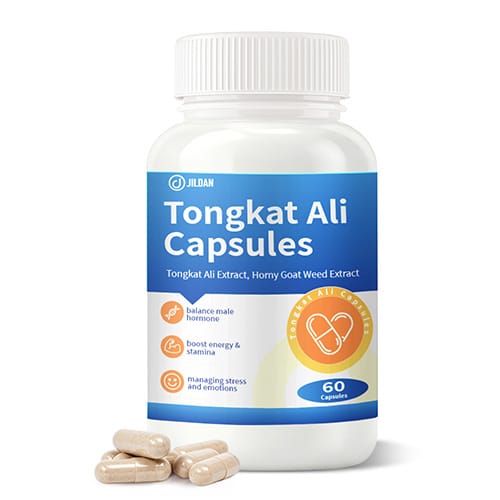
Brands developing capsule products can also review the manufacturer’s broader capsule supplement capabilities when deciding how Tongkat Ali fits into a larger product line.
If a gummy format is being considered,gummy supplement manufacturing capabilities should be evaluated separately because the formulation and manufacturing environment differ substantially from capsules.
Capsule, Tablet, or Gummy? Format Changes the Manufacturing Challenge
Tongkat Ali can be developed in several dosage forms, but a Tongkat Ali manufacturer should not treat them as interchangeable.
Capsules
Capsules are often attractive for botanical extracts because they allow relatively straightforward delivery of powders and dry extracts.
Development considerations include:
- extract bulk density;
- flowability;
- serving quantity;
- capsule size;
- excipient requirement;
- capsule shell type;
- moisture sensitivity;
- fill-weight variation.
A highly concentrated extract may fit easily into a capsule, while a less concentrated powder may require multiple capsules per serving.
Tablets
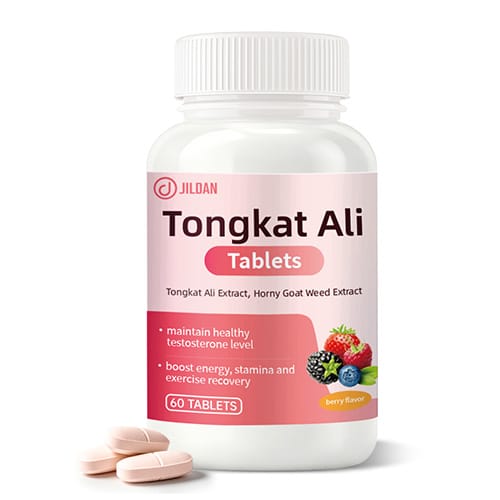
Tablets can offer compact packaging and efficient production at scale, but tablet development may require more attention to:
- compressibility;
- binders;
- disintegrants;
- hardness;
- friability;
- disintegration;
- coating.
Not every botanical extract behaves well under compression.
Gummies
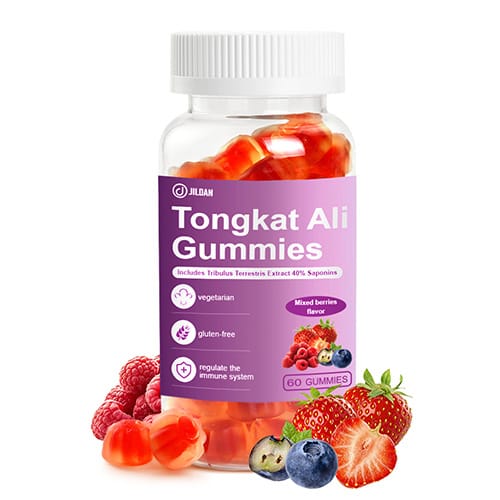
Gummies offer a more consumer-friendly experience but create additional formulation challenges.
Botanical extracts can have intense bitterness and distinctive sensory characteristics. Tongkat Ali is particularly challenging from a flavor perspective.
A Tongkat Ali manufacturer developing gummies therefore needs to consider:
- bitterness masking;
- flavor selection;
- sweetener system;
- active loading;
- gummy size;
- texture;
- pH;
- stability;
- processing temperature.
The best dosage form should reflect both the desired consumer experience and the physical properties of the actual ingredient.
Don’t Ignore Extract Taste, Color, and Physical Behavior
Botanical extracts are not just chemical specifications.
They are physical materials that must run through real manufacturing equipment.
A Tongkat Ali manufacturer should evaluate how the selected extract behaves during production.
Important characteristics include:
- color;
- aroma;
- bitterness;
- particle size;
- bulk density;
- flow;
- hygroscopicity;
- solubility;
- compressibility;
- compatibility with other ingredients.
These factors influence formulation decisions.
For example, an extract with poor flow may need carefully selected excipients for consistent capsule filling. A highly bitter extract may be difficult to use in gummies or flavored powders. A hygroscopic ingredient may require additional moisture protection.
This is why approving an ingredient based solely on a specification sheet can be risky.
A pilot sample should represent the actual planned raw material as closely as possible.
If the Tongkat Ali manufacturer changes the extract source after sample approval, the new ingredient may behave differently even if the front-page specification appears similar.
Supplier and formulation change control therefore matters.
Multi-Ingredient Male Wellness Formulas Need More Scrutiny, Not Less
Tongkat Ali is frequently considered for broader botanical combinations.
A Tongkat Ali manufacturer may be asked to combine it with other plant extracts, minerals, amino acids, or wellness ingredients.
A multi-ingredient formula can create a stronger commercial concept, but adding more actives creates additional quality questions.
For every ingredient, ask:
- Why is it included?
- Is the amount meaningful?
- Does it fit the intended consumer?
- Is it compatible with other ingredients?
- Does it create new testing requirements?
- Does it change serving size?
- Does it increase regulatory risk?
- Can the finished formula be manufactured consistently?
Botanical blends also require careful identity controls because each botanical ingredient must be properly qualified.
A Tongkat Ali manufacturer that handles multi-ingredient products should be able to explain how individual ingredients are controlled before blending and how the finished formulation is verified.
More ingredients should never mean less documentation.
Claims About Testosterone and Sexual Performance Require Careful Review
Tongkat Ali is often marketed around men’s vitality, testosterone, libido, stress, and physical performance.
These are precisely the areas where brands should slow down.
A Tongkat Ali manufacturer may manufacture the product, but the finished commercial claims still need appropriate scientific and regulatory review.
Research on a botanical ingredient should be evaluated according to:
- exact extract;
- strain or botanical identity where applicable;
- dose;
- study population;
- study duration;
- endpoint;
- study quality;
- consistency across research.
Evidence involving one standardized extract should not automatically be applied to every Tongkat Ali raw material.
Brands should be especially careful with language that could imply diagnosis, treatment, cure, or prevention of disease.
The FDA’s dietary supplement guidance provides the regulatory framework for U.S. dietary supplements, while health-related advertising also requires appropriate substantiation.
For an international product, claims need to be reviewed for each destination market rather than copied from a U.S. website.
A responsible Tongkat Ali manufacturer should support accurate specification and documentation rather than encourage exaggerated marketing claims.
How to Audit a Tongkat Ali Manufacturer Before Production
Supplier qualification works best when it is systematic.
Instead of asking general questions such as “Are you GMP?” use a structured checklist.
Botanical Controls
Ask:
- How is Eurycoma longifolia authenticated?
- Which plant part is used?
- How is the supplier qualified?
- Is every incoming lot tested?
- Which methods are used?
- How is adulteration risk assessed?
Chemical Specification
Ask:
- What is standardized?
- Which markers are tested?
- Which test method is used?
- What is the specification range?
- How much batch variation is acceptable?
Contaminants
Ask:
- Which heavy metals are tested?
- What microbiological limits apply?
- Are pesticides evaluated?
- Are residual solvents relevant?
- How are destination-market requirements incorporated?
Manufacturing
Ask:
- Can the plant handle the required dosage form?
- How is cross-contamination controlled?
- How are raw materials weighed and verified?
- How is blending uniformity managed?
- How are deviations documented?
Finished Product
Ask:
- What specifications are established?
- Which finished batches are tested?
- What does the COA include?
- Who releases the batch?
- Are retain samples maintained?
Documentation
Ask:
- Can batch records be traced to raw-material lots?
- How are changes managed?
- How are complaints investigated?
- How long are records maintained?
A Tongkat Ali manufacturer that answers these questions clearly is much easier to evaluate than one that relies primarily on marketing statements.
What to Include in a Tongkat Ali Manufacturing RFQ
A detailed request for quotation gives manufacturers enough information to assess the actual project.
When contacting a Tongkat Ali manufacturer , include the following.
Ingredient Requirements
Specify:
- Eurycoma longifolia ;
- desired plant part;
- extract or powder;
- standardization requirements;
- marker specification if applicable;
- ingredient restrictions.
Dosage Form
Specify whether you need:
- capsules;
- tablets;
- gummies;
- powder;
- another format.
Formula
Include:
- amount per serving;
- number of units per serving;
- supporting ingredients;
- vegetarian or vegan requirements;
- allergen restrictions;
- clean-label preferences.
Quality
State:
- identity requirements;
- heavy-metal limits;
- microbiological limits;
- additional contaminant requirements;
- finished-product testing;
- COA expectations;
- stability requirements.
Packaging
Define:
- bottle or pouch;
- count;
- closure;
- desiccant if required;
- label;
- carton;
- shipping configuration.
Market
Tell the Tongkat Ali manufacturer :
- countries of sale;
- primary distribution channels;
- label language;
- certification requirements;
- retailer or distributor specifications.
Commercial Planning
Provide:
- expected initial volume;
- repeat-order forecast;
- sample requirement;
- target launch timing;
- future product extensions.
Brands can review JD Nutra’s supplement manufacturing services while preparing these requirements so that formulation, dosage form, quality control, packaging, and production are evaluated as one project rather than separately.
Red Flags When Comparing Tongkat Ali Suppliers
Not every sourcing concern is visible in a quotation.
There are several warning signs worth investigating before approving a Tongkat Ali manufacturer .
The Supplier Cannot State the Scientific Name
A botanical manufacturer should know exactly which species is being supplied.
The Plant Part Is Unclear
“Tongkat Ali extract” without a plant-part specification is incomplete information.
Extract Ratio Is the Only Quality Metric
A dramatic ratio cannot replace identity and chemical specifications.
The COA Contains Almost No Actual Results
A useful COA should connect the specific batch with meaningful test results and specifications.
No One Can Explain the Testing Methods
Sales teams do not need to be laboratory scientists, but the quality team should be able to answer technical questions.
Every Batch Is Described as Identical
Natural botanical materials vary. Good manufacturing controls variation; it does not pretend natural variation does not exist.
The Manufacturer Encourages Aggressive Medical Claims
Manufacturing capability does not remove a brand’s responsibility for lawful and substantiated marketing.
Formula Changes Are Made Without Formal Approval
A reliable Tongkat Ali manufacturer should manage ingredient, supplier, specification, and process changes through documented change control.
Quality Should Be Designed Before the First Commercial Batch
One of the most expensive mistakes is building the quality specification after the formula and packaging have already been approved.
Quality should begin with the product brief.
Before commercial production, the brand and Tongkat Ali manufacturer should agree on:
- botanical identity;
- plant part;
- raw-material source;
- extract specification;
- marker compounds;
- active amount;
- contaminants;
- dosage form;
- excipients;
- finished-product specification;
- testing plan;
- packaging;
- storage;
- shelf life;
- change control.
These decisions should then flow into manufacturing documents and release criteria.
This approach makes reorders easier because both parties know exactly what constitutes an acceptable batch.
It also reduces disputes caused by vague statements such as “same quality as last time.”
A specification is much more useful than a promise.
Frequently Asked Questions About Choosing a Tongkat Ali Manufacturer
What should I ask a Tongkat Ali manufacturer first?
Start with botanical identity.
Ask the Tongkat Ali manufacturer to confirm the scientific name, plant part, raw-material source, extract specification, and identity-testing method before discussing marketing claims or packaging.
Is a 200:1 Tongkat Ali extract automatically better than a lower ratio?
No.
Extract ratio alone does not establish authenticity, marker-compound concentration, consistency, or finished-product quality. Buyers should evaluate the complete ingredient specification.
What is the scientific name of Tongkat Ali?
Tongkat Ali is generally identified as Eurycoma longifolia . The scientific name and plant part should appear in the approved raw-material documentation.
Should Tongkat Ali be standardized?
Standardization can be useful when it refers to a clear, measurable specification, but the word itself does not prove quality.
Ask your Tongkat Ali manufacturer which compounds or chemical characteristics are controlled and how they are tested.
What testing should be requested?
Testing depends on the ingredient, product, and target market, but a quality program may address botanical identity, chemical specifications, microbiology, heavy metals, pesticides, residual solvents, and other relevant contaminants.
Is a supplier COA enough?
A supplier COA is an important document, but it should be part of a broader qualification and verification system.
A strong Tongkat Ali manufacturer should have procedures for incoming ingredient verification, supplier qualification, finished-product specifications, batch release, and traceability.
Can Tongkat Ali be manufactured as gummies?
Yes, depending on the formula and manufacturing capability.
However, bitterness, active loading, texture, flavor, and stability can make gummy development more complicated than capsules.
What makes a reliable Tongkat Ali manufacturer?
A reliable Tongkat Ali manufacturer should be able to demonstrate botanical identity, raw-material traceability, appropriate analytical testing, documented specifications, contaminant controls, controlled manufacturing, finished-product verification, and clear change management.
Conclusion
Choosing a Tongkat Ali manufacturer should be treated as a botanical quality decision rather than a simple capsule-filling purchase.
The strongest sourcing process begins with verified Eurycoma longifolia identity and the correct plant part, then moves through raw-material supplier qualification, chemical standardization, contaminant testing, manufacturing controls, finished-product specifications, COAs, batch traceability, and change control.
Extract ratios, certification logos, and large ingredient catalogs may help start a conversation, but they do not replace technical evidence.
For supplement brands, the most important question is not simply whether a Tongkat Ali manufacturer can produce the desired dosage form. It is whether that manufacturer can demonstrate, batch after batch, that the ingredient and finished product meet a clearly defined and reproducible specification.
Brands planning capsules can review available capsule manufacturing options , while companies considering a chewable format can explore gummy supplement manufacturing .
For a project involving a defined botanical extract, custom formula, testing requirements, packaging, and target market,contact JD Nutra with the product brief so the technical and manufacturing requirements can be reviewed before commercial production.