La creatina se ha asociado tradicionalmente con atletas, culturistas y entrenamientos de alta intensidad. Esa percepción está cambiando rápidamente.
Hoy en día, los consumidores buscan beneficios de los monohidratos de creatina desde una perspectiva mucho más amplia. Los entusiastas del fitness siguen siendo una audiencia importante, pero el interés también está aumentando entre las mujeres, los deportistas recreativos, los consumidores centrados en el bienestar y las personas que buscan formas convenientes de apoyar estilos de vida activos.
Current supplement trend data places creatine monohydrate among the fastest-growing supplement topics, with substantial search growth in 2026. One trend analysis reports approximately 368,000 monthly searches and 50% year-over-year growth for the term, while other search datasets show even higher global demand.
El cambio es importante para las marcas de suplementos.
La creatina ya no es simplemente un ingrediente del culturismo. Se está convirtiendo en parte de una conversación mucho más amplia sobre el rendimiento físico, las rutinas de ejercicio, la recuperación y el bienestar cotidiano.
Para las marcas y los desarrolladores de suplementos, comprender los beneficios de los monohidratos de creatina que buscan los consumidores puede ayudar a crear productos que se adapten mejor al mercado actual.
Por qué el monohidrato de creatina va más allá de la nutrición deportiva tradicional
Durante años, la creatina se comercializó principalmente entre personas que participaban en entrenamientos de fuerza y deportes competitivos.
La categoría ahora se ha vuelto mucho más común.
El comportamiento de búsqueda sugiere que los consumidores están pasando de búsquedas amplias como “creatina” hacia preguntas más específicas sobre monohidrato de creatina, suplementación, beneficios, formatos de dosificación y uso diario. Un análisis de 2026 identificó más de 22.000 palabras clave relacionadas con la creatina en los EE. UU., lo que ilustra cuánto más profunda se ha vuelto la categoría.
Varios factores están contribuyendo a este cambio.
En primer lugar, los consumidores tienen mayor acceso que nunca a la información nutricional. Las personas pueden investigar ingredientes individuales, comparar formularios y leer literatura científica antes de elegir un suplemento.
En segundo lugar, el fitness en sí se ha vuelto más común. Los consumidores no necesariamente se identifican como atletas, pero muchos participan en entrenamiento de resistencia, deportes recreativos, fitness funcional, caminar, andar en bicicleta u otras actividades.
En tercer lugar, la definición de bienestar se está ampliando.
Los consumidores ven cada vez más la fuerza, la movilidad, la actividad física y el envejecimiento saludable como partes conectadas de una estrategia de bienestar a largo plazo.
Esto ha creado una audiencia potencial mucho mayor para los productos de creatina.
¿qué es el monohidrato de creatina?
La creatina es un compuesto natural implicado en los sistemas energéticos del cuerpo.
Se almacena principalmente en el músculo esquelético, donde contribuye a la rápida regeneración del trifosfato de adenosina, comúnmente conocido como ATP.
El ATP es una de las monedas energéticas primarias del cuerpo. Durante períodos cortos de actividad de alta intensidad, el cuerpo necesita regenerar ATP rápidamente.
La creatina participa en este sistema energético a través de la vía de la fosfocreatina.
Monohidrato de creatina es una forma específica de creatina que ha sido ampliamente estudiada y ampliamente utilizada en suplementos dietéticos.
Para los fabricantes, la popularidad de este formulario ofrece varias ventajas.
Los consumidores reconocen el nombre del ingrediente, la investigación es relativamente extensa y puede incorporarse en múltiples formatos de suplementos.
La Sociedad Internacional de Nutrición Deportiva ha publicado un stand de posición que revisa la suplementación con creatina y sus aplicaciones en el ejercicio, el rendimiento deportivo y áreas relacionadas.
Esta base de investigación establecida es una de las razones por las que el monohidrato de creatina sigue siendo un ingrediente importante para el desarrollo de suplementos deportivos y de bienestar.
Cómo la creatina apoya la producción de energía
Para entender el beneficios de la creatina monohidrato, ayuda a comprender su papel en la energía celular.
Durante la actividad física intensa, el ATP se puede utilizar rápidamente.
El cuerpo necesita sistemas capaces de regenerar ATP para que pueda continuar la contracción muscular.
La creatina se almacena en el músculo en parte como fosfocreatina. Cuando aumenta la demanda de energía, la fosfocreatina puede contribuir a la regeneración de ATP.
Este mecanismo es particularmente relevante durante actividades de corta duración y alta intensidad.
Ejemplos incluyen:
- Entrenamiento de resistencia
- Sprint
- Saltar
- Intervalos repetidos de alta intensidad
- Movimientos atléticos explosivos
Esto no significa que la creatina sea un sustituto del entrenamiento, la nutrición, el sueño o la recuperación adecuados.
Más bien, es un componente nutricional que puede sustentar el sistema energético existente del cuerpo.
Para las marcas de suplementos, esta distinción es importante porque la educación eficaz sobre el producto debe explicar el papel del ingrediente sin exagerar lo que la suplementación puede lograr.
Beneficios clave del monohidrato de creatina para consumidores activos
El interés más establecido por la creatina proviene del ejercicio y el rendimiento físico.
Las investigaciones han investigado constantemente la suplementación con creatina en relación con el ejercicio de alta intensidad y el entrenamiento orientado a la fuerza.
Las posibles áreas de interés incluyen:
Fuerza y rendimiento del entrenamiento
La suplementación con creatina puede aumentar la disponibilidad de fosfocreatina en el músculo, lo que puede respaldar esfuerzos repetidos de alta intensidad.
Para los consumidores que siguen programas de entrenamiento de resistencia, esta es una de las razones más importantes para elegir un producto de creatina.
Metas relacionadas con los músculos
La creatina se utiliza con frecuencia como parte de estrategias nutricionales diseñadas para apoyar el desarrollo muscular y las adaptaciones del entrenamiento.
Sin embargo, los resultados dependen de muchos factores, incluida la coherencia del entrenamiento, la nutrición general, la respuesta individual y la ingesta dietética total.
Recuperación del ejercicio
La creatina también se ha estudiado en relación con la recuperación y la adaptación al entrenamiento.
Para los consumidores activos, esto hace que la creatina sea relevante más allá del entrenamiento en sí.
Actividad de alta intensidad
El papel de la creatina en la rápida regeneración de energía la hace particularmente relevante para actividades que requieren breves y repetidos estallidos de esfuerzo.
Esto amplía su relevancia desde el culturismo tradicional hasta el entrenamiento funcional, los deportes recreativos y otros estilos de vida activos.
La conclusión clave es que beneficios de la creatina monohidrato los más respaldados por la investigación están estrechamente relacionados con el ejercicio y el rendimiento físico.
Por qué más mujeres exploran los suplementos de creatina
Uno de los avances más interesantes en la categoría de creatina es el creciente interés entre las mujeres.
Históricamente, el marketing de creatina estuvo fuertemente asociado con audiencias masculinas de culturismo.
Ese posicionamiento está cada vez más obsoleto.
Las mujeres participan en entrenamiento de fuerza, carrera, deportes recreativos, fitness funcional y otras formas de ejercicio a gran escala.
Como resultado, la creatina se analiza cada vez más como un ingrediente nutricional principal en lugar de un suplemento exclusivo para culturismo.
Para las marcas, esto crea una oportunidad para repensar el posicionamiento del producto.
Un producto de creatina moderno no necesariamente necesita utilizar imágenes deportivas agresivas o mensajes centrados en el culturismo.
En cambio, las marcas pueden crear productos en torno a:
- Estilos de vida centrados en la fuerza
- Mujeres activas
- Fitness diario
- Envejecimiento saludable
- Complementación conveniente
- Apoyo general al ejercicio
Este posicionamiento más amplio puede hacer que la creatina sea más accesible para los consumidores que anteriormente asumían que el ingrediente sólo era relevante para los atletas serios.
La creatina y el cambio hacia el bienestar cotidiano
La expansión de la creatina al bienestar general es uno de los avances más importantes de la categoría.
Los datos de tendencias de búsqueda muestran que la creatina está pasando cada vez más de la nutrición deportiva tradicional a conversaciones más amplias sobre bienestar.
Esto no significa que todos los beneficios declarados asociados con la creatina tengan el mismo nivel de evidencia científica.
De hecho, los consumidores se hacen cada vez más preguntas sobre cognición, envejecimiento saludable y otras aplicaciones potenciales.
Algunas investigaciones en estas áreas son prometedoras, pero la evidencia varía según la población, los resultados y el diseño del estudio.
Para las marcas de suplementos responsables, esto crea una oportunidad importante.
En lugar de hacer afirmaciones amplias, las marcas pueden proporcionar contenido educativo que explique qué está bien establecido, qué queda bajo investigación y por qué la creatina continúa atrayendo interés científico.
Ese enfoque es más creíble y está mejor alineado con las expectativas de los consumidores modernos.
Polvo de monohidrato de creatina frente a otros formatos de suplementos
El monohidrato de creatina se ha asociado tradicionalmente con suplementos en polvo.
Pero el mercado está cambiando.
Los datos de búsqueda muestran un fuerte crecimiento en múltiples formatos, incluidos creatina en polvo y gomitas de creatina.
Fórmulas en polvo
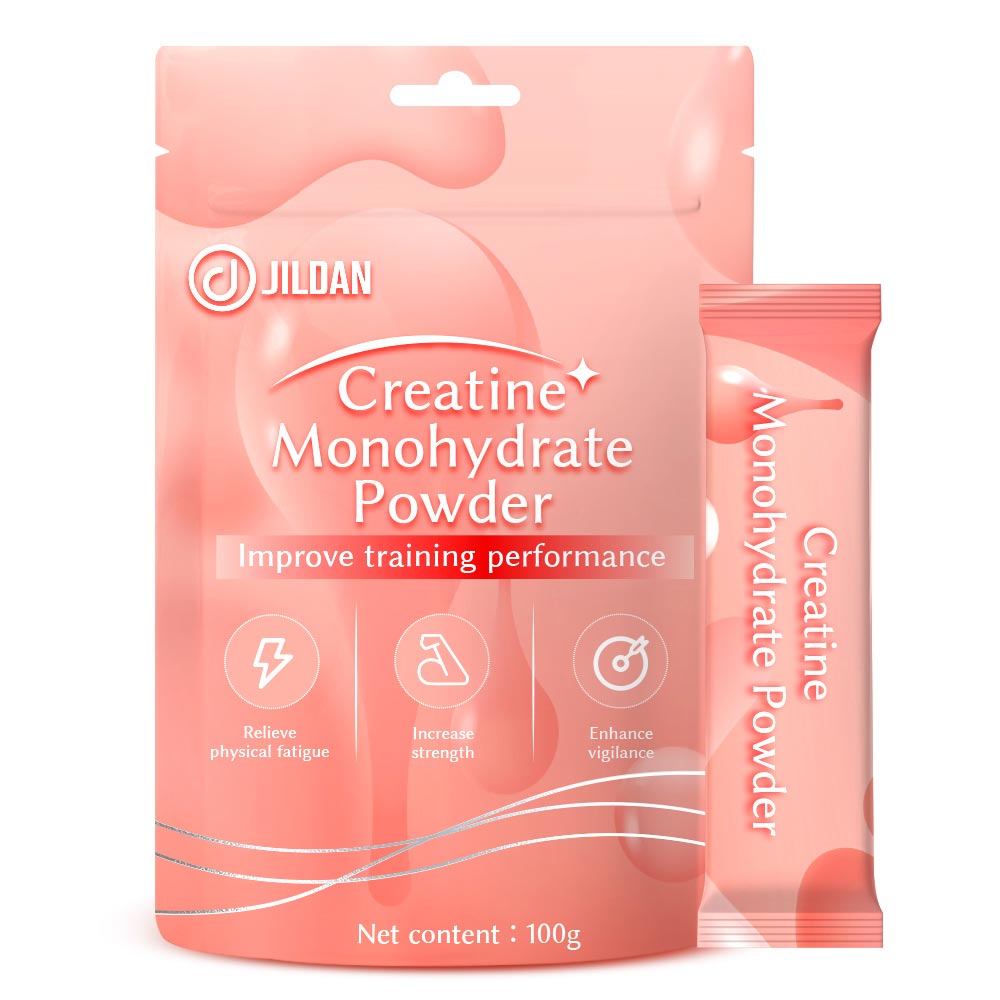
El polvo sigue siendo un formato práctico para los productos de creatina.
Ofrece flexibilidad en el tamaño de la porción y puede incorporarse a bebidas, batidos y otras rutinas nutricionales.
Desde una perspectiva de fabricación, las fórmulas en polvo también brindan oportunidades para productos combinados y aromatizantes personalizados.
Sin embargo, se deben evaluar cuidadosamente el sabor, la solubilidad, el control de la humedad y el embalaje.
Cápsulas y Comprimidos
Las cápsulas y tabletas brindan comodidad a los consumidores que prefieren un formato previamente medido.
El principal desafío es el tamaño de la porción.
Debido a que la creatina se usa a menudo en cantidades de nivel de gramos, los fabricantes deben evaluar la cantidad de ingrediente activo que puede encajar de manera realista en la forma farmacéutica elegida.
Gomitas de creatina
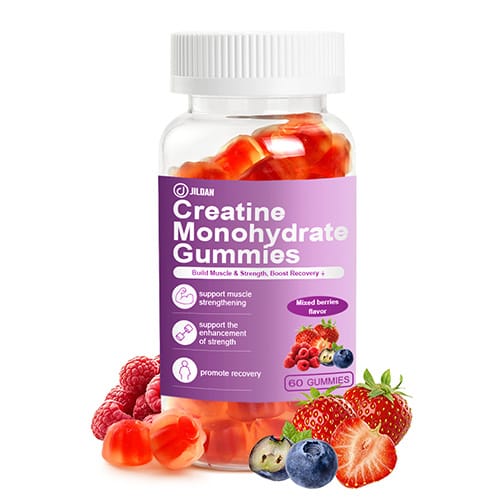
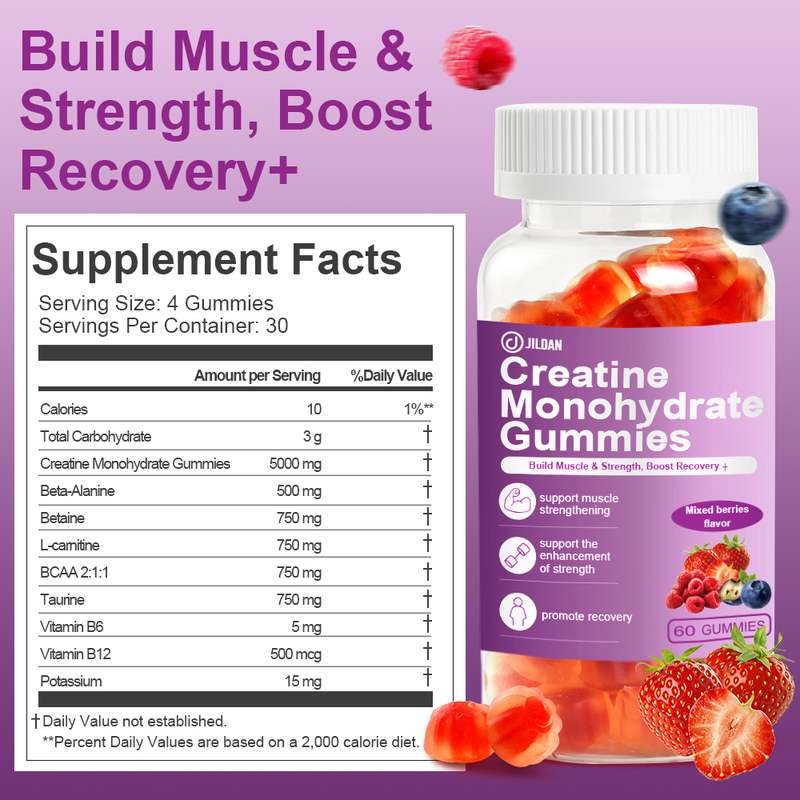
Las gomitas son uno de los desarrollos más interesantes de la categoría.
El análisis de mercado actual muestra un fuerte crecimiento en las búsquedas de gomitas de creatina, lo que sugiere un creciente interés de los consumidores por formatos más convenientes y accesibles.
JD Nutra también incluye las gomitas de creatina entre sus capacidades de fabricación de suplementos, lo que hace que este formato sea particularmente relevante para las marcas que exploran nuevos conceptos de productos de creatina.
Sin embargo, el desarrollo de gomitas requiere una cuidadosa atención a la textura, la estabilidad, el sabor, la carga de ingredientes y el proceso de fabricación.
Formatos listos para usar
Los productos listos para usar pueden simplificar aún más la suplementación.
Por ejemplo, las marcas pueden explorar conceptos de bebidas líquidas o funcionales en los que la creatina se incorpora a una fórmula nutricional más amplia.
Estos productos requieren pruebas adicionales de estabilidad y compatibilidad porque el ingrediente activo está expuesto a un entorno de formulación diferente.
Qué deben considerar las marcas de suplementos al formular productos de creatina
La elección del monohidrato de creatina es sólo el comienzo del desarrollo del producto.
Las marcas deben considerar la arquitectura completa del producto.
Consumidor objetivo
Un producto diseñado para atletas serios puede tener requisitos de formulación y empaque muy diferentes a los de un producto diseñado para consumidores de bienestar general.
Formato de servicio
El polvo, las gomitas, las cápsulas, las tabletas y los líquidos crean diferentes desafíos técnicos.
Compatibilidad de ingredientes
Si la creatina se combina con otros ingredientes, los fabricantes deben evaluar:
- Estabilidad
- Solubilidad
- Sabor
- Sensibilidad a la humedad
- Condiciones de procesamiento
- Requisitos de vida útil
Embalaje
Los productos de creatina pueden requerir un embalaje que proteja la fórmula de las condiciones ambientales como la humedad.
Por lo tanto, la selección del embalaje debe considerarse durante la formulación en lugar de tratarse como una decisión de la etapa final.
Cumplimiento normativo
Los reclamos y los requisitos de etiquetado varían entre mercados.
Las marcas dirigidas a consumidores internacionales deben revisar los requisitos reglamentarios aplicables a cada mercado de destino.
El Recursos de suplementos dietéticos de la Administración de Alimentos y Medicamentos de EE. UU proporcionar antecedentes útiles para las empresas que desarrollan productos para el mercado estadounidense.
Cómo crear un producto de creatina más respetuoso con el consumidor
El consumidor moderno de creatina no siempre quiere un producto complicado.
En muchos casos, la simplicidad es una ventaja.
Un producto exitoso puede centrarse en:
Información clara sobre ingredientes
Los consumidores deberían poder comprender exactamente qué contiene el producto.
Uso conveniente
Cuanto más fácil sea incorporar un producto a una rutina existente, más accesible será.
Formato de dosificación adecuado
El formato del producto debe coincidir con el estilo de vida del cliente objetivo.
Educación útil
Las marcas pueden explicar cómo funciona la creatina, lo que dicen las investigaciones y cómo encaja el ingrediente en una estrategia nutricional más amplia.
Calidad consistente
El control de calidad es esencial para generar confianza a largo plazo.
Para las marcas que desarrollan un nuevo producto de creatina, asociarse con un fabricante profesional de suplementos dietéticos puede brindar apoyo en la formulación, producción, pruebas y envases.
Explore las capacidades de fabricación de suplementos dietéticos de JD Nutra para obtener más información sobre las opciones de producción y desarrollo de suplementos personalizados.
Errores comunes al desarrollar suplementos de creatina
La creciente popularidad de la creatina puede hacer que la categoría parezca sencilla.
En realidad, el desarrollo de productos todavía requiere una planificación cuidadosa.
Error 1: Tratar a cada consumidor como un atleta
El mercado se ha expandido.
Las marcas que sólo se comunican con culturistas pueden pasar por alto grandes grupos de clientes potenciales.
Error 2: elegir un formato sin considerar el tamaño de la porción
Una fórmula puede funcionar bien como polvo pero volverse poco práctica en otro formato.
El sistema de entrega debe considerarse desde el principio.
Error 3: agregar demasiados ingredientes
Más ingredientes no crean automáticamente un mejor producto.
Cada componente adicional puede afectar la complejidad, estabilidad, sabor, etiquetado y fabricación de la formulación.
Error 4: Exagerar las pruebas
La evidencia más sólida de creatina se relaciona con el ejercicio y el rendimiento físico.
Áreas emergentes como la salud cognitiva y el envejecimiento saludable son interesantes, pero las marcas deberían comunicarlas de manera responsable.
Error 5: ignorar la experiencia del consumidor
Incluso una fórmula técnicamente fuerte puede tener dificultades si tiene un sabor desagradable, es difícil de usar o no se ajusta a la rutina del consumidor.
Por lo tanto, el desarrollo de productos debe considerar tanto la evidencia científica como la usabilidad práctica.
Oportunidades futuras para la creatina en el mercado mundial de suplementos
El futuro de la creatina parece cada vez más diverso.
La categoría se mueve en varias direcciones simultáneamente.
Uno es el continuo crecimiento de la nutrición deportiva.
Otro es el bienestar generalizado.
Un tercero es la innovación de formatos.
Los datos de búsqueda ya muestran que los consumidores buscan cada vez más suplementos de creatina en lugar del formato tradicional en polvo.
Esto crea oportunidades para que los fabricantes y marcas se desarrollen:
- Polvos de creatina
- Gomitas de creatina
- Fórmulas combinadas
- Bebidas en polvo funcionales
- Convenientes productos en cápsulas
- Suplementos de creatina orientados al estilo de vida
La oportunidad más amplia no es simplemente vender más creatina.
Se trata de crear productos que hagan que el ingrediente sea más fácil de entender y de incorporar a diferentes estilos de vida.
A medida que la base de consumidores se expanda, la educación sobre productos y la calidad de las formulaciones se convertirán en ventajas competitivas cada vez más importantes.
Conclusión
El creciente interés en beneficios de la creatina monohidrato refleja una transformación importante en la industria de los suplementos.
La creatina está yendo más allá de su imagen tradicional de culturismo y convirtiéndose en un ingrediente principal en los mercados de nutrición deportiva, fitness y bienestar en general.
Su papel establecido en el metabolismo energético y el rendimiento del ejercicio proporciona a la creatina monohidrato una base sólida, mientras que las investigaciones emergentes continúan generando interés en aplicaciones adicionales.
Para las marcas de suplementos, la oportunidad radica en traducir este ingrediente en productos que sean convenientes, bien formulados, claramente posicionados y respaldados por una educación responsable.
Ya sea que el producto final sea un polvo, una cápsula, una gomita u otro formato, el paso más importante es comprender al consumidor objetivo antes de desarrollar la fórmula.
A medida que el interés de los consumidores continúa expandiéndose, las marcas que combinan una sólida estrategia de formulación con una fabricación de calidad y una comunicación clara estarán mejor posicionadas para construir la próxima generación de suplementos de creatina.